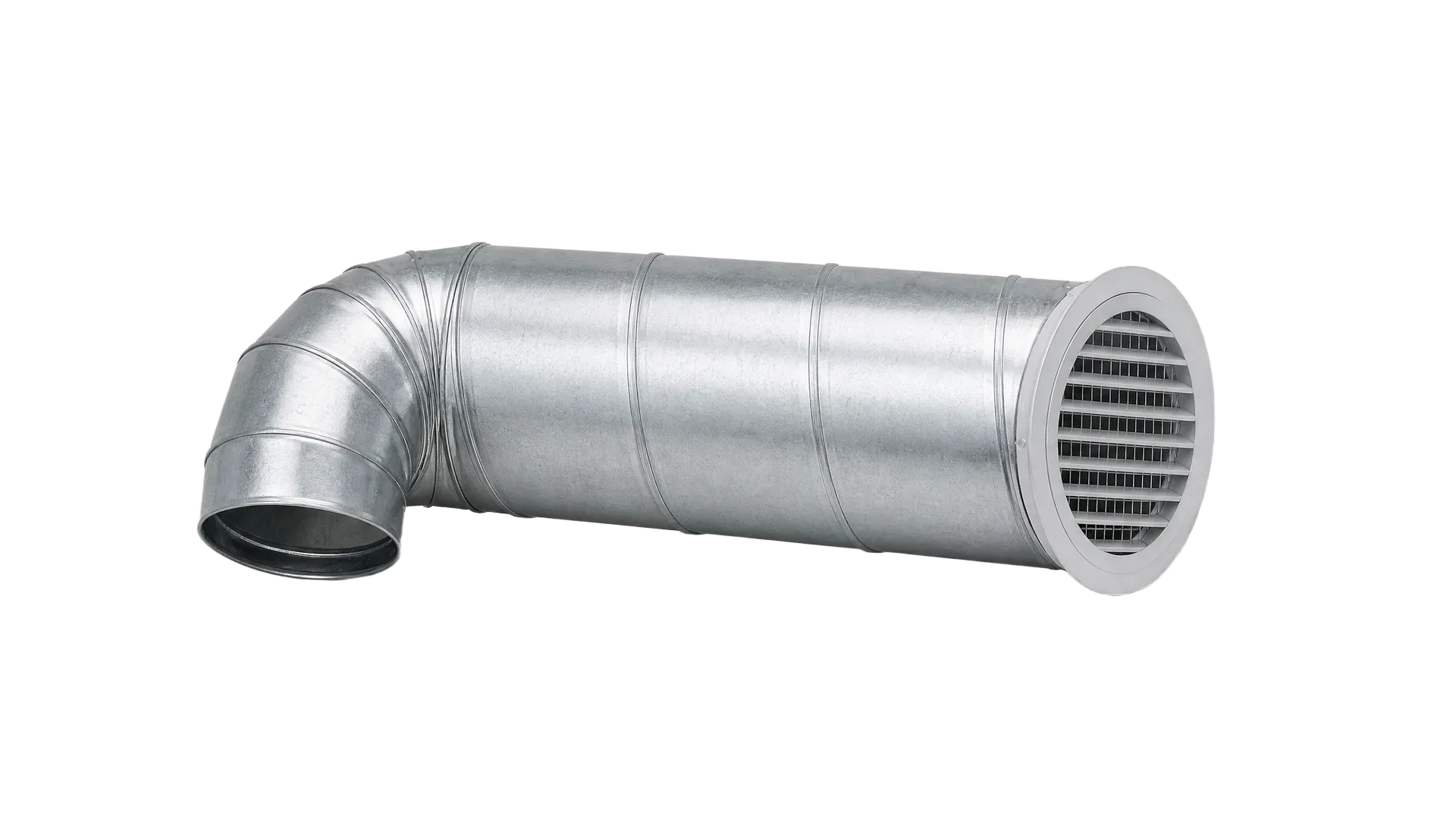
Dry ducts, no smell
This is what a basement duct system looks like when it's not holding moisture. The metal is dry, the joists above are clear, and air moves through without picking up anything musty on the way to your rooms.
A musty smell from your vents means moisture is sitting somewhere in your duct system, usually growing mold on dust that built up inside. Michigan summers get humid enough that ducts running through a crawlspace or attic can sweat, and that damp dust turns moldy over time. It also happens around the coil and drain pan on your air conditioner, since both stay wet for hours after the system runs and anything growing there gets pushed through the ducts every time the blower kicks on. Once mold takes hold inside the ductwork, running the fan just spreads the smell through the house instead of clearing it. Changing the filter or running a candle won't touch it, because the source is inside the ducts themselves, not the air passing through the room. Getting the ducts cleaned out removes the dust and growth causing the smell, rather than covering it up.



This is what a basement duct system looks like when it's not holding moisture. The metal is dry, the joists above are clear, and air moves through without picking up anything musty on the way to your rooms.

Dust settles inside these same ducts over years, coating the metal low on the branches where airflow is weakest. Add summer humidity and that dust holds moisture long enough for mold to take hold, which is what you're smelling at the vent.

This is a duct system doing its job. The sheet metal runs dry along the joists, the furnace pushes air through without picking anything up, and there's nothing sitting on the duct walls for mold to take hold of.

Here the ductwork runs through an unfinished space where damp air settles on the metal and the dust inside it. That dust holds the moisture, mold works on it, and every time air moves through those ducts it carries the smell into your rooms.


Dust inside a duct is mostly dead skin and fiber, and mold can live on it once moisture shows up. A furnace running six or seven months a year keeps pushing air over that same buildup the whole time.
That's why the smell tends to show up strongest when the furnace or AC first kicks on after sitting idle. Air moving over mold that's been sitting undisturbed in the duct carries the smell straight into the room.
Running a blower longer or bumping a dehumidifier costs real money at 20.03 cents a kilowatt-hour. Moldy ducts make your furnace fan work through buildup that slows airflow, so it runs longer to move the same air through your house. Clean ducts move air freely and cost less to push.
EIA-861 2025 statewide residential average




That musty smell isn't going to air itself out. It sits inside the ductwork until something physically removes it, and most homeowners don't have the equipment to get into every run of duct under the house or through the attic. A contractor who services duct systems in your area deals with this every summer, the same crawlspaces and attics holding the same humidity, so they know where moisture collects and what it takes to clear it out for good. Send the request and it goes to one local contractor who works on this kind of system regularly, not a handful of companies competing for your callback. From there, finding someone to handle it stops being on you. You keep living in the house while that smell comes from somewhere specific and gets dealt with, instead of staying there into fall when the furnace is pushing air through it every day.
A musty smell from your vents comes from mold growing on dust inside your ductwork, fed by moisture that built up over a humid Michigan summer. That's the whole story. It's not the furnace itself, and it's not something that airs out once the weather turns. The dust and the mold sitting on it stay right where they are until the ducts get cleaned, and your furnace keeps moving air across that same buildup every day it runs between October and April.
Cleaning works because it takes the dust away along with what's growing on it. Nothing gets sprayed over, so nothing grows back on the same buildup a month later. That part is straightforward once someone gets into the ductwork with the right equipment, which isn't something most homeowners have sitting in the garage.
Finding that someone is the part that usually stalls. A contractor who works on duct systems through a Michigan summer has already seen where moisture tends to collect, whether that's a crawlspace run or a stretch through the attic, and knows what to check first instead of guessing. Your request goes to one licensed local contractor, not a handful of companies all calling about the same job. Once they have your information, the job of finding someone to look at your ducts is no longer sitting on your list.

One request and it's handed off



