Dry ducts move air and nothing else
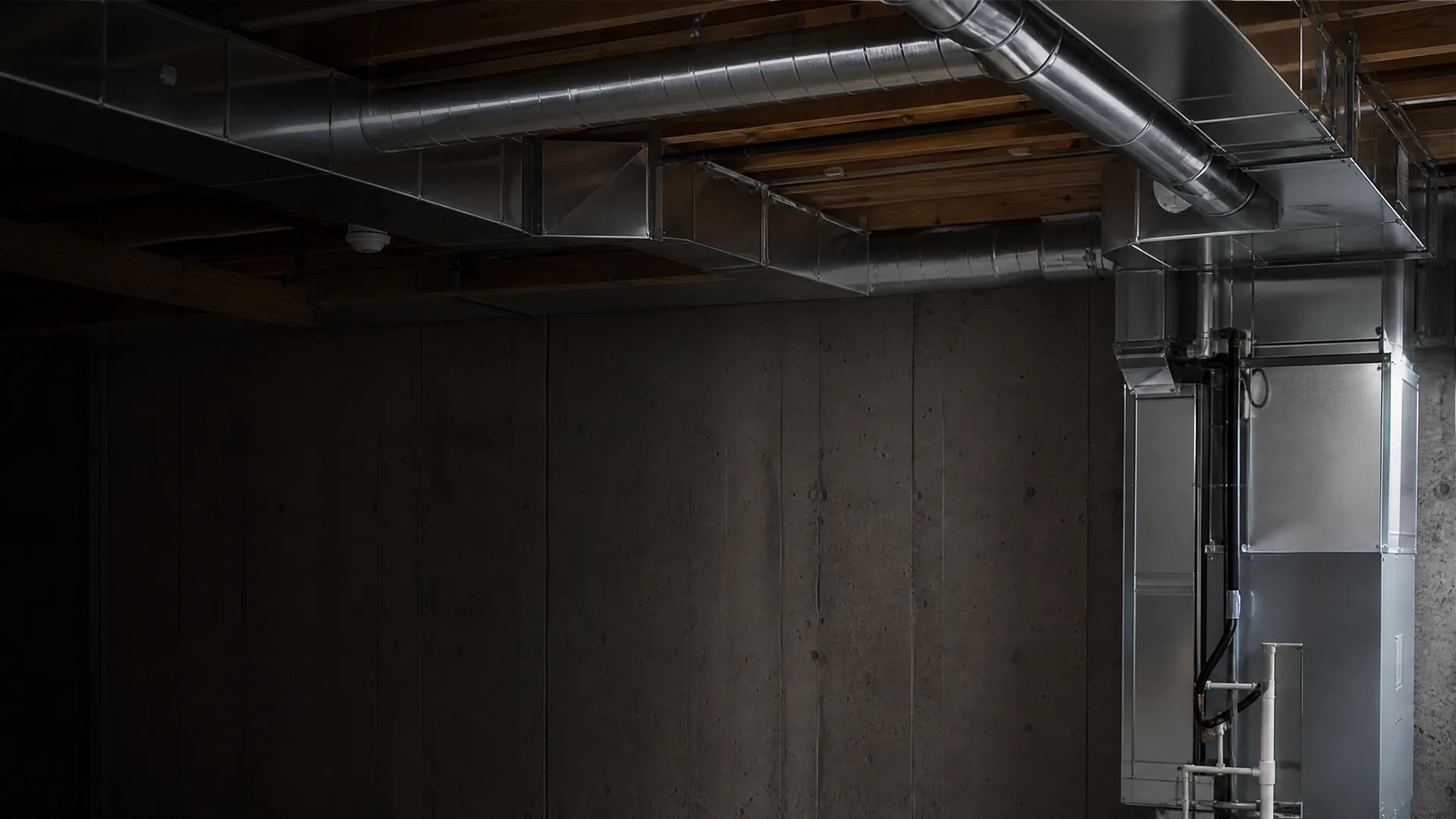
This is what a duct system looks like when it's doing its job. Air moves through, the metal stays dry, and there's nothing for mold to feed on. The furnace runs, the house heats, and the ducts just carry the air.
 Find my pro
Get matched with someone who does this kind of work in Wayne County.
You noticed a musty smell when the furnace or the AC kicks on, or maybe there's dust around the vents that keeps coming back no matter how often you clean it. In a duct system, that smell usually means moisture got in somewhere and mold is growing on the inside surfaces where you can't see it.
Humid summers here give mold what it needs. Warm, damp air moving through ductwork, especially where a duct runs through an unconditioned space or near a leak, gives mold a place to take hold. Cold winters add their own problem: condensation where warm house air meets a cold duct surface. Either way, the air moving through your home is picking something up before it reaches you.
This isn't something to figure out by smell alone, and it isn't something to fix with a stronger air filter. The ducts themselves need to be opened up, inspected, and cleaned by someone who does this work regularly and knows where mold tends to collect in a system like yours.
That's a licensed contractor working in Wayne County, someone who deals with ductwork in homes like yours every summer and every winter and knows the usual spots a system traps moisture, whether that's a joint near a crawlspace, a return near a bathroom, or a run through an uninsulated attic. When you request service here, you're matched with one contractor suited to your situation, not a handful of companies competing for your callback. That one contractor follows up with you directly, so you can describe what you're smelling or seeing and get a straight answer about what it will take to look at your actual ducts.
The box below starts that match. Tell it a bit about your home and what you've noticed, and the right contractor for your situation takes it from there.
Mold in air ducts usually starts where moisture has no way to dry out. A duct system stays dark and closed, so any water that gets in, from a leaky vent boot, a condensation line that backs up, or humid air meeting a cold duct, sits there instead of evaporating. Summers around Detroit get sticky, and that humidity moving through the ducts gives mold what it needs to grow on the dust already coating the inside. Once it's established, running the furnace or the AC pushes spores through the house every time the system kicks on, which is why the smell comes and goes with use. It will not clear on its own with the duct closed up. Cleaning removes the growth and the dust it's feeding on, and sealing up wherever the moisture got in is what keeps it from coming back.
Half the homes here were built by 1956
Half the homes in Wayne County were built in 1956 or earlier, and ductwork that old has had decades of seams and joints to let moisture in.
Heat runs October through May
Furnaces here run October through May, about eight months of the year, so warm air moves through the same ducts where mold took hold for most of the year.
Cooling runs June through August
Air conditioning runs June through August, and that's exactly when humid air meets cool duct metal and leaves condensation behind for mold to use.
ACS 2020-2024 · NOAA nClimDiv 1991-2020
A duct cleaning clears out the mold that has already grown, along with the dust and debris that built up around it. That takes care of what you can smell and what's circulating through the house right now. But if a vent boot is still leaking where it meets the floor, or the AC's condensate line is still backing up, the ducts have the same damp conditions they had before. Mold needs moisture to grow, and a cleaning doesn't change where that moisture comes from. Homes near the Detroit River and Lake St. Clair deal with more humidity than most, and that works against a cleaning that isn't paired with fixing the source.
A contractor who checks the ducts for the actual entry point, a disconnected seam, a leaking boot, a condensation line that isn't draining, can seal or repair it before cleaning the system. That means the mold that gets removed stays removed, instead of returning in a few months because the same water is still getting in. It takes more than a cleaning alone, but it's the difference between a duct system that stays dry through next summer's humidity and one that needs cleaning again every year. A local contractor who services ducts in Wayne County homes every season has seen most of the ways moisture gets into this area's ductwork and knows where to look first.




A duct system in a house like yours in Wayne County isn't something you can inspect yourself. The ducts run behind drywall and above ceilings, and the only way to know how bad the mold is, and whether it's coming from a leaky vent boot or a cracked condensation line, is to have someone open it up and look. A local contractor who cleans ducts in this area every week during the humid months has seen what Wayne County's older housing stock does to ductwork and knows where to check first. Getting matched with one contractor, rather than fielding calls from several, means you're dealing with someone who can actually walk through your specific setup with you instead of quoting a job sight unseen. That smell isn't going away on its own, and every month it sits is another month of humid summer air feeding it. The sooner someone qualified looks at your ducts, the sooner you know what you're actually dealing with.
Mold in a duct system doesn't need much to get started. It needs moisture, something to feed on, and air that isn't moving, and a closed duct system gives it all three without trying. Dust alone is enough food. Once a spore lands on wet sheet metal, it has what it needs to spread along the duct wall.
Where that moisture comes from depends on which part of the system you're looking at. The evaporator coil and drain pan condense water out of the air every time the AC runs, and that moisture gets pulled straight into the supply ducts by the blower. A vent boot that's cracked or come loose at the joint does something similar from the outside, feeding in humid attic or crawlspace air you'd never see from inside the house. Flex duct has its own failure point. When the thin inner liner tears, water gets trapped between it and the insulation, and that spot stays wet long after everything around it has dried.
It spreads through both sides of the system. Supply ducts push conditioned air into your rooms, return ducts pull house air back to the furnace, and mold takes hold in either one once conditions are right. A proper cleaning works the ducts with rotating brushes and negative air pressure so the mold and debris actually come off the metal and get pulled out, rather than getting knocked loose and blown further down the line toward a room register.



This is what a duct system looks like when it's doing its job. Air moves through, the metal stays dry, and there's nothing for mold to feed on. The furnace runs, the house heats, and the ducts just carry the air.

Tucked between the joists, this ductwork never sees light and rarely sees a fresh coat of dry air. If moisture got in from a leaky boot or a sweating line, it has nowhere to go. That's where mold takes hold and keeps coming back.
At 20.20 cents per kilowatt-hour, running a bathroom fan longer or an air scrubber to dry things out costs more here than in most places. That makes it worth fixing the moisture source the first time, instead of paying to clean the same mold out again next year.
EIA-861 2025

This is what the joists above an unfinished basement usually hide: trunk lines and flex duct carrying air to every room, nothing more. The metal stays dry because the air moving through it doesn't sit long enough to leave moisture behind. No smell, no dust ring at the vents, just a system doing its one job.

Same kind of ceiling, same sheet-metal trunk and round flex pipe, but water has gotten into the system somewhere and stayed. Dust is already in there, metal stays damp longer than it should, and mold has what it needs. From below you can't tell how far back it goes or where it started.

A musty smell from your vents means moisture is sitting somewhere in the duct system and mold is feeding on the dust in there. Cleaning the ducts clears out what's already grown. Finding the leaky vent boot or the condensation line that's feeding it is what keeps it from coming back.
A contractor who works on duct systems around Wayne County every winter has seen what usually fails in homes like yours, from old seams in ductwork to a condensate line that backs up under a furnace. Once you request service, you get matched with one licensed local contractor who takes a look at your ducts and tells you what's actually going on, not a handful of companies competing for the job.

A licensed pro who works in Wayne County gets your request.