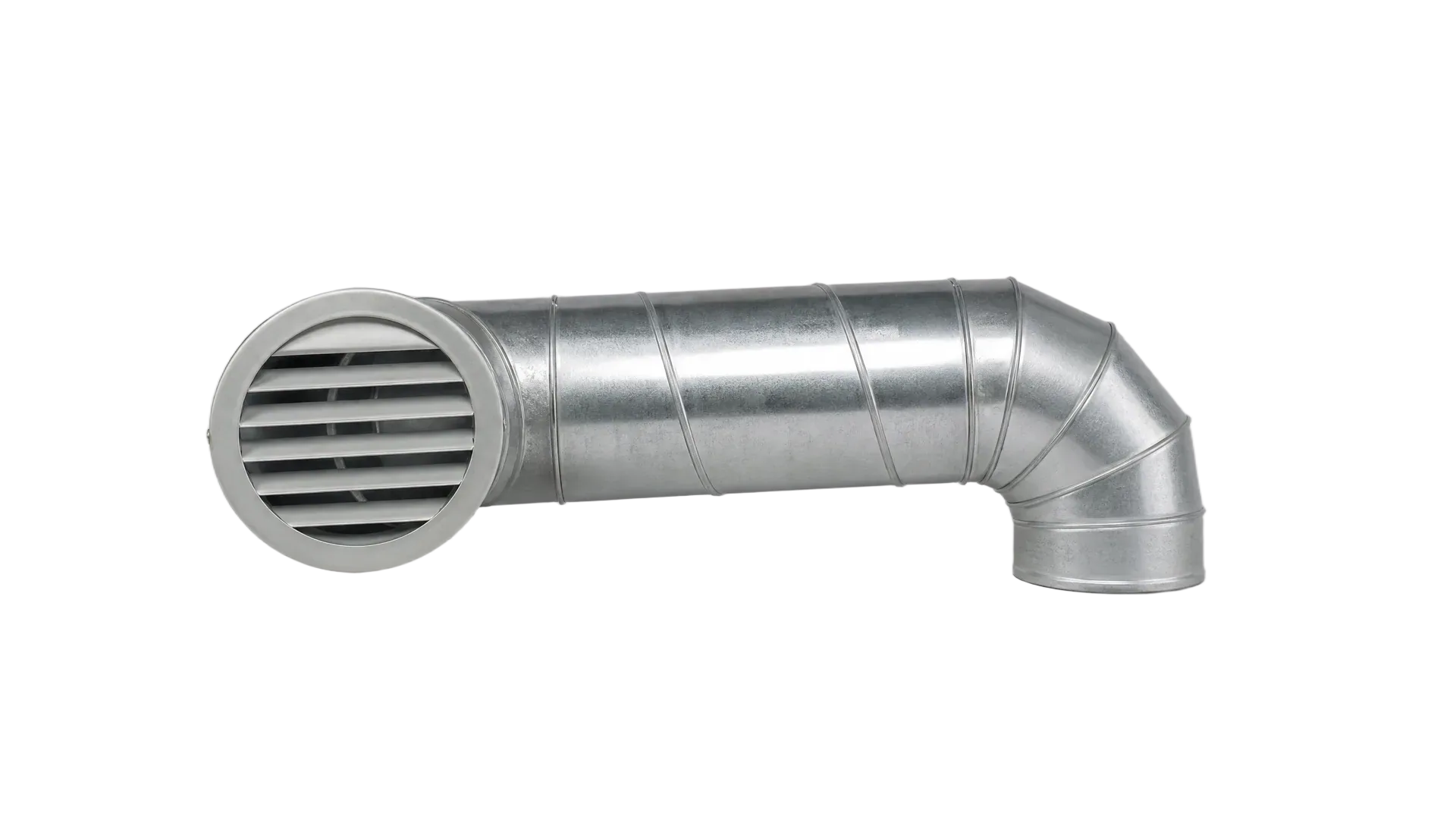

Clean duct run
Metal ducts stay dry and bare, with no dust clinging to the seams. Air moves through without that musty push when the furnace or AC starts. Nothing growing where the joists meet the metal.
A musty smell when the furnace or AC kicks on, dust that seems to come back days after cleaning, or a family member with allergies acting up more indoors than outside. Michigan summers get humid enough to leave ducts damp, and that moisture is what starts the problem. You want to know what to actually look for before you decide whether this is worth dealing with.
A smell that shows up only when the air is running, especially a sour or musty one, usually means moisture sitting somewhere in the ductwork. Dark specks around the vent covers or on the grille itself are the other giveaway, and you can often see those without taking anything apart. Humid summers here give mold what it needs: damp air moving through metal or flex duct that doesn't dry out between cycles. Once it's growing, every time the system runs it pushes that air through the whole house, not just the one room near the vent. If anyone in the house has allergies or asthma that flare up indoors more than outside, that's worth paying attention to alongside the smell and the spots.
Metal ducts stay dry and bare, with no dust clinging to the seams. Air moves through without that musty push when the furnace or AC starts. Nothing growing where the joists meet the metal.

Dark spots or a fuzzy film sit at the seams and joints near the drain pipes. Dust builds back up within days of wiping it down. The air smells musty the moment the system kicks on.
Walk the house and pay attention to what the furnace or AC stirs up. A smell that's stronger in one room than another, especially a bedroom near a return vent. Dust that settles fast on the same shelf or windowsill no matter how often you wipe it down. Sneezing or a stuffy head that eases up once you step outside. Check the vent covers themselves for dark specks around the edges, and look at the drip pan under the AC coil if you can get to it, since standing water there is what feeds growth in the first place. Left alone, it keeps cycling through air the whole household breathes, every time the system runs.




Your duct cleaning request goes to one local pro.
No fee to send it, and nothing to sign.

You open the living room windows for the first time since March, letting the afternoon air in. The sun catches the ceiling vent grille above the couch, and you notice the slats are gray with dust, thicker than you remembered. The side table under it has a fine layer too, the kind that comes back a day after you wipe it down. The furnace kicks on for one last run before you switch over to the AC, and a faint musty smell drifts down into the room. You stand there a second, looking at the dust on the lamp and the magazines, wondering how long it's been building up behind that grille.


Mold in a duct system almost always starts at a spot where metal meets moisture. Supply runs carry cold air in summer, and where they pass through a hot attic or an unconditioned crawlspace, the outside of the duct sweats the same way a glass of ice water does. That moisture sits on the metal, settles into the dust already lining the inside seams, and mold takes hold there first, usually within a few feet of the air handler or at a low point where a run sags and condensation pools instead of draining back. The furnace fan then pushes air across that spot every time it cycles, carrying spores down the line and out through the registers. That's why the smell is strongest right when the system kicks on and fades after a few minutes, and why it's often worse in whichever room sits closest to the return vent. A return pulling air from a damp basement will pull mold spores into the whole system before a single supply vent ever shows a sign of it.
At 20.03 cents a kilowatt-hour, running a blower longer than it needs to run costs you something real. A duct system clogged with dust and mold makes the furnace and AC push harder to move the same air, and that extra runtime shows up on the bill every month.
EIA-861 2025 statewide residential average
Technician inspects duct runs and the coil for mold growth
Negative air pressure gets set up to stop spores spreading
Agitation tools knock mold and dust loose from duct walls
A HEPA vacuum pulls the loosened debris out of the system

A duct system either has mold working in it or it doesn't, and the smell when the blower kicks on, the dust that comes back too fast, the allergies that flare up worse inside than out, tell you which one you've got. None of those signs fix themselves. They come from moisture sitting somewhere in the runs, and they stay until someone gets in there and cleans it out.
Finding the right person for that is its own chore. You'd be calling around, describing the smell and the dust to three or four different companies, then sitting with quotes trying to tell which one actually understood what you described. Here you fill out one request and it goes to a contractor local to Michigan, someone who works on duct systems through every humid summer and knows where mold sets up in a house like yours. One call, one visit, one person who already knows what you're dealing with before they walk in.



Explain it one time
Your request goes to one pro, not a list of companies.