
Clear and venting right
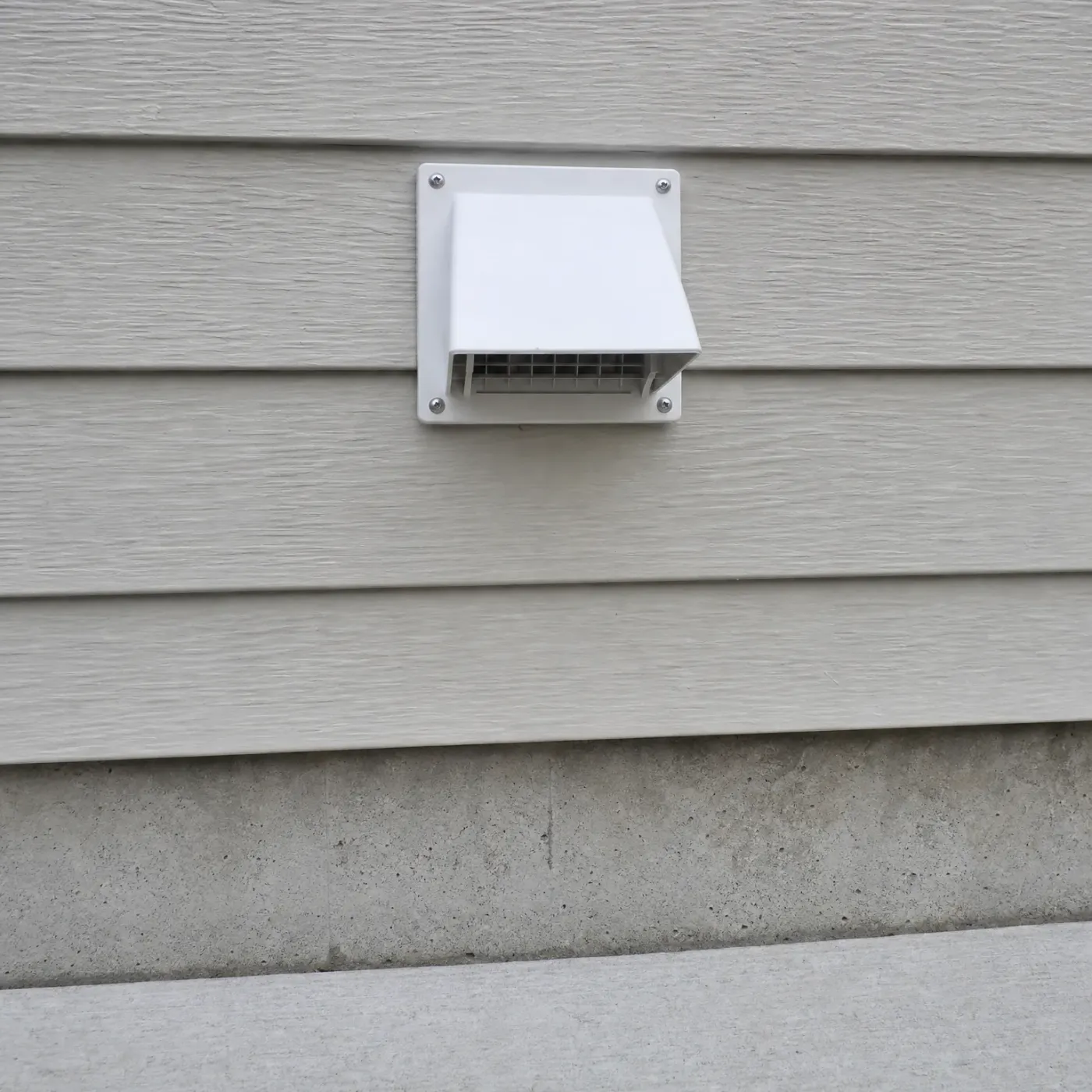
This is what a clear vent looks like from outside. Air pushes out in a steady stream and the hood's flaps swing open wide. Nothing holds the heat back, so it doesn't have a reason to back up into your laundry room.
 Match me with a pro
A local pro who cleans dryer vents gets in touch with you.
A hot laundry room in July makes sense. A hot laundry room in January doesn't, and that's usually when people notice something's wrong. Your dryer pushes heat and damp air out through the vent. If that vent is full of lint, the heat has nowhere to go but back into the room, and the air you're paying to condition just sits there.
In Michigan, that's a bigger deal than it sounds. Summers here are sticky already, so a laundry room that traps extra heat on top of the humidity gets uncomfortable fast. Winters are the opposite problem: most homes here heat with gas, and a dryer fighting a clogged vent runs longer to do the same job, which means more gas burned and more of that expensive electricity run through the blower motor.
A clogged vent doesn't announce itself. It shows up as a room that stays warm long after the dryer shuts off, towels that take two cycles instead of one, or a faint hot smell when it's running. By the time you notice, the restriction has usually been building for a while.
Finding someone to clear it out shouldn't be the hard part. You could spend an evening searching for vent cleaning companies near you, calling a few, describing the same problem three or four times, then sitting on quotes trying to figure out who actually knows what they're doing. Or you could skip all of that.
This page matches you with a contractor who handles dryer vent cleaning and works in your area, and that contractor reaches out to you directly. No more comparing strangers off a search results page or explaining your laundry room's quirks from scratch to each one. Just a straight line from the room that's too hot to someone who can look at the vent and tell you what's going on in it.
You run a load of laundry and the room ends up warmer than the rest of the house, even with the door shut and the furnace set low. It's not just a summer thing. You've noticed it in January too, and that's what makes you think it's not normal. You want to know if this is just how dryers work or if something's off.
A dryer is built to push hot, damp air outside through the vent, not into the room it sits in. When lint packs the vent line, that air has nowhere to go, so it backs up and spills out around the dryer door and drum. The room heats up because the dryer is doing the work of two or three loads just to dry one. In Michigan winters, with the furnace already running and windows shut, that extra heat and moisture has no way to escape, so the room feels warmer and stickier than it should, even on a cold day.

You pull the third load of the night out around nine, and the towels are still damp. You've run them twice already. The dryer's hot to the touch, the window's fogged over, and the room feels thicker than the rest of the house, like the air itself got tired. You crack the door to let it breathe and keep folding what's dry enough to fold. Outside it's sticky, the kind of July night Michigan does well, and you tell yourself that's the reason. But you ran a load in February and it felt the same. You stack the damp towels on top of the dryer to deal with after this one finishes, if it finishes.
A clogged vent doesn't just make the laundry room hot. It makes the dryer work harder to push air through a passage that's half blocked, and in a Michigan winter, with the furnace already running and the house holding onto every bit of that heat, you feel it most in that one room. Finding out whether it's actually the vent, and not something else in the wall or the duct run, usually means calling around to a few places, explaining the same thing each time, and waiting on quotes you then have to sort through. Handing that off means one contractor who works on vent cleaning in your area takes it from here and reaches out to you directly. You keep running loads in the meantime, but you stop being the one who has to track down who can look at it and when.
A dryer doesn't dry clothes by magic. It heats air, usually with a gas burner or an electric element, then pushes that hot air through the tumbling drum and out through the vent to the outside of your house. That's the whole design. The vent duct is the only path that heat is supposed to take. When the duct is clear, the hot, damp air travels maybe ten or fifteen feet and leaves through the hood on your siding, and the laundry room stays close to the temperature of the rest of the house.
Lint changes that. It's sticky with the same moisture the dryer is trying to get rid of, and it catches on every seam and bend in the duct. Over time it builds up along the inside walls of the vent until the opening left for air is a fraction of what it should be. The dryer doesn't know the path is blocked. It keeps heating and keeps blowing, and the air that can't get out through a narrow duct has only one other direction to go, which is back into the room around the door and the seams of the duct itself.
Some dryers respond to that trapped heat by running longer cycles, which just adds more warm air to a room that's already holding too much. And if the outside hood's damper is stuck shut with lint, the air never gets past the wall at all. It's not the season making your laundry room hot. It's the path.
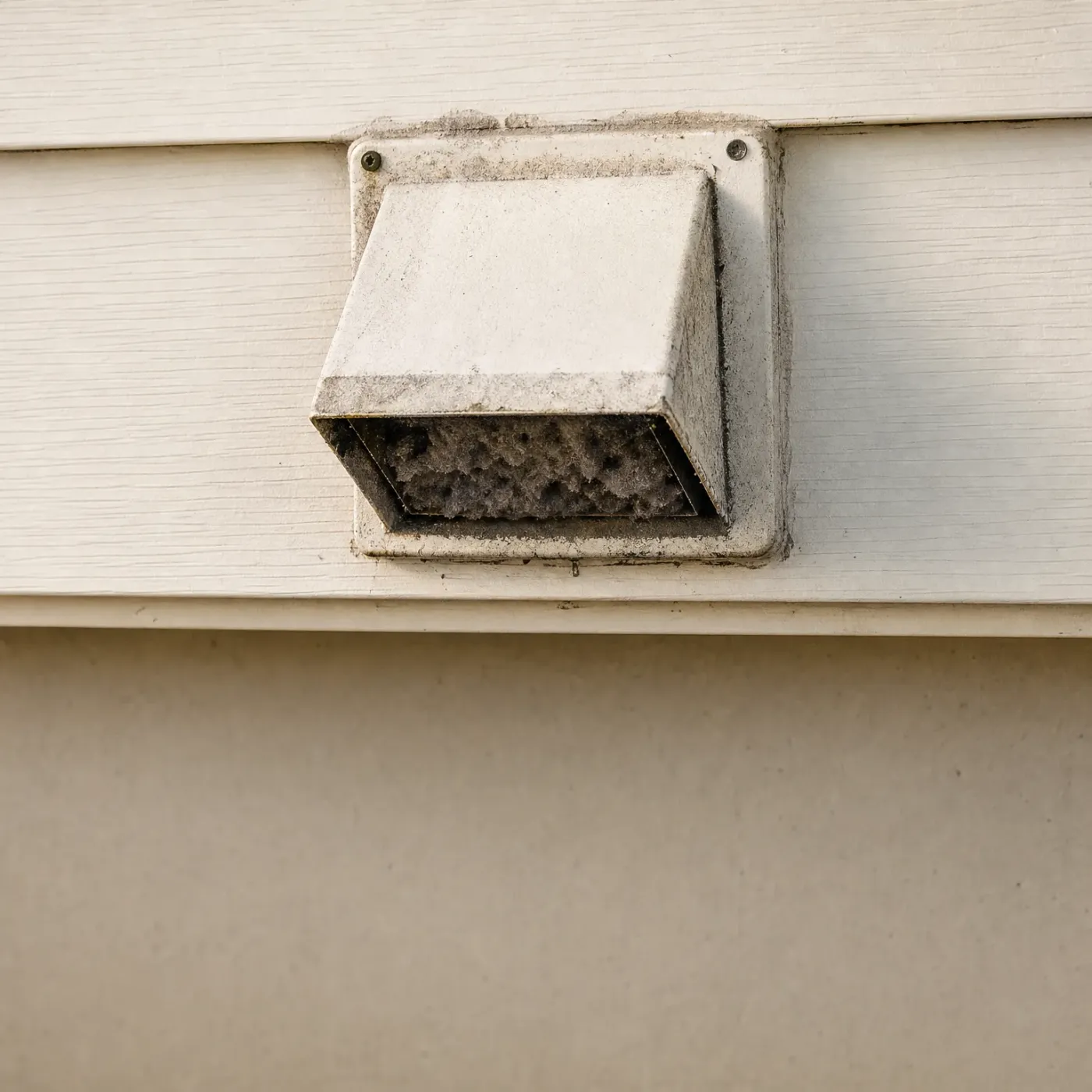
Lint builds up along the vent's inside wall, narrowing the path
The dryer senses the blockage and runs its heating element longer
Hot, damp air backs up through the duct instead of venting outside
That trapped heat pushes back into the laundry room through the dryer and seams




A clogged vent makes your dryer run longer to finish each load, and every extra minute it runs is pulling power at 20.03 cents a kilowatt-hour. That heat you feel in the laundry room is electricity you already paid for, going nowhere.
EIA-861 2025 statewide residential average
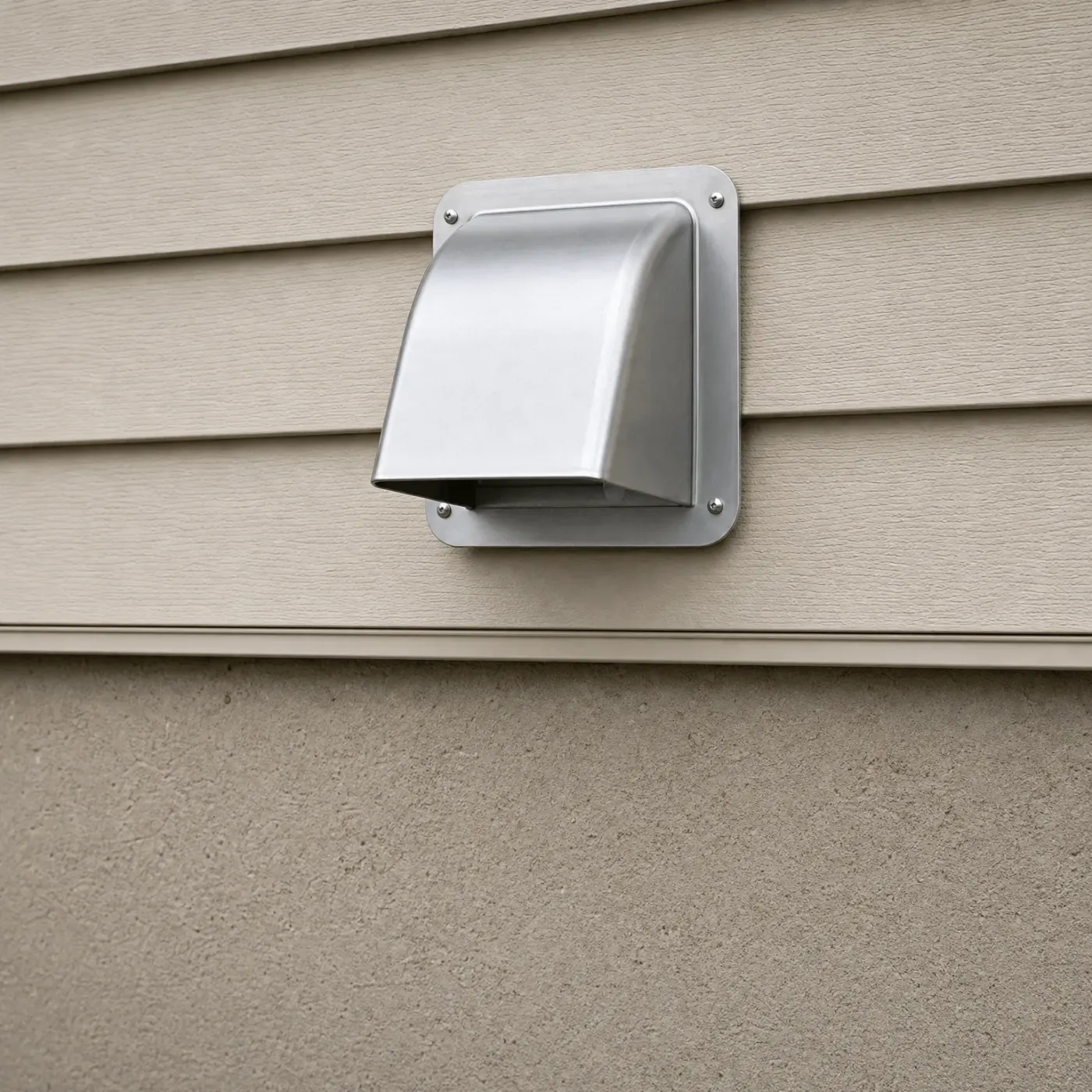
This is what a clear vent looks like from outside. Air pushes out in a steady stream and the hood's flaps swing open wide. Nothing holds the heat back, so it doesn't have a reason to back up into your laundry room.
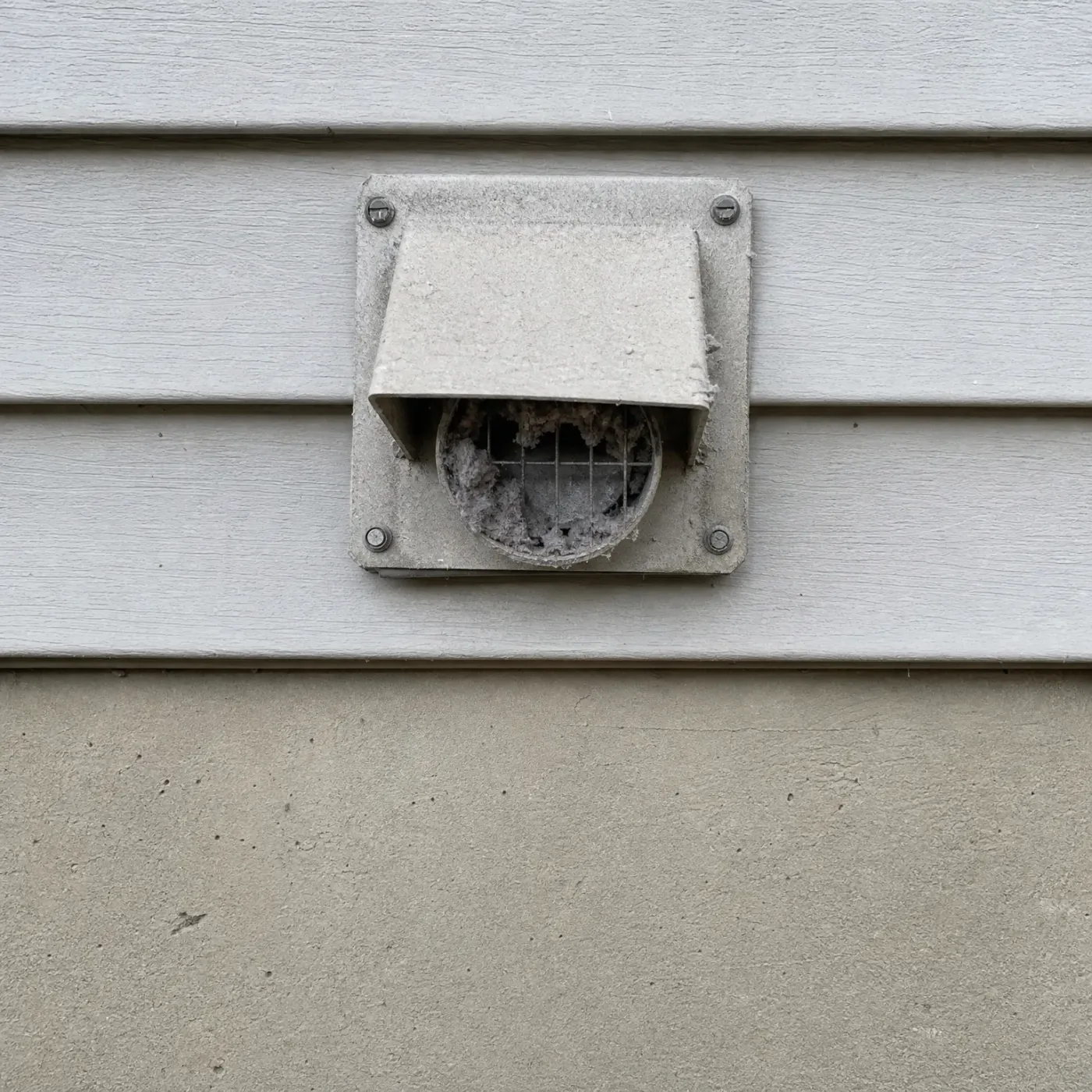
This cap is choked with lint, the screen packed solid and dust coating the siding around it. Air can't get out, so the heat and damp from your dryer have nowhere to go but back inside.
A hot laundry room, especially in the middle of a Michigan winter, means heat and damp air that should be going outside are backing up into your house instead. The vent is blocked, the dryer is working harder than it should, and the gas or electricity paying for that extra work is money spent heating a room that doesn't need it. That part's been covered above. What's left is doing something about it, and that usually means finding a contractor who clears dryer vents, checking they're licensed, calling to see if they're free, explaining what your laundry room's been doing for months, then doing it all over again with the next one so you've got something to compare. Getting matched with someone who already does this work and having them reach out to you skips that part. The room will still need the vent cleared. But you won't be the one tracking down who can do it.

Answer a few questions about the dryer vent cleaning and skip the search.