Once you send the form, finding a pro is off your list.
A dryer that's hot to the touch but won't dry your clothes usually means heat has nowhere to go. The vent is blocked somewhere between the drum and the outside wall, and that hot, damp air just sits in the drum with your clothes instead of leaving the house.
In Michigan, lint mixed with summer humidity packs into a vent run tighter than dry lint would on its own. That's often why a dryer runs hot, runs long, and still leaves everything damp at the end of the cycle. Running it again doesn't fix the airflow problem, it just adds another hour of gas or electric to a bill that's already not cheap here.
A blocked vent is also worth taking seriously beyond the wet clothes. A gas dryer pushes exhaust through that same vent, and when it can't get out, that's not something to leave for later.
Clearing the vent is a job for someone who can get to the full run, not just the lint trap you empty every load. That means finding a contractor who does dryer vent cleaning, checking that they know vent work and not just general duct cleaning, calling a few, explaining what your dryer's been doing, and sitting with quotes trying to figure out who's worth the call back.
Send the form below instead and that part stops being yours to manage. You won't be the one tracking down who's available or repeating the same explanation three different times. That work moves off your plate, and a contractor who knows vent systems takes it from here.
A hot dryer that won't dry means the heating element or burner is working fine, but the airflow that's supposed to carry moisture out of the drum isn't moving. Heat builds up inside the dryer with nowhere to go, so clothes come out hot and still damp, sometimes heavier than they went in. The usual cause is lint packed into the vent line itself, not the trap you clean every load. Michigan summers run humid, and that extra moisture in the air makes a half-blocked vent fall behind faster than it would in a dry climate, since the dryer is already fighting more water per load. A clogged vent also means more heat and moist air stay trapped near the duct work and the back of the dryer, which is worth noticing if that run passes close to anything else in the house. Left alone, this doesn't fix itself, the blockage only gets worse with each load. Clearing the full vent run, not just the trap, is what gets the airflow back and the drying time back to normal.
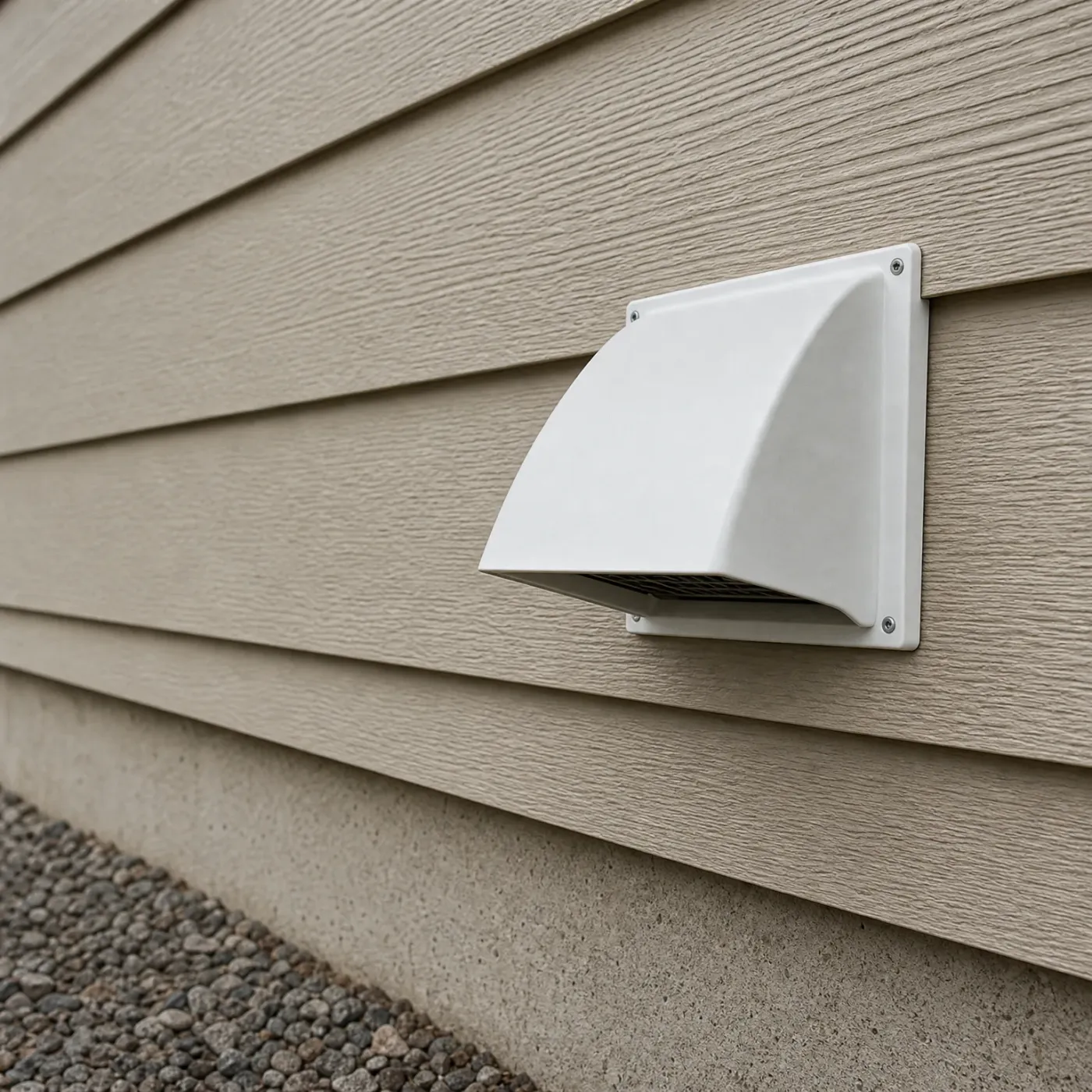
Air moves freely through the vent and out the hood, carrying the moisture with it so the flap swings open on its own.
Lint has packed the hood shut and is staining the foundation below, so the heat your dryer makes has nowhere to go.
Clear It Yourself or Call In Help
Clean the vent yourself
You can pull the dryer out, disconnect the duct, and vacuum out what you can reach from both ends.
A long brush from the hardware store reaches a few feet further into the duct than a vacuum hose alone.
You won't see what's packed in the middle of a run that bends through a wall or goes up two stories.
If the clog is at the roof hood or behind drywall, you're stuck without the right tools to get there.
Michigan winters mean you're doing this in a cold garage or basement, not exactly a quick weekend task.
Get it wrong and the vent looks clear near the dryer while the real blockage sits untouched further down.
Have it cleaned professionally
A contractor brings rotary brushes and cameras that reach the full length of the duct, not just the first few feet.
They can tell you if the clog is lint, a bird's nest, or a crushed section of flex duct behind the wall.
Once the form is sent, you're done hunting for someone, calling around, or explaining the problem twice.
They check the vent hood flap and the duct's full run, not just the section behind the dryer.
With gas dryers, a blocked vent also matters for combustion byproducts, something worth having someone qualified look at.
You skip the back and forth of comparing quotes and just get the vent cleared.
1
Hot, damp air leaves the drum and enters the duct.
2
Lint snags on duct seams and screws along the way.
3
Airflow slows as more lint collects at the narrow points.
4
Moist air backs up into the drum instead of venting out.
Before you get your dryer vent cleaningAfter you get your dryer vent cleaning
Stop chasing a dryer vent pro
Answer a few questions instead of calling shop after shop.
After you send the request, you're done searching.
You run the cycle, the clothes come out hot, and the collar or waistband is still damp. So you run it again. Somewhere behind the machine the inside of the vent is coated in lint, and the duct has lost the width it needs to carry air out to the hood. A dryer that keeps running past its normal cycle is also running up a bill that's already higher here than in a lot of places. Left long enough, the heat that can't escape stays in the duct and in the wall around it, and lint that dry is what feeds a dryer fire. You're not imagining it taking longer. That's exactly what a choked vent does.
The vent flap swings open
Warm air pushes the hood open from the inside and clears out right away. Nothing collects around the opening, and the siding under it stays clean. This is what a dryer vent looks like when a load actually finishes in one cycle.
The vent flap stays shut
Lint has built up around the opening and the hood barely moves when the dryer runs. Some of it has settled on the siding below. The air your dryer is pushing has nowhere to go, so it backs up into the drum with your clothes.
Power costs 20.03 cents per kilowatt-hour statewide
A clogged vent means your dryer runs two or three times to do one load's work, and at 20.03 cents per kilowatt-hour, that extra cycle shows up on your bill every time you do laundry. A clear vent gets the moisture out in one run instead of three.
EIA-861 2025 statewide residential average
Why the lint builds up so fast
Michigan summers run sticky, and a dryer pulling in air that's already heavy with moisture has to work harder to push it back out through the vent. That slows the airflow even before lint gets involved. Once lint starts collecting along the duct, the same humid air has less room to move and carries less heat out with it. The drum stays warm because the element or burner is doing its job. The air around your clothes just isn't leaving fast enough to take the moisture with it. A vent that's narrowed by lint and fighting humid air on top of that reaches the point where one cycle can't finish the job anymore.
Gas dryers still need to vent fully
Most homes in Michigan heat with gas, and plenty of gas dryers too, which burn fuel to make heat rather than relying only on electric coils. A gas dryer produces moisture from combustion itself, on top of the water coming out of your clothes, so there's more humid air that needs a clear path outside. If the vent is restricted, that air has nowhere to go but back into the drum. With power costs what they are here, running a gas dryer twice to finish one load still costs you electricity for the extra cycle, even though the heat source itself runs on gas.
A hot dryer with wet clothes means the vent needs clearing
That's the answer. Heat is building up with nowhere to go, and the fix is getting the duct clear from the drum to the outside wall, not a new heating element or a new dryer. Everything above shows the same thing: lint narrowing the path, airflow dropping, moisture backing up into the drum instead of leaving the house.
You don't have to find out who does this kind of work, call a few of them, explain the dryer and the extra cycles and the hot collar on every load, then sit with quotes trying to figure out who's worth having out to the house. Send the form and that part is off your plate. Someone qualified to clear the vent takes it from there.