Unfinished basement with concrete floor and walls, exposed wood joists, steel support columns, and two furnace-type units connected to sheet-metal and flexible insulated ducts.

Done looking for a duct system pro

Signs of leaky ductwork in Detroit, MI

A duct that leaks sends air you paid to heat or cool into the attic or crawlspace instead of your rooms. Below are the signs that point to it: rooms that won't hold a temperature, a gas or power bill that keeps climbing, dust around the vents. Once you send the form, finding someone to look at your ducts is off your plate.

Hand it over

A leaky duct shows up as rooms that never feel right. One bedroom runs cold while the rest of the house is fine, or the upstairs stays warm in July no matter how low you set the thermostat. That happens because the duct is losing air along the way, through a loose joint or a seam that's come apart, so less of what your furnace or AC makes actually reaches the room. You'll see it in the bill too, since the system has to run longer to make up for what it's losing. Check the vents themselves: weak airflow at a register, even with the fan on, often means the air is escaping before it gets there. Dust streaking around a vent cover is another sign, since air pushing out through a gap carries dust with it. None of this fixes itself. A duct that's leaking in January will still be leaking in July, costing you in both.

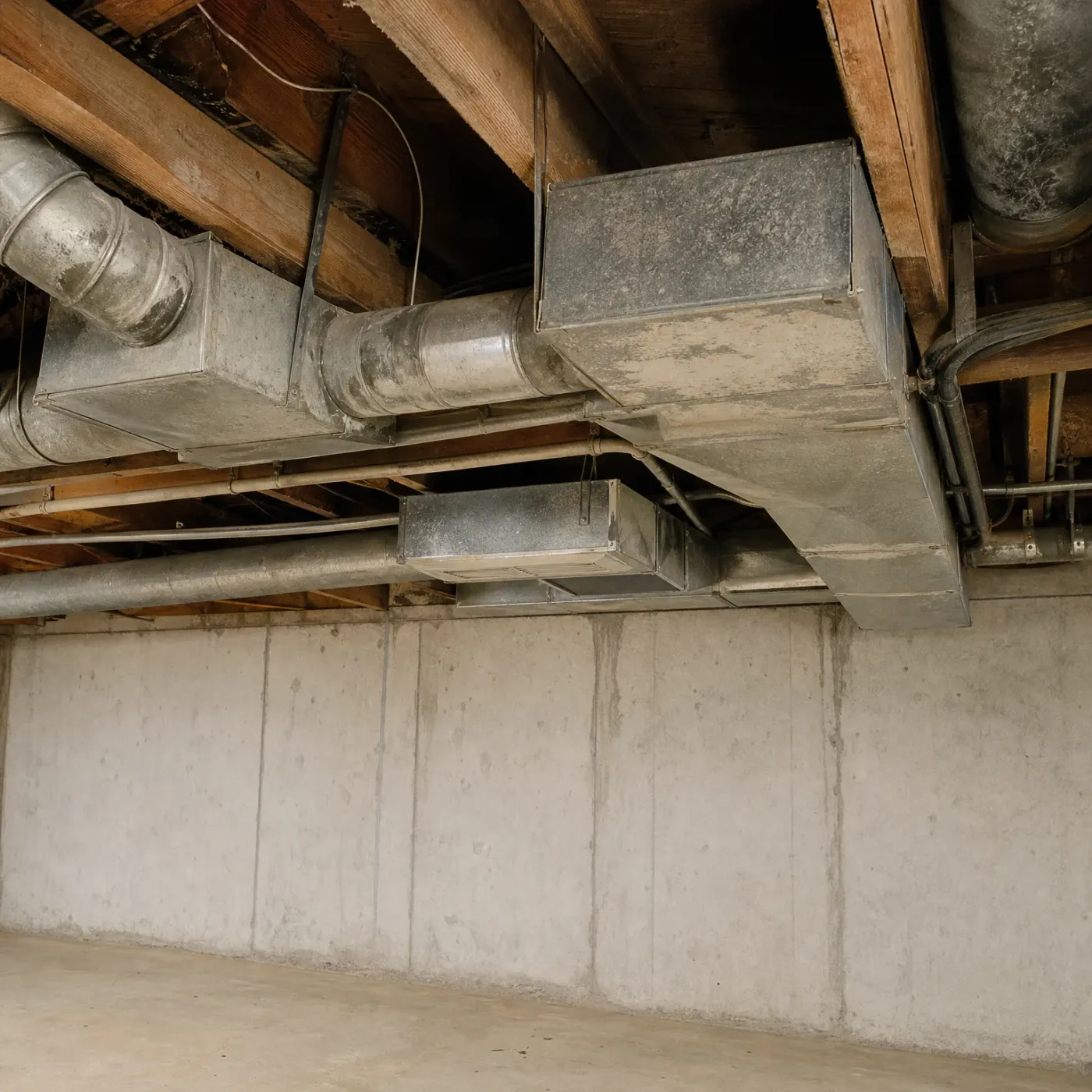
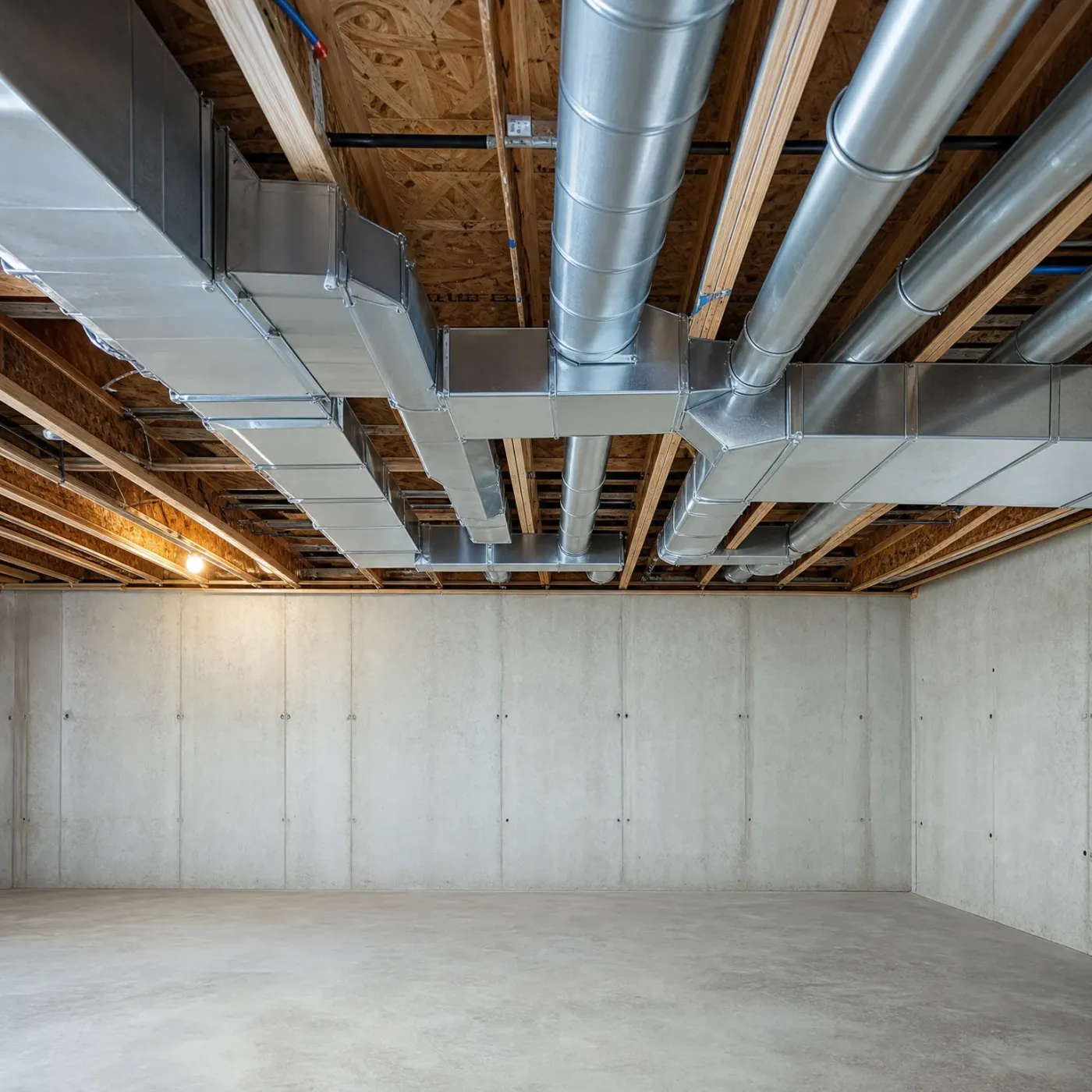
Empty concrete-walled basement room with exposed wooden joists and galvanized rectangular and round ductwork plus pipes running across the ceiling.
Before you get your ductwork cleaning
Empty concrete-walled basement room with bare floor and an exposed wood-joist ceiling carrying galvanized rectangular and round sheet-metal ducts, black pipes, and wiring.
After you get your ductwork cleaning

Why does duct leakage matter so much for a Wayne County house?

  • Half the homes here were built by 1956

    Half the homes in Wayne County were built in 1956 or earlier. Ductwork installed decades ago has had that much longer for joints and seams to pull apart.

  • Heat runs October through May

    Heat runs here from October through May, about eight months of the year. A leak in that duct wastes gas for most of the calendar.

  • Cooling runs June through August

    Cooling only runs June through August here, but a leaking duct still loses conditioned air for all three of those months, right when the house needs it most.

ACS 2020-2024 · NOAA nClimDiv 1991-2020

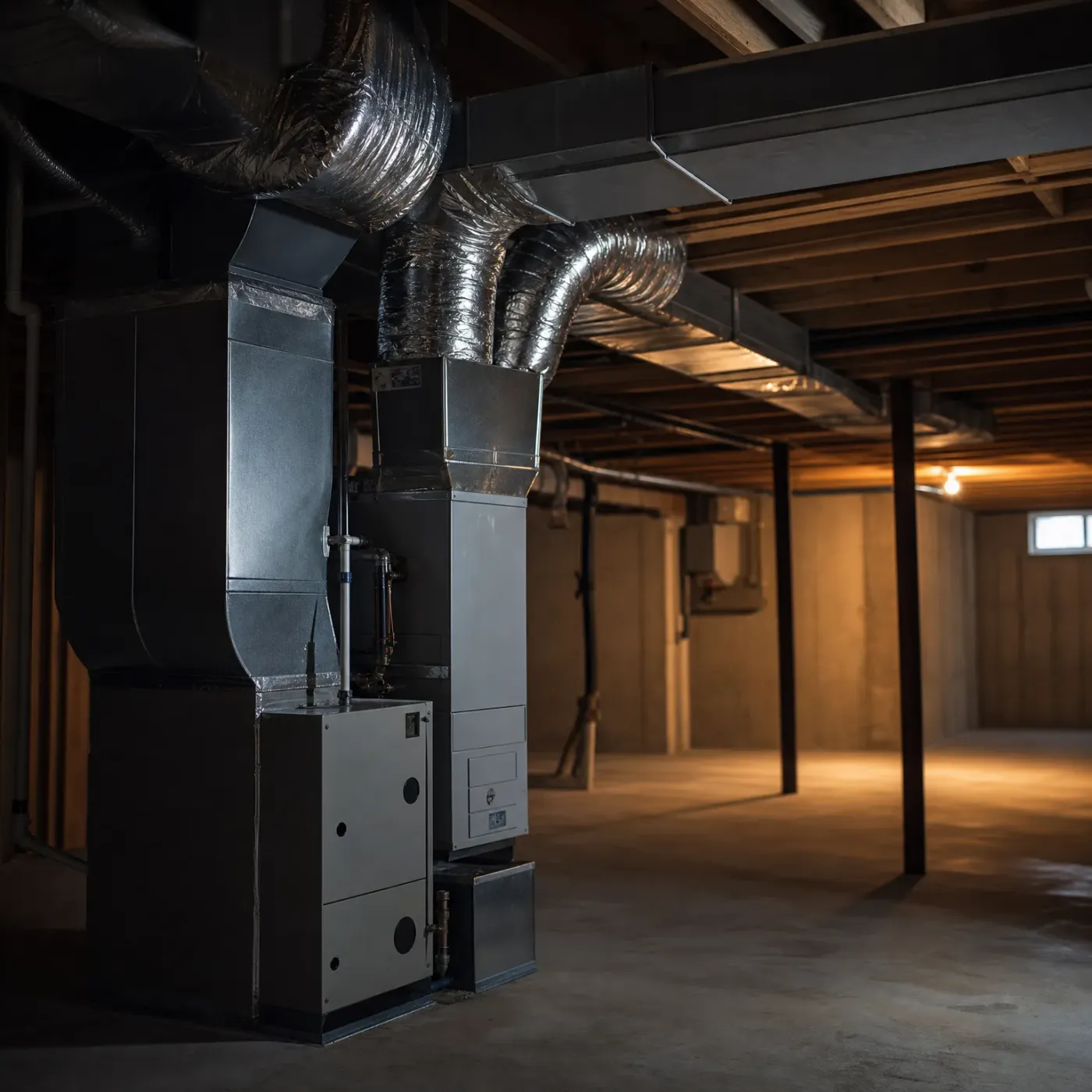
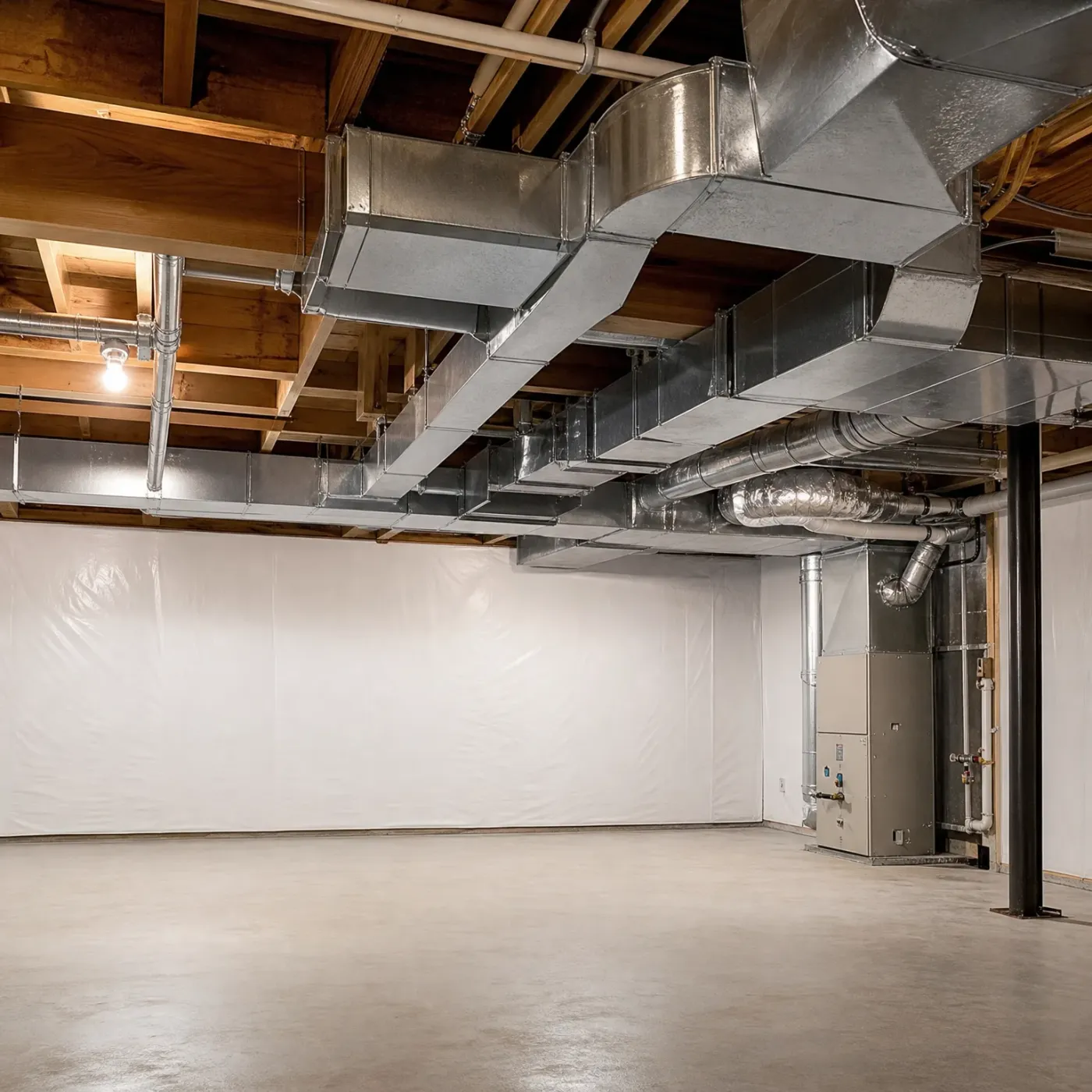
Empty basement with bare concrete floor, white plastic sheeting over one wall, exposed wood joists, galvanized sheet-metal ductwork and pipes overhead, and a furnace unit with a steel support column at right.

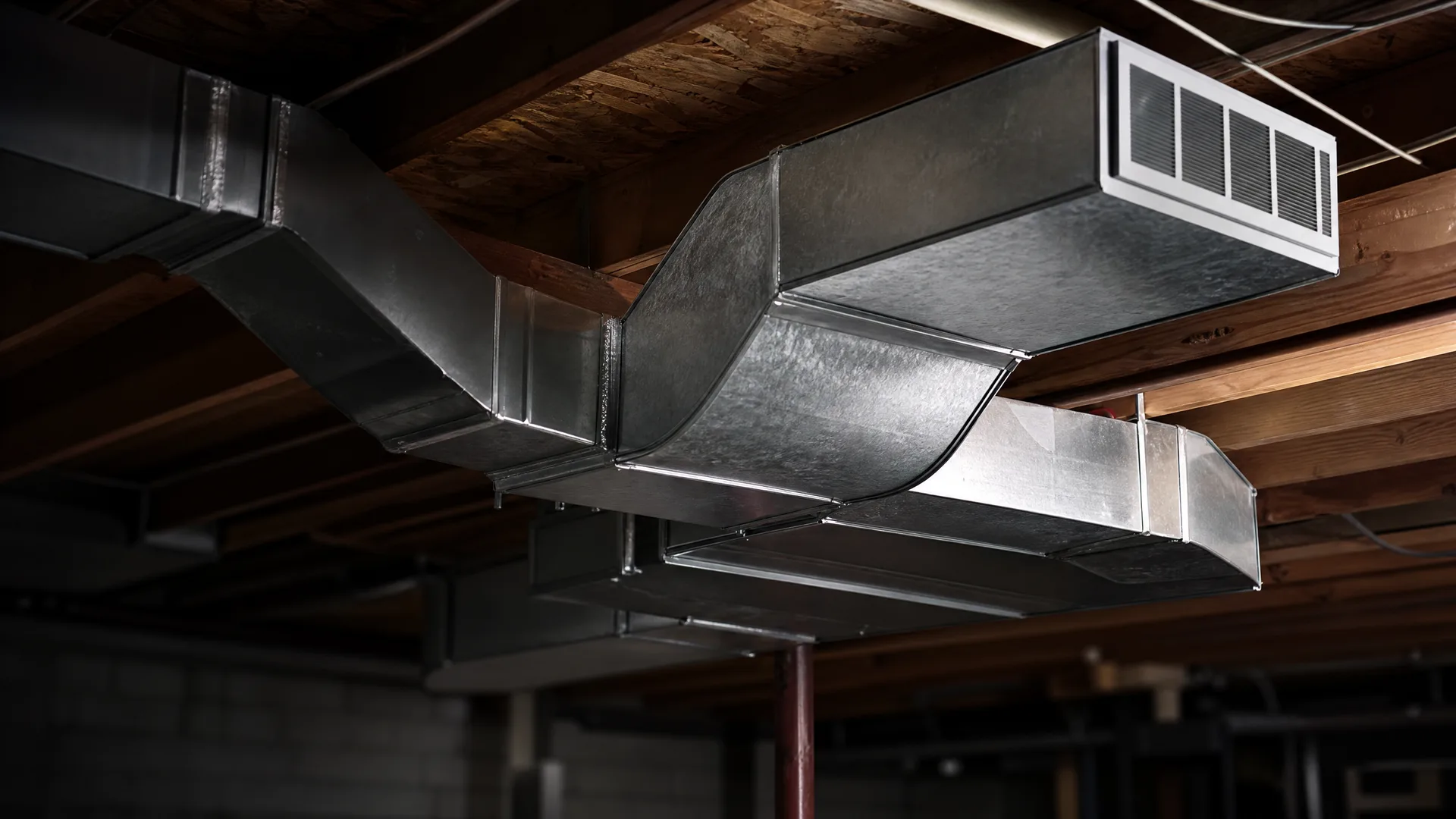
Sealed and sound

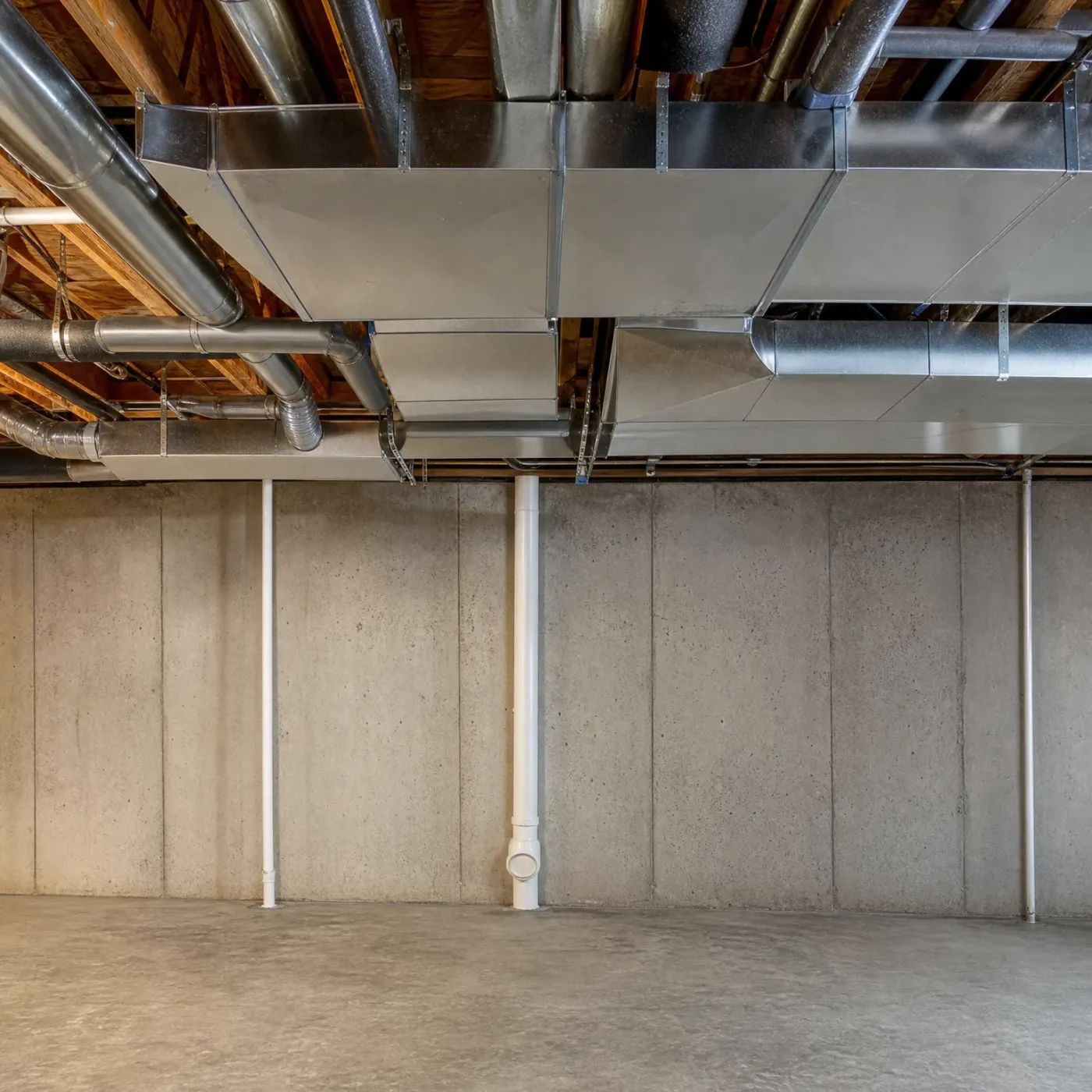
This is what a tight duct run looks like, joints snug, metal unbroken from the furnace to every branch. Air put in at one end comes out the registers, not into the joist bays or the dirt under the floor. The furnace cycles off when the thermostat is satisfied, because the air actually got where it was going.
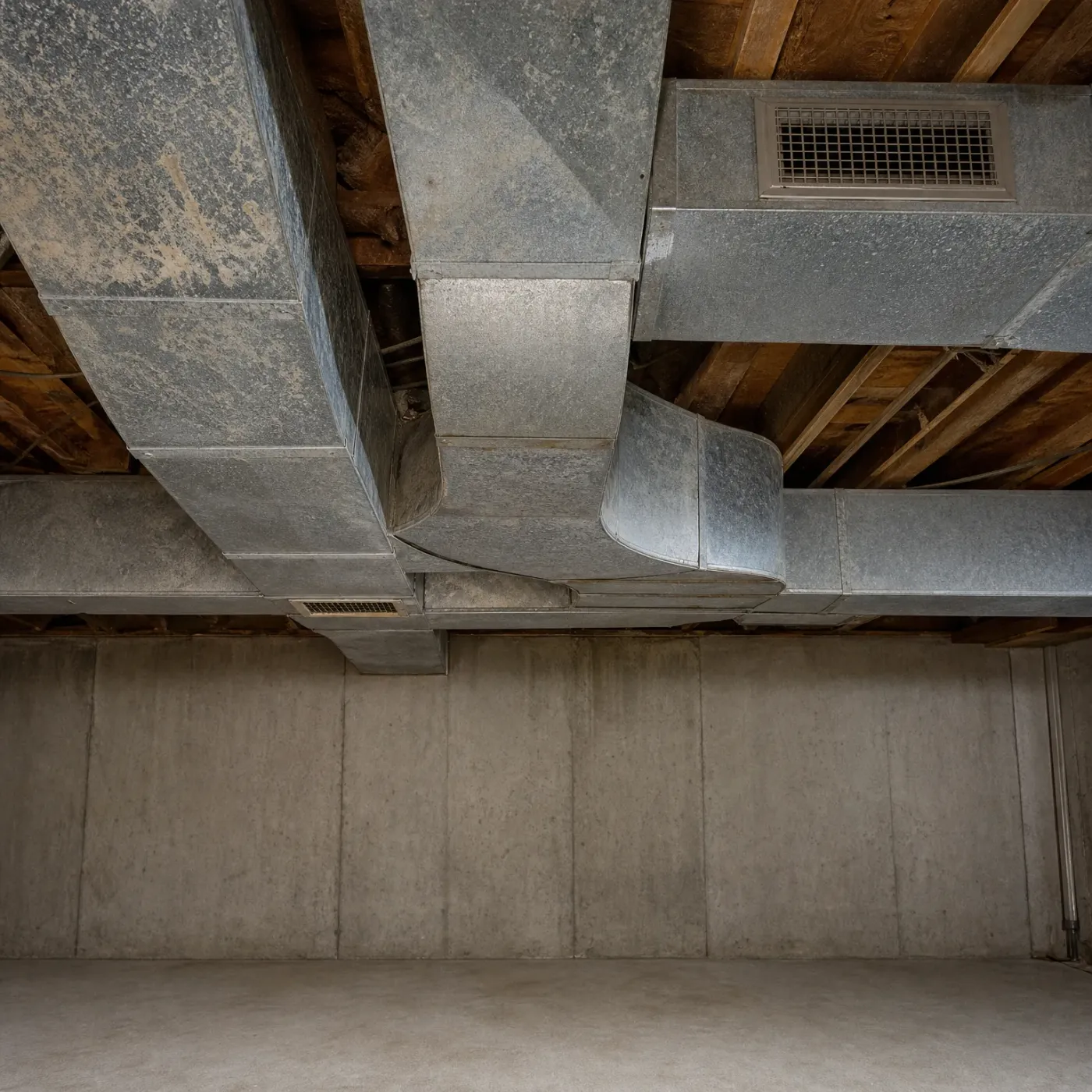

Galvanized sheet metal HVAC ducts with vent grilles run along a wooden floor joist ceiling above bare concrete walls and floor in an unfinished basement.

Leaking into the basement

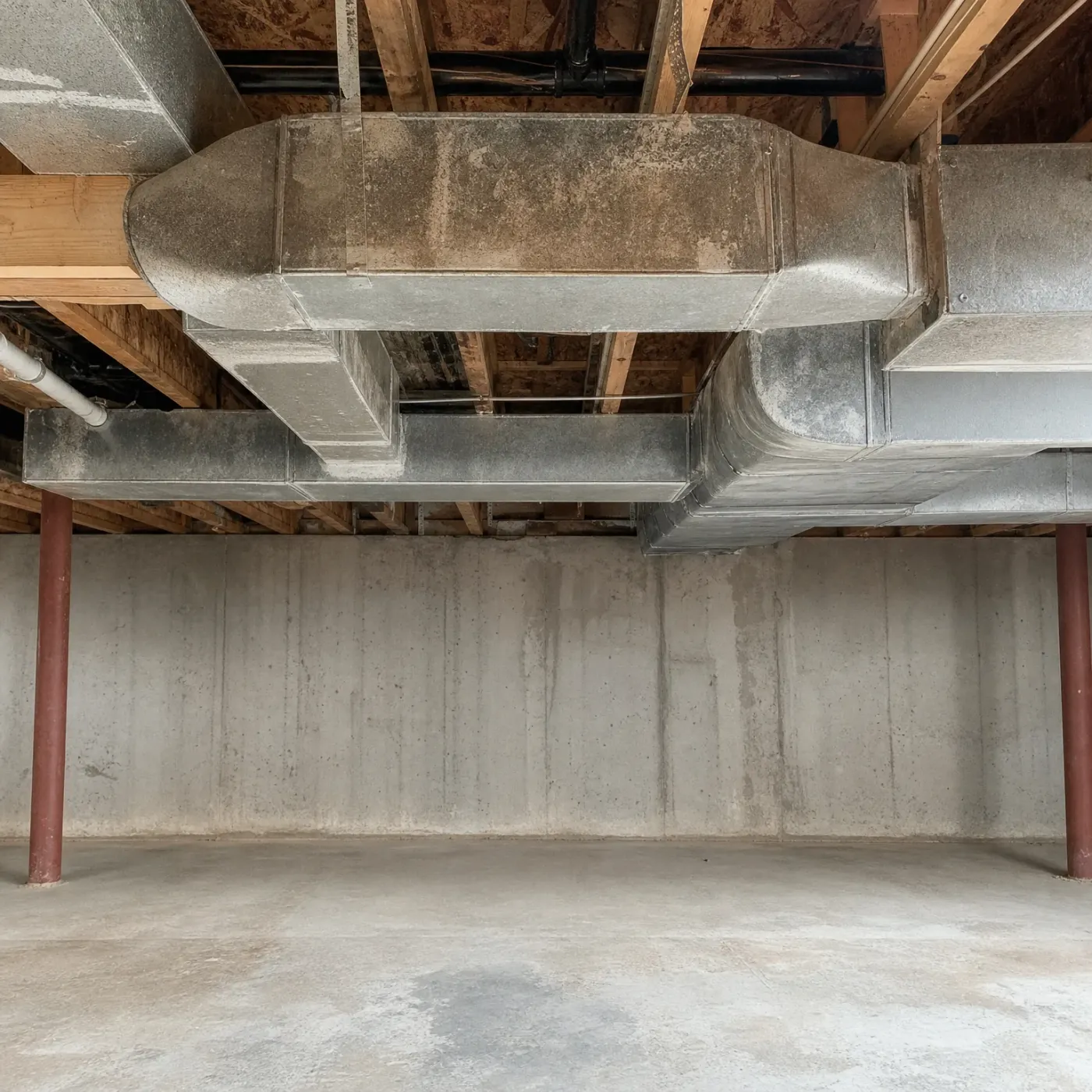
Here the ducts cut across the joists with turns and branches, and any gap at a seam or a boot lets heated or cooled air spill out before it reaches the registers. You won't see it happen. You'll feel it as a room that won't warm up and hear it as a furnace that runs longer than it should.

What would you actually notice in your own house

Walk your ducts in the basement or crawlspace and look for a dark, sooty smudge at the joints. That's air escaping and pulling dust with it. Press a hand near a seam when the furnace is running and feel for a draft. Upstairs, a layer of dust settles around the vents faster than it should, and the air coming out of some registers feels weak compared to others. You might hear a faint hiss near the ductwork when the system kicks on. Left alone, the furnace and AC run longer to make up for the air that never reaches the room, and Wayne County power rates make that extra runtime show up on the bill month after month.

A smiling man in a green sweater stands at a kitchen counter with a dark mug, with an open-plan dining area and large windows behind him.
A smiling man in a dark green sweatshirt sits at a kitchen island with a gray mug, with cabinets, plants, and a dining area near large windows behind him.
A smiling bearded man in a green sweater sits at a white marble kitchen island with a mug, potted plant and bowl of fruit, in a bright white interior with open shelving and an arched doorway.
A smiling man in a gray long-sleeved shirt stands in a kitchen looking to the side, with open shelves of dishes, a white mug on the counter, a potted plant, and a view through a doorway into a living room.
Unfinished basement with poured concrete walls, a bare concrete floor, white PVC pipes running down the wall, and exposed sheet-metal HVAC ductwork beneath wood floor joists.
Metal unbroken, joints tight, every run carrying air straight from the furnace to the register where you need it.
Unfinished basement with bare concrete walls and floor, galvanized sheet-metal HVAC ducts running beneath wooden floor joists, and two red steel support columns.
Ducts slung between the joists with gaps at the seams, losing air into the basement before it ever reaches a vent.
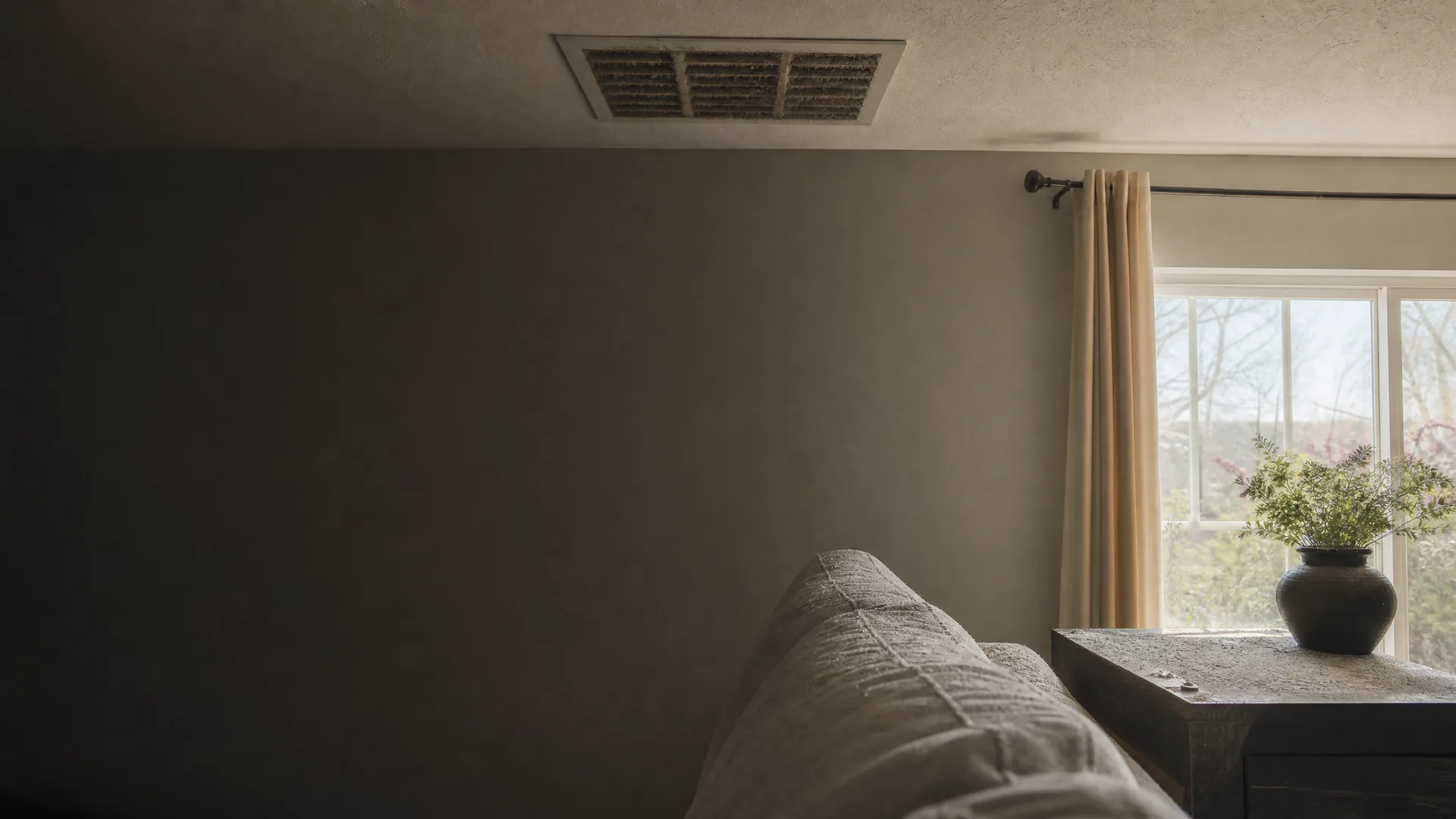
Dim interior corner of a room with a ceiling air vent, a beige wall, a cream curtain beside a window showing bare trees, and a dark ceramic vase of flowers on a wooden side table behind a light upholstered sofa back.

It's April, mid-morning, and the sun coming through the living room window shows it plainly. The ceiling vent grille has gone gray around the edges, a ring of dust thickened over the winter. The side table under it has a fine film across the top, the kind you can write your name in. You ran the furnace hard since October, and every cycle pulled air through a duct that isn't sealed where it should be, dragging dust out of the joist bays and into this room. The heat's off for the season now. The dust stays until someone wipes it down, and it'll start again when the AC kicks on this summer.

It's off your list after this

You've read the signs. A sooty ring around the grille, a room that never matches the thermostat, a gas bill that keeps climbing no matter how carefully you set the furnace. What you're left with is finding someone to open up that ductwork and look. That usually means a string of calls, explaining the same leak and the same symptoms to five different voices, then sitting with quotes you can't really compare because you don't know what any of them actually checked. Send the form instead and that work is off your plate. One contractor who serves Wayne County gets your request, not a batch of strangers bidding against each other. You still have a duct system losing air into the crawlspace or the attic every time the furnace runs, and that doesn't change until someone gets eyes on it. What changes is that you're no longer the one tracking it down.

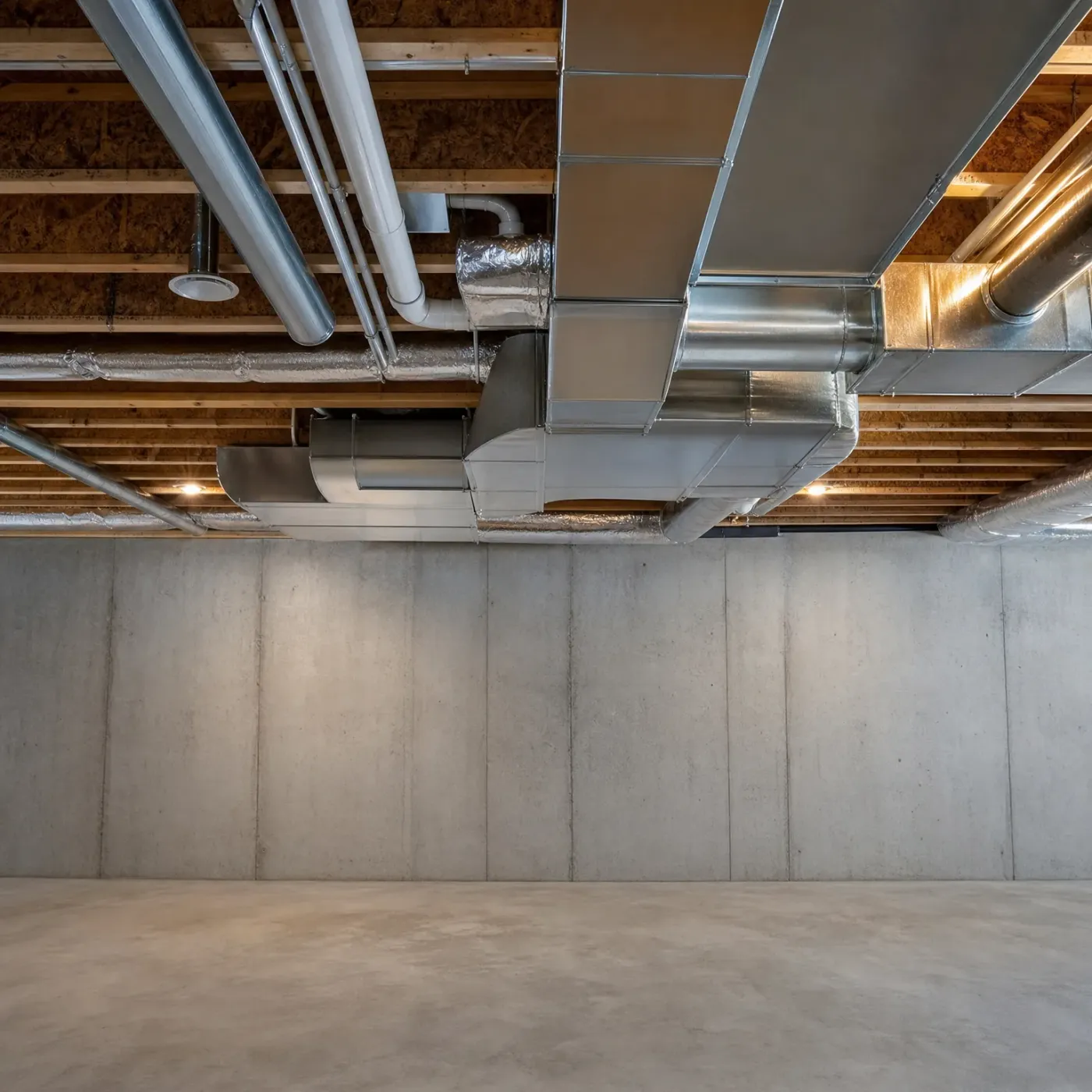
Empty basement room with bare concrete walls and floor, and an exposed wood-joist ceiling carrying sheet-metal ductwork, insulated pipes, and recessed lights.

Ductwork doing its job

Metal runs tight between the joists, seams snug from the furnace to every branch. Air moving through here stays inside the duct until it reaches a register. Nothing to see along the trunk but clean galvanized metal.

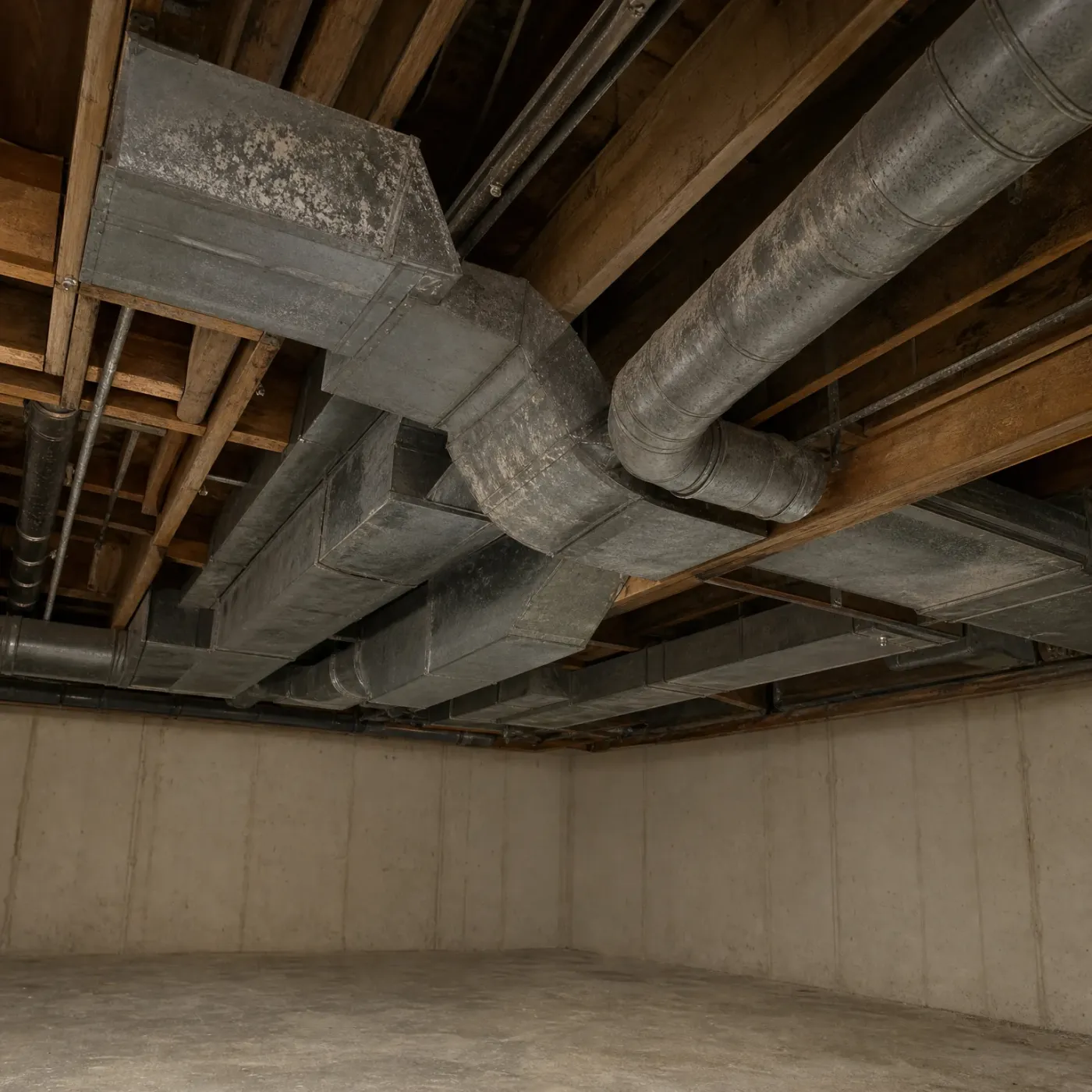
Basement ceiling with galvanized sheet metal ductwork, round pipes and rectangular plenums running between wooden joists above a bare concrete foundation wall and floor.

Ductwork losing air

Fittings and transitions like these are where a duct comes apart over time. Air finds the gap at a joint and goes into the basement instead of your rooms, and the register at the far end gets less than the furnace sent.

Leaky Duct or Sound Duct

Leaky duct

  • A room at the end of a long run stays colder in winter and warmer in summer than the rest of the house.
  • Dust collects fast around certain registers because the duct is pulling air from the attic or crawlspace, not just pushing it out.
  • The furnace or AC runs longer each cycle trying to make up for air lost before it reaches the vents.
  • Gas and power bills climb even though nobody changed how the thermostat gets set.
  • A sooty or gray ring builds up around a vent grille over a season.
  • Crawling the basement or crawlspace, you can feel air moving at a seam when the system is running.

Sound duct

  • Every room holds the temperature you set it to, upstairs and down, winter and summer.
  • Registers stay clean, no gray ring building up around the grille month to month.
  • The furnace and AC cycle off on schedule instead of running long to compensate.
  • Gas and power bills track with the weather instead of drifting upward on their own.
  • Metal runs stay unbroken from the furnace to each branch, with no gap at the joints to feel or hear.
  • Air put in at the furnace is the air coming out the register, not air pulled in from the joist bays along the way.
  1. Air leaves the furnace cabinet under pressure, pushed into the trunk line.

  2. A gap at a joint or seam lets some of that air escape early.

  3. Lost air fills the attic, crawlspace, or basement instead of a room.

  4. Less air reaches the register, so that room runs hot or cold.

A wooden table with a closed laptop, a ceramic mug of dark coffee, and a glass vase of eucalyptus stems beside a window, with a dark green kitchen cabinet, wooden counter, potted herb, cutting boards and bowl blurred in the background.

What a leaky duct is doing to your house right now

Air that leaks out before it reaches a register is air the furnace already heated or the AC already cooled. That means it runs longer to get the house to the same temperature, cycling on and off more than it should through a Wayne County winter or a muggy July. The parts of the house farthest from the furnace, an upstairs bedroom, a room over the garage, feel it first and worst. You've probably already shut a vent or thrown a space heater in that room without knowing why it never evens out.

If the duct runs through an attic or crawlspace, the lost air carries moisture with it, and that moisture sits against wood and insulation it was never meant to touch. None of this gets fixed by guessing. It takes someone looking at the actual runs in your basement or crawlspace, which means finding a contractor who does duct work, not just furnace repair, calling around to see who has the equipment to check for leaks, and explaining the same cold-room, high-bill story more than once before anyone shows up to look.

A light gray sofa with gray and beige textured throw pillows and a cream knit blanket beside a white-framed window, with a small round side table holding a ceramic vase and potted greenery.

Power here costs 20.20 cents per kilowatt-hour

At 20.20 cents per kilowatt-hour, every bit of conditioned air your ducts lose into the attic or crawlspace costs more to replace than in most places. A leak that would be a minor waste elsewhere shows up faster here, in a bill that keeps climbing while the house still won't hold its temperature.

EIA-861 2025

A smiling man with short dark curly hair and stubble, wearing a navy T-shirt, sits on a beige sofa looking down toward a dark object in the foreground, with a living room, round mirror, lamp and bright window behind him.
A bearded man in a red and dark plaid flannel shirt looks out a frost-edged window at a snow-covered yard, with a gray mug on the sill in the foreground.

What the signs add up to

  • A room that never matches the thermostat, dust around certain vents, and a gas or power bill that keeps rising together point to leaky ductwork.
  • Checking the ducts yourself means crawling the basement or crawlspace with a flashlight looking for soot marks and gaps at the seams.
  • Confirming a leak and finding its exact location usually takes someone who can pressure test the system and trace every run.
  • Wayne County's gas and power rates mean a leak here costs more in wasted energy than the same leak would somewhere cheaper.
  • Without a contractor lined up, you're left calling around, explaining the same problem more than once, and sorting through quotes on your own.
  • The signs point to one answer: air is leaving the ducts before it reaches your rooms, and someone needs to find where.

A room that runs hot or cold against the rest of the house, dust piling up fast around one vent, a gas bill that keeps climbing even though nothing changed on the thermostat. Taken together, that is a leaky duct, air you paid to heat or cool escaping into the attic, the crawlspace, or the basement before it ever reaches you. You can confirm part of this yourself. A flashlight in the crawlspace or basement will show soot marks at the joints, and a hand held near a seam while the furnace runs will sometimes feel the air leaving. What you can't do without the right tools is pressure test the whole system and trace every run to find each gap, especially the ones behind a wall or above a ceiling where you can't see or reach. In Wayne County, with gas heat running October through April and power priced the way it is, a leak like this costs more here than it would somewhere with cheaper rates. The signs don't need more watching. They point to one answer, and the only question left is where along the run the air is getting out. Finding that out usually means getting a contractor into the basement or crawlspace with a pressure gauge, rather than more guessing from the living room. Once you send the form, you're done hunting for someone to call, explaining the same symptoms twice, and weighing quotes against each other. That part of the job is no longer yours to carry.

Galvanized sheet metal HVAC ductwork with a white vent grille, mounted against wooden floor joists in a dim basement with concrete block walls.

Stop chasing a duct system pro

Duct and vent cleaningDucts or ventsWayne County, MI
Step 1 of 2

What ZIP code is the job in?