Profile view of a bearded man wearing a dark baseball cap and a dark gray T-shirt against a plain off-white background.

Signs your ducts need cleaning in Flint, MI

Duct and vent cleaningDucts or ventsGenesee County, MI
Step 1 of 2

What ZIP code is the job in?

Dust that resettles within a day or two of cleaning, musty air when the furnace or AC kicks on, and more sneezing or coughing indoors than outdoors are the clearest signs your ducts need cleaning. Registers that look dusty right after you wipe them, or a visible buildup inside the vent covers, point the same way. In Flint, furnaces run hard through a long winter and the AC runs hard through a muggy summer, so air moves through the ducts for most of the year, and whatever is sitting in them gets pushed into every room on a regular schedule. If someone in the house has allergies or asthma, you may notice symptoms get worse specifically when the system is running. Rooms that collect dust fast even after you've cleaned them, or a system that seems to be working harder than it used to for the same comfort, are both worth a closer look at what's inside the ducts themselves.

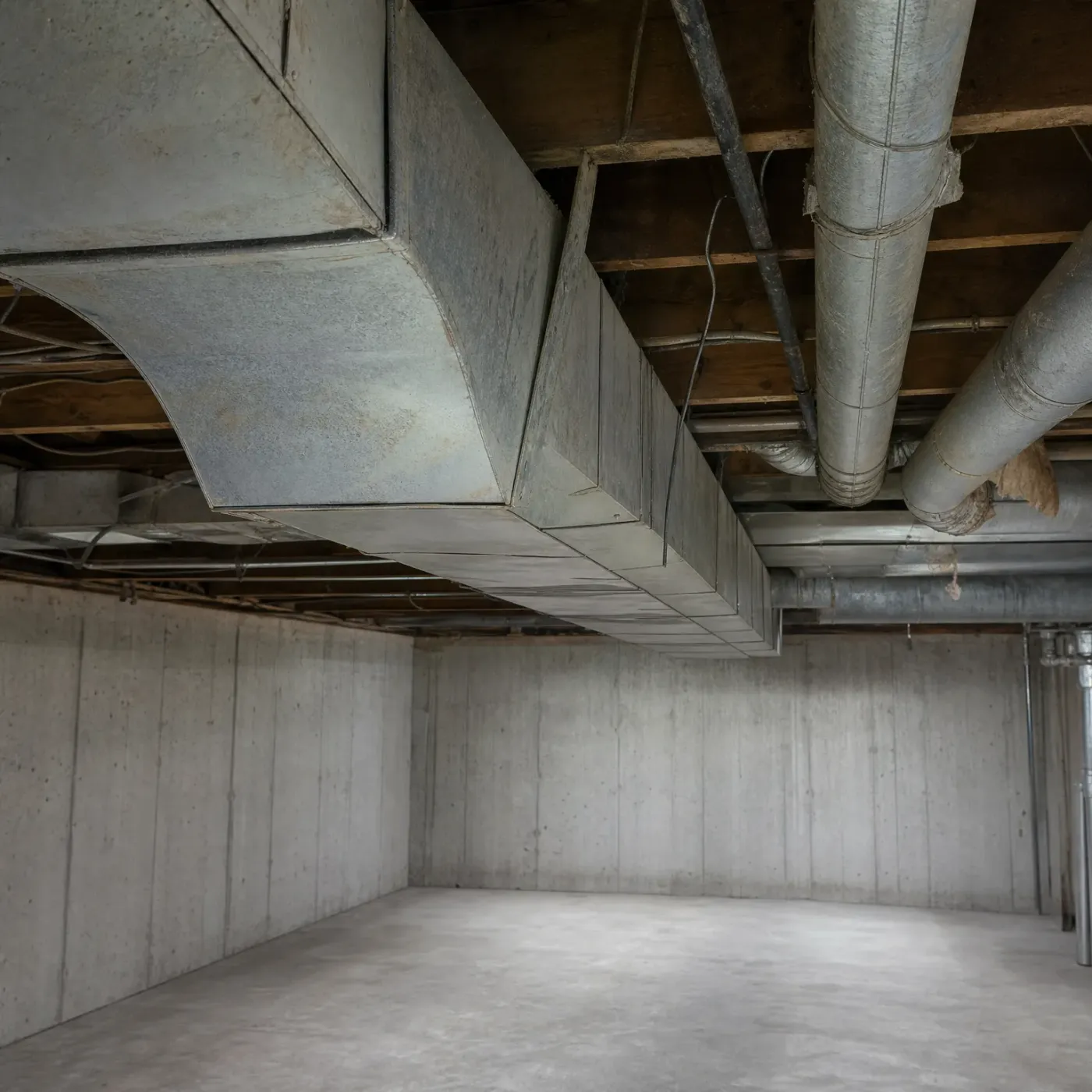
Empty unfinished basement with bare concrete floor and wall, wood-framed stud walls, exposed joists, galvanized HVAC ducts and pipes overhead, a steel beam and red support column, and a single bare bulb light.
Clean metal ducts like these move air without adding dust or odor back into the rooms they feed.
Empty concrete-walled basement with bare floor, showing large galvanized sheet-metal HVAC ducts, insulated pipes, wiring and wooden floor joists overhead.
Dust or dark staining around the seams and joints here means the system is feeding that into your air.

Why does Genesee County dust and age matter for your ducts?

  • Half the homes here were built by 1969

    Half the homes here date to 1969 or earlier, long enough for ductwork to pick up years of dust, rust, or old insulation debris nobody's checked.

  • Heat runs October through May

    Eight months of furnace use pushes air through the same ducts over and over, so whatever's built up inside gets circulated all winter long.

  • Cooling runs June through August

    Three months of AC adds another stretch where the same ducts carry air through the house, giving buildup more chances to blow into your rooms.

ACS 2020-2024 · NOAA nClimDiv 1991-2020

A woman in a cream cowl-neck sweater sits by a window with snow outside, in a dimly lit living room with a sofa, lit lamp, mirror, candles and a fireplace.
A woman in a gray turtleneck sweater sits beside a large window looking out at snow-covered evergreen trees, in a dimly lit living room with a lit fireplace, lamps, couch and houseplant.
A woman in a cream turtleneck sweater stands beside a large window with snow-covered ground and bare trees outside, in a dimly lit living room with lamps, a sofa and framed art.
A woman in a grey cowl-neck sweater stands indoors near a window, looking out at falling snow, with a lamp, framed picture and couch in the warmly lit room behind her.

Clean Ducts vs. Ducts Needing Cleaning

Clean Ducts

  • Air coming out of the registers matches the air in the room, no extra dust smell, no musty note when the furnace kicks on.
  • Wipe a register and it stays clean for weeks, not hours, because nothing behind it is feeding dust back into the room.
  • Reaching a hand just inside a supply vent comes back with a light film at most, not a gray coating.
  • Furnace filters last close to their rated time instead of graying out early from debris pulled in from the duct run itself.
  • No rust flakes or insulation crumbs show up around the register when you vacuum nearby carpet or flooring.

Ducts Needing Cleaning

  • Registers go visibly dusty again within a day or two of wiping them down, even in rooms that stay closed up.
  • Turning on the furnace or AC sends a musty smell through the house that wasn't there a minute before.
  • Family members sneeze or cough more indoors than they do stepping outside, especially right after the system cycles on.
  • A flashlight down a supply register shows gray buildup or dark staining along the metal instead of bare duct.
  • Rooms farthest from the furnace get noticeably less airflow, as if something inside the duct run is choking it down.
  • Insulation debris or rust flakes turn up on registers or nearby surfaces with no other source in the room.
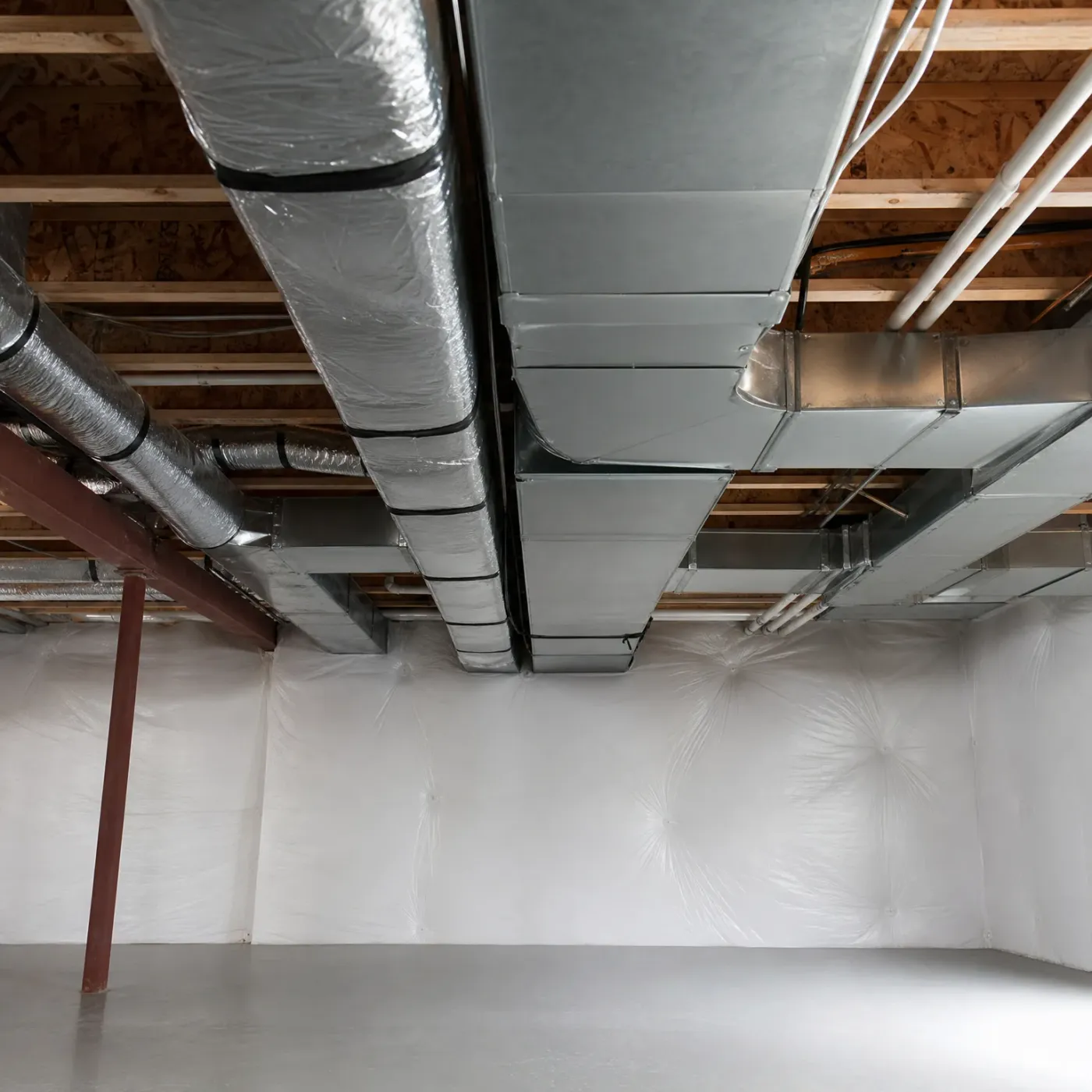
Unfinished basement with exposed wood joists, sheet metal and insulated flexible ductwork, white pipes, a steel support post, plastic-covered walls, and a bare concrete floor.

Ducts holding up fine

Sheet-metal trunk lines and flex runs like these, tucked between the joists, should look dry and intact with every joint sealed tight. Air moves through without picking up anything on the way, so what comes out the register is just the air that went in.

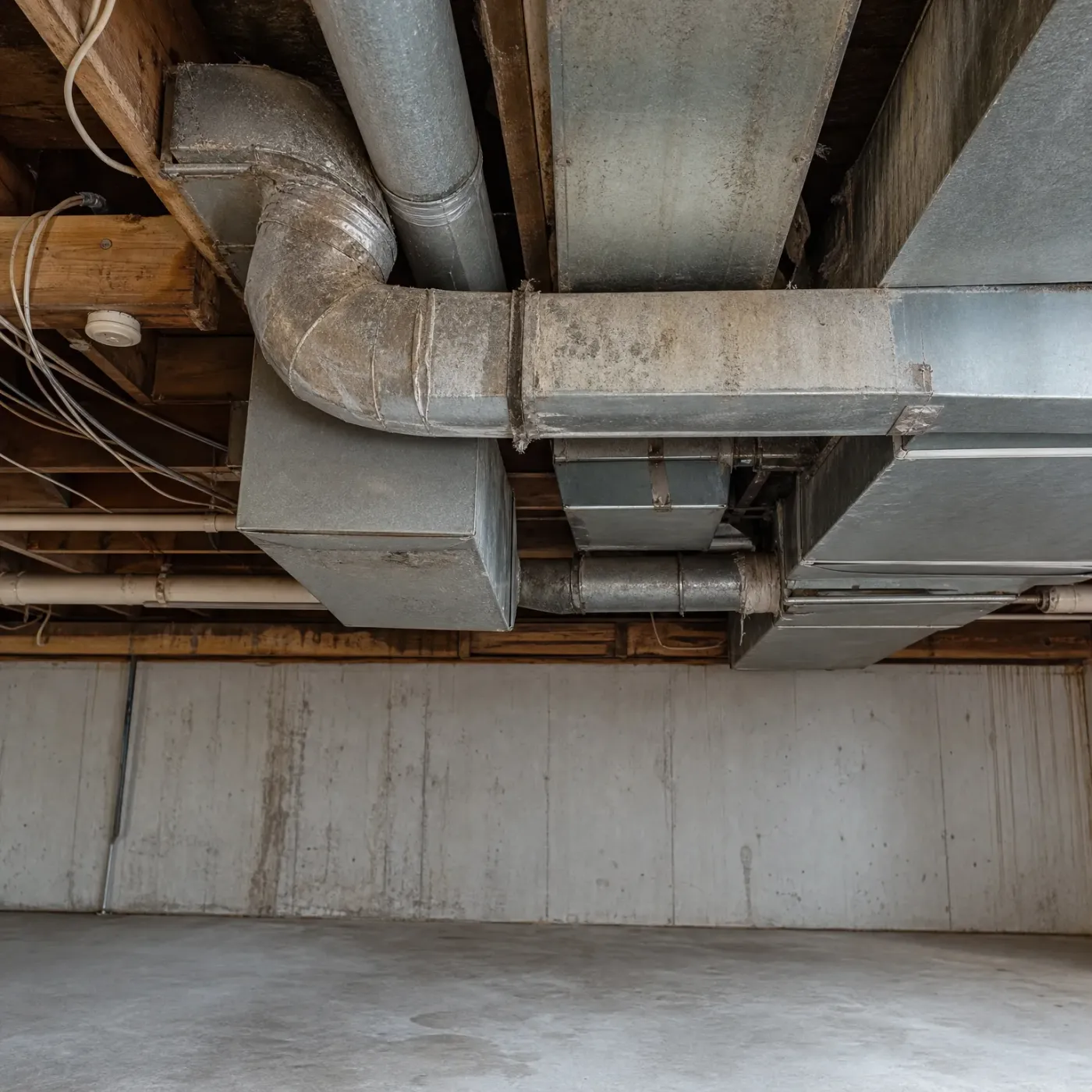
Galvanized sheet-metal ductwork and round pipes run beneath wooden floor joists in a basement with concrete walls and floor.

Ducts in trouble

Galvanized duct runs like this one gather dust along the seams and inside the elbows where the flex connects. Once it builds up there, the furnace and AC push it straight into the rooms every time they run, which is where that stale smell and the dust back on the registers comes from.

A woman in a gray sweater and jeans stands in an open wood front door of a white stucco house while a man in a dark jacket walks toward her on the entry path.

What dirty ducts end up costing you

A furnace running eight months a year is pulling air through those ducts constantly. If there's dust, rust, or old insulation sitting in the runs, every cycle pushes some of it into the rooms you live in. You end up wiping registers more often, running the vacuum more often, and still smelling that musty note when the system kicks on. None of that goes away on its own, and it tends to get worse as the season goes on, not better.

If your ductwork hasn't been looked at since the house changed hands, or you're not sure it ever has, that's worth checking before another winter of hard furnace use. A local contractor who works on duct systems in Genesee County homes every season can tell you from a look whether what's built up in there is normal dust or something feeding back into your air. Getting matched with one means a single contractor reaching out, not a handful of companies competing for your number.

A living room with a cream sofa and knit throw beside a window, with a wooden coffee table in the foreground holding a round woven tray, a small bowl, and a speckled vase of green leafy branches.
A dimly lit living room corner with a gray wall, framed picture, a table lamp on a wooden side table, a beige sofa with pillows, a ceiling vent, and windows showing flowering trees outside.

It's a Saturday afternoon in April, sun coming in through the living room window. You're on the couch, and the furnace kicks on for what feels like one of the last times this spring. You look up at the ceiling vent and notice the grille has gone gray around the slats. On the side table underneath, a thin film has settled across the wood since you dusted it Tuesday. You run a finger along the shelf and it comes back dark. The register above hasn't moved, hasn't been touched, but somehow it's doing this to the room every few days. You make a note to call someone who actually works on this stuff in Genesee County, someone who'll look at your system specifically instead of guessing over the phone.


Get matched with a duct system pro in Genesee County

The pro who gets in touch is licensed in Michigan and works in Genesee County.

It costs nothing to send, and you don't have to hire anyone.

What a cleaning actually removes

A duct cleaning clears the trunk lines and the flex runs branching off them, plus the inside of the registers themselves. The crew works the full run, not just what you can see by pulling a register off the wall. Rust flakes from an old supply line, chewed-up insulation, construction dust left over from a remodel, all of it sits in those runs until something pulls it loose and pushes it into the room. A furnace running eight months a year does exactly that, cycle after cycle. Cleaning out the runs is the only way to stop that material from getting into the air twice a day.

Why the filter alone can't fix it

The filter catches what passes through it, nothing that's already settled behind the walls. Dust sitting in a trunk line since before the current filter was installed stays put until airflow stirs it loose, and by then it's past the filter already, headed for the register. That's why a fresh filter and a dusty register can show up in the same house at the same time. Changing the filter keeps new dust out. It does nothing for what's already built up in ductwork that hasn't been cleaned, which is the part a filter was never built to reach.

Power here costs 20.62 cents per kilowatt-hour

At 20.62 cents per kilowatt-hour, your furnace blower and AC fan aren't cheap to run through eight months of use. Clogged ducts make them work harder to push the same air, so a cleaning that keeps them clear also keeps that motor from drawing more than it needs to.

EIA-861 2025

Where That Leaves You

  • Resettling dust, musty air at startup, and staining around register seams are the signs that point to a cleaning, not a filter swap.
  • A local contractor who works on Genesee County duct systems every heating season knows what eight months of furnace use typically leaves behind in trunk lines and flex runs.
  • Matching you with one licensed local contractor means a single point of contact, not a round of calls from companies you don't know.
  • Catching this now, before gray rings around the registers turn into something you're wiping off furniture weekly, keeps it a small job.
  • What you've read above is enough to tell whether your ducts fit the pattern or whether the air coming through your vents is still just air.

The signs are the ones already covered: dust that comes back fast, a musty smell when the system starts, staining around the register seams, more sneezing indoors than out. If you're seeing one or two of those, it's worth a look. If you're seeing most of them, the ducts are already feeding it into the rooms you spend time in, eight months a year, every time the furnace or the AC runs.

Genesee County homes built in 1969 or earlier have had a long time to collect what sits in trunk lines and flex runs, and nobody checks that part of the house until something like this shows up. A contractor who works this county every heating season has seen what that buildup looks like and what it takes to clear it out fully, not just from the registers you can reach by hand.

When you ask for a match here, it's one licensed local contractor, not a handful of companies competing for your callback. That matters with duct work, because the crew needs to know the trunk lines and flex runs they're walking into, not just the make of your furnace.

Nothing above requires guessing. Wipe a register and see how fast the dust comes back. Notice whether the smell shows up right when the blower kicks on. The ducts will tell you which side of this they're on.

Interior room corner with sunlight from a window, showing peeling paint and damaged plaster on the wall above a white baseboard, a wooden cabinet with a pale bowl on top, hardwood floor and a patterned rug.
Interior corner of a room with tan walls, white profiled baseboard and window trim, a wood-plank floor in sunlight, and green foliage visible through the window.
An empty room corner with cream walls, white baseboard, two windows with deep sills showing green foliage outside, and a wood plank floor lit by sunlight.
Empty room corner with beige walls, white beadboard wainscoting, chair rail and baseboard, a window with green foliage outside, and sunlight casting leaf shadows on the wall above a wood floor.
Sunlit room corner with a multi-pane window, beige walls, white baseboard, wood floor with a woven rug, and a dark wooden cabinet holding a ceramic table lamp below a framed picture.

Find a duct system cleaning pro in Genesee County

A licensed pro who works in Genesee County gets your request.

Connect with a pro

No charge to send it. You decide if you hire them.