
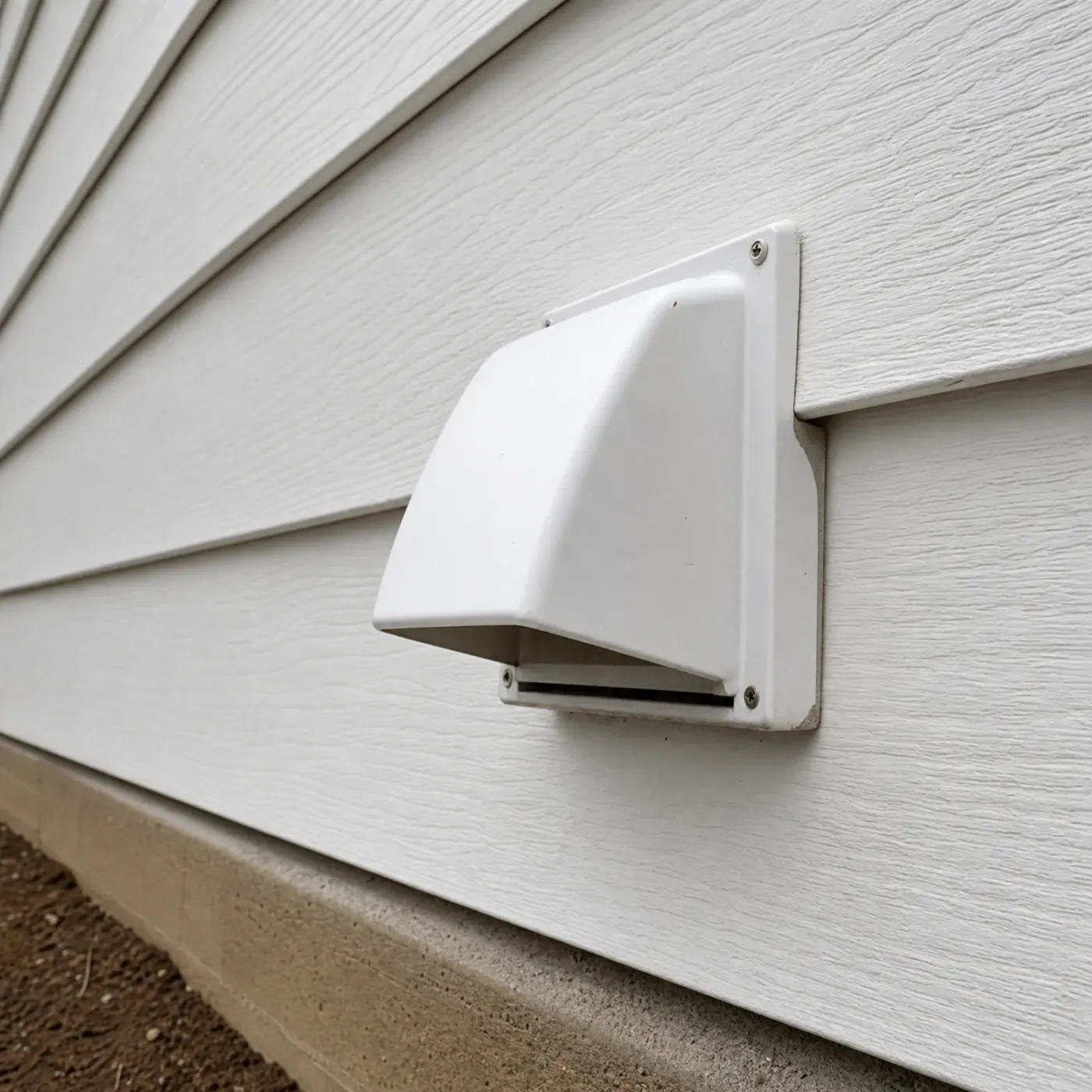
The vent flap opens and closes freely
Air pushes the flap open when the dryer runs, and it falls shut when the cycle ends. The screen behind it stays clear enough that you can see through it. A load of towels dries in one cycle, not two.
You run the dryer a few times a week, every week, and Michigan winters mean months where it's going nonstop with wet coats and towels in the mix. You've heard a clogged vent can start a fire, and you'd rather clean it before that happens than deal with it after.
A year is the standard gap between cleanings for most households. Lint builds up along the vent run every time you dry a load, and it doesn't matter whether the air outside is humid or dry, the lint collects the same. What changes the timeline is how much the dryer runs. A house doing laundry daily through a Michigan winter, with snow gear and towels piling up, pushes more lint through the vent than a house drying three loads a week. If your dryer is taking longer than it used to, or the top of it feels hot to the touch, that's the vent telling you a year is too long to wait.

Air pushes the flap open when the dryer runs, and it falls shut when the cycle ends. The screen behind it stays clear enough that you can see through it. A load of towels dries in one cycle, not two.

Dust and lint cling to the hood itself, not just the screen inside. The flap may hang open or barely move when the dryer runs. If drying is taking longer than it used to, this is often why.




Every load pushes moist air and lint through the vent, and in Michigan the dryer runs hard from November through March with heavy coats, towels and blankets going through it week after week. That steady load adds up fast. Lint doesn't just sit at the dryer end either. It catches along the full run of the vent, especially at bends and where sections join, and a long or bent vent run traps more of it than a short straight one. The more it runs, the more there is to clear out.
When the vent is restricted, the dryer has to push harder to move the same air, and it takes longer to dry a load. That means more electricity for a longer cycle, and with power costs what they are in Michigan, a clogged vent shows up on the bill before it shows up as anything else. The heating element also runs longer to make up for air it isn't getting, which adds wear on a part that's expensive to replace. A clear vent moves air the way the dryer was built to use it.


Feel the outside of the dryer during a cycle. If it's warm to the touch, or the room itself gets warmer than it used to, air isn't moving out like it should. Check the clothes at the end of a cycle. If towels or jeans come out hot but still damp, or you're running the cycle twice to get a load dry, that's the vent telling you something. Open the lint trap and look past it if you can. A musty smell near the dryer, or lint you notice collecting around the back of the machine instead of in the trap, means it's not making it outside. Left alone, this is what turns a dryer into a fire risk in a house that runs it hard all winter.




Skip calling around for someone who cleans dryer vents.
Send the form and finding a dryer vent cleaner is handled.
No charge to send it. You decide if you hire them.

The dryer pushes hot, wet air down a metal duct that runs through the wall, maybe through a joist bay or two, out to a hood on the outside of the house. Lint rides along with that air the whole way. It doesn't just collect at the far end. It catches on screw ridges where two sections of duct meet, on any bend the duct makes, and on the inside of the hood itself where the flap hinges. A duct with a few turns in it traps more lint than a straight run, because every turn slows the air down enough for lint to settle out.
A technician doing this work clears the full run, not just what's reachable from inside the house. That means disconnecting the duct at the dryer, running a brush through from both ends, and checking that the outside flap swings freely when finished. Finding someone who does the whole job, not just a quick vacuum near the wall, usually means calling a few places and asking exactly what's included before you book anything.


A short, straight shot from the dryer to the outside hood gives lint less distance to settle. Air moves fast enough to carry most of it out with each load. A house built with the laundry room on an exterior wall usually has this setup, though you'd need to check how yours runs. Even then, lint still collects at the hood screen and the flap, so a straight run buys you time, not an exemption.

Some houses route the vent a longer way, up through an attic or across several joist bays before it reaches outside. More distance means more turns, and every turn is a place lint catches and stays. A long run also means a longer stretch of warm, wet air moving through cold framing in a Michigan winter, which gives lint more places to clump before it ever reaches the hood.
A clogged vent makes the dryer run longer to finish a load, and at 20.03 cents a kilowatt-hour, those extra minutes show up on your bill every single week. A clean vent gets the heat out fast and the dryer shuts off on time.
EIA-861 2025 statewide residential average
Once a year, maybe twice if the vent run is long or the dryer gets heavy use, is what keeps a Michigan dryer vent safe and working the way it should. That's the plain answer. Everything else is about catching the signs between cleanings: the warm room, the longer cycles, the burnt smell, the lint you can't see because it's packed in a joist bay instead of sitting in the trap. You don't need to become someone who thinks about dryer vents all the time. You just need it handled before it turns into a longer dry time, a higher bill, or worse. Instead of searching through listings, calling a few places, explaining the same thing about your vent run and your dryer each time, and sitting with quotes trying to figure out who's worth it, you can send this once and let the finding part be someone else's job. You already know what you're dealing with. Now it's a matter of getting someone out to deal with it.

It's off your list after this



