




Michigan HVAC Help

Is duct cleaning worth it in Flint, MI

Request a pro

You typed that question because something about your ducts has you wondering. Maybe it's the dust that settles back on the shelf a day after you wipe it. Maybe it's a musty smell when the furnace kicks on, or someone in the house who can't stop sneezing through a Flint winter spent mostly indoors. Whether cleaning is worth it depends on what's actually sitting in your system and how it was installed, and that's not something to guess at from a search result. It takes someone who can look at your ductwork and tell you straight whether it needs cleaning or something else entirely. Answer a few questions about your home and you'll be matched with a contractor who handles duct systems in Genesee County. They'll reach out to you directly. No more searching, no more wondering if the next article has a different answer. Just someone who can look at your actual ducts and tell you what's true.

For most homes in Flint, duct cleaning is worth doing when there's a reason for it, not on a fixed schedule. Dust that resettles fast, a musty smell when the furnace kicks on, or a recent renovation are reasons. So is a house that's had rodents or a water leak get into the ductwork. Gas furnaces run hard here from October through April, and that long stretch pushes a lot of air through the same ducts every day. If those ducts are dirty, the furnace is just moving that dust and odor through every room instead of clearing it. Cleaning won't lower your gas bill or fix a furnace that's struggling, but it does address what's actually circulating through your house. If nothing's prompting the question beyond curiosity, it's a lower priority. If something specific sent you looking, it's worth having someone take a look.

How old is the ductwork you're dealing with?

  • Half the homes here were built by 1969

    Half the houses in Genesee County went up in 1969 or earlier. If yours is one, nobody alive may know when that ductwork was last opened up.

  • Heat runs October through May

    Your furnace pushes air through those ducts about eight months of the year, October through May. That's a lot of hours for dust to move and settle.

  • Cooling runs June through August

    Three months of summer run through the same ducts your furnace uses all winter. Whatever sits in them gets blown through the house twice a year, not once.

ACS 2020-2024 · NOAA nClimDiv 1991-2020

How a Duct Cleaning Actually Works

  • A duct cleaning crew runs a vacuum collection unit at the trunk line and agitates each branch with a brush or air whip to knock debris loose.
  • Every supply and return register gets pulled and cleaned separately, since dust settles differently depending on airflow at each one.
  • The furnace blower and the coil cabinet usually get cleaned too, since that's where dust mixes with moisture and builds up fastest.
  • Negative pressure inside the ducts keeps loosened dust moving toward the vacuum instead of blowing back into the rooms.
  • A sheet metal duct holds onto dust differently than a flex duct does, so the method used often depends on which one runs through your house.
  • The job is only done right when every branch is reached, not just the ones nearest the furnace.

A duct cleaning starts with a vacuum collection unit connected at the trunk line, the main duct the furnace feeds into. That vacuum holds negative pressure through the whole system while a crew works branch by branch with a brush or an air whip, knocking loose whatever has built up on the inside walls of the duct. Nothing gets to fall back into the room because the vacuum is pulling the other way the whole time. Each supply register and each return register comes off the wall or ceiling and gets cleaned on its own, since airflow is different at every one and so is what collects there. The furnace itself usually gets attention too. The blower wheel and the coil cabinet sit right where moving air meets moisture, and that combination builds up dust faster than the straight runs of duct do. What the crew is working with matters. A sheet metal duct is smooth and rigid, so dust clears off it differently than it does out of a flex duct, which has ridges that catch debris along its length. A job that only hits the branches closest to the furnace and skips the rest hasn't done what it claims to. The whole point is reaching every branch, not just the easy ones.

An older man with gray hair and a beard stands in a dimly lit entryway wearing a dark hooded coat dusted with snow, with a lit table lamp, framed picture, and front door with glass panels behind him.
An older man with gray hair and a beard, wearing a dark snow-dusted jacket and scarf, stands smiling in a dimly lit entry hall with a lamp, wooden front door and staircase behind him.
A gray-haired bearded man in a dark coat with snow flecks on the shoulders stands just inside a dimly lit home entryway, with a lamp, framed pictures, sofa and candle-style lights in the background.
An older man with gray hair and a beard, wearing a dark coat and scarf dusted with snow, stands in a warmly lit home entryway with an arched doorway, lamps, and a living room visible behind him.

Get matched with a duct system pro in Genesee County

If you've gotten this far, you already have a reason to look into this, whether it's the dust, the smell, or just not knowing what's been sitting in that ductwork since the house was built. That's enough reason to get someone out to look at it. A furnace running eight months a year in Flint pushes a lot of air through those same ducts, and nobody can tell you what's in them from outside. A contractor who does this work can open a register, look inside, and tell you whether cleaning will actually help your situation or whether something else is going on, like a leak in the ductwork itself or a filter that's not doing its job. You don't have to figure out which one it is on your own. Send the request and let someone who does this for a living take a look and tell you straight what your ducts need, if anything.

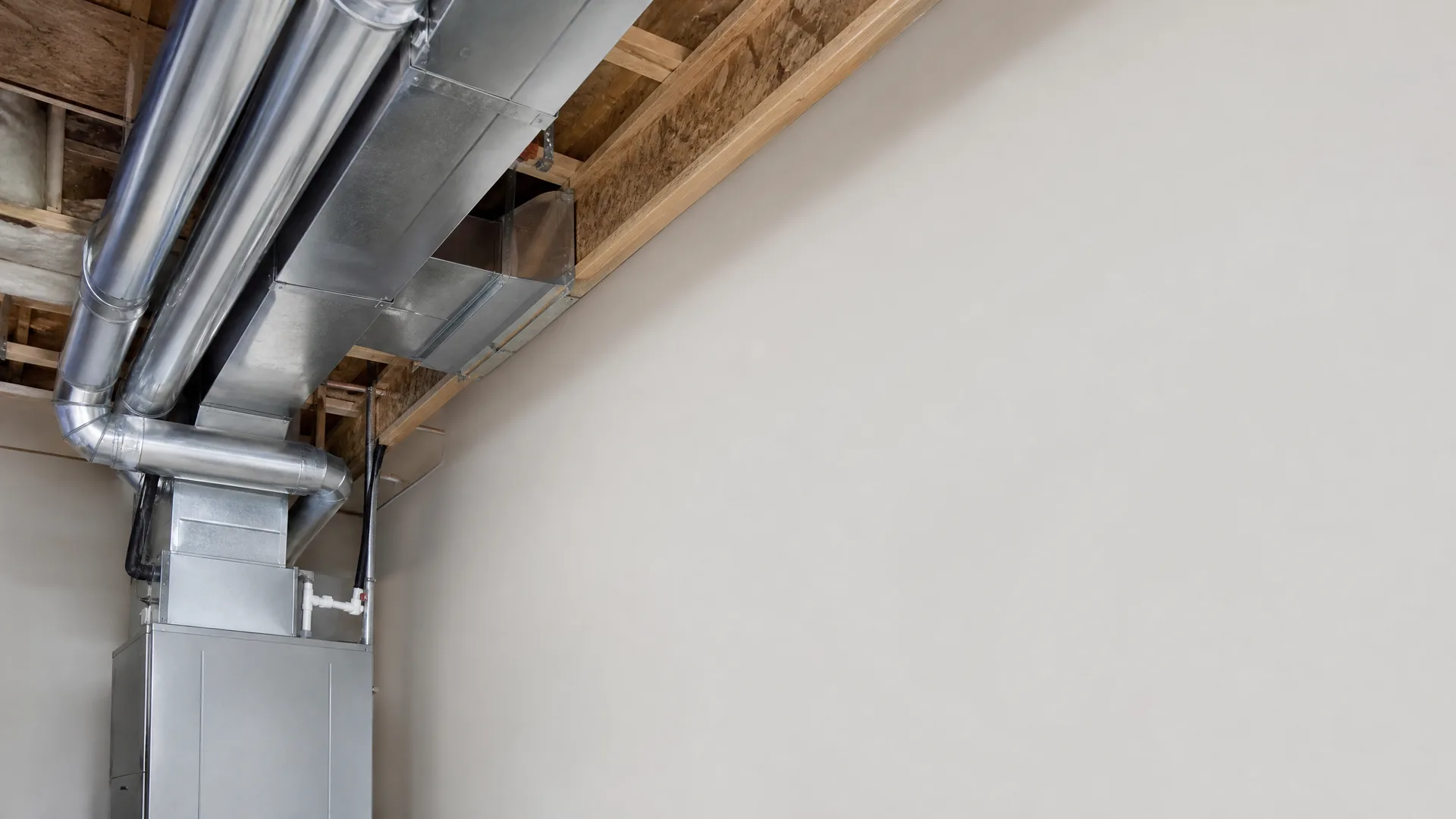
Galvanized sheet-metal ductwork and round pipes running along an exposed wood-joist ceiling with insulation, above a furnace unit beside a blank painted wall.

When cleaning actually helps

A duct system that's dusty because of a dirty filter or a leaky return won't get better from cleaning alone. If the dust keeps coming back within days, something upstream is pulling it in, and a cleaning crew who finds that during the job is doing you a favor. Where cleaning does help is after a renovation, after rodents have gotten into the ducts, or after a water leak left anything damp in there long enough to smell.

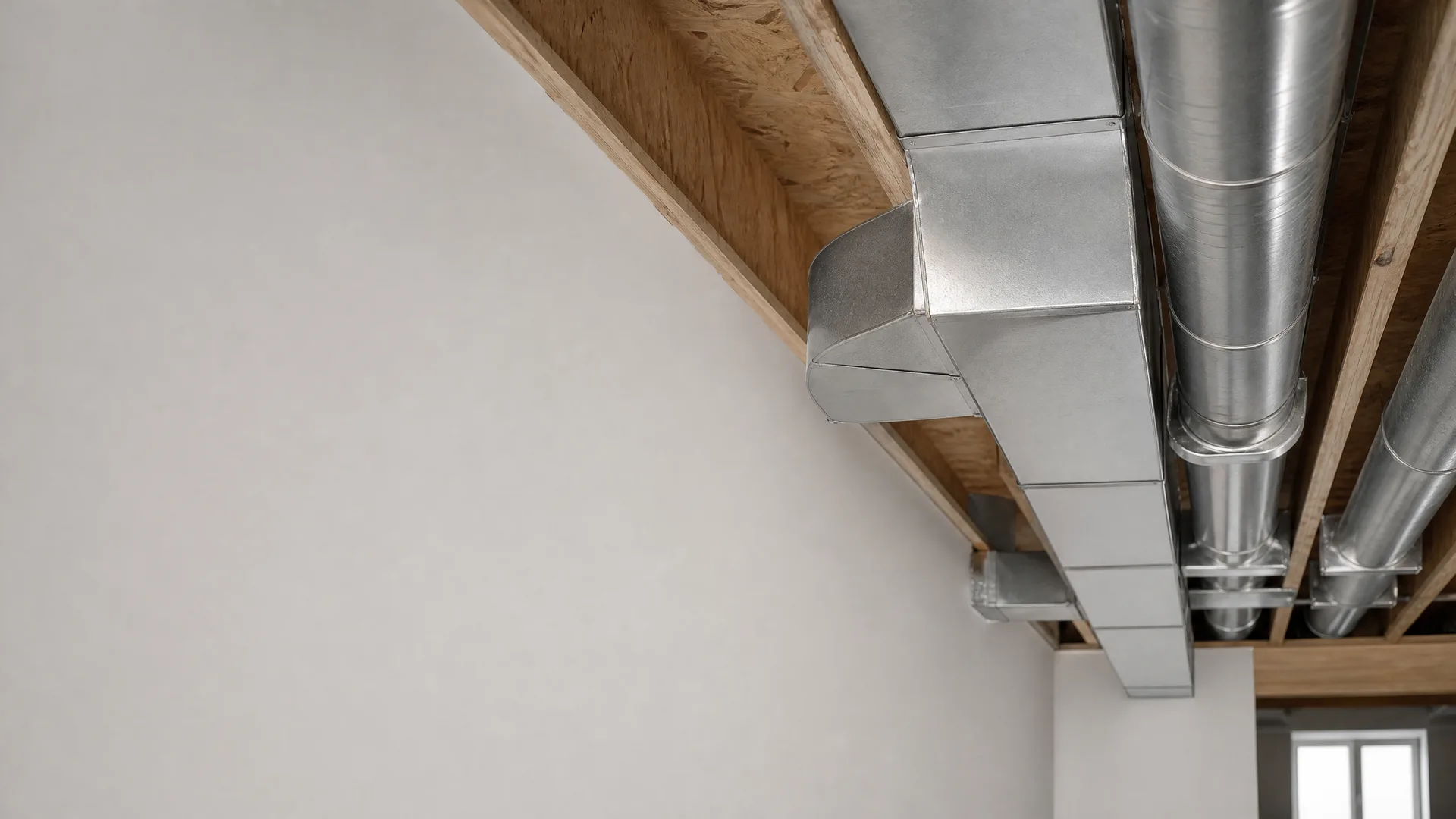
Galvanized rectangular and round sheet-metal ductwork mounted beneath an exposed wooden joist and OSB ceiling, next to a plain white wall and a window at lower right.

When it's probably not the fix

If the house just feels stale or a little dusty without any of those specific causes, duct cleaning may not change much. A weak furnace fan, a cheap filter, or gaps in the duct joints themselves can cause the same symptoms, and no amount of brushing out the trunk line fixes those. Flint winters mean that furnace runs for months straight, so if the real issue is airflow or a leak, cleaning the ducts won't stop the dust from coming back by December.

How do I know if my ducts actually need cleaning?

You typed that question because you want a real answer, not a reason to spend money. Nobody wants a crew pulling panels off the ductwork for no reason, and nobody wants to ignore something that's actually a problem. You're looking for the signs that separate the two, something more concrete than a gut feeling about how long it's been.

Look at the registers, the smell, and how fast the dust comes back

Pull a supply register off the wall and look inside with a flashlight. Gray buildup on the first few inches of duct is normal. A thick mat of it, or anything that looks like insulation or debris that doesn't belong, is a sign worth acting on. A musty smell when the furnace or AC first kicks on points to moisture sitting somewhere in the system. Dust that resettles on furniture within a day or two of cleaning, even with a fresh filter in place, means more is moving through the ducts than the filter is catching. Any of these on their own is reason enough to have someone look at the system rather than guess.

Unfinished basement with bare concrete walls and floor, exposed wood joists, and large sheet-metal HVAC ducts and pipes running along the ceiling.

Ductwork that's doing its job

This is what a clean trunk line looks like. The metal is bright, the joists above it are clear, and air is moving through without anything blocking it. A furnace running eight months a year depends on ducts that look like this.


Basement interior with galvanized rectangular and round sheet-metal ductwork and copper piping running below a wood-joist ceiling, above a concrete wall and bare concrete floor.

Ductwork that needs a look

Same kind of basement, same galvanized duct run, but this is where buildup hides. Dust sits inside rectangular and round sections alike, along seams and low spots, where you won't see it unless someone opens a panel and looks.

A woman wrapped in a thick wool blanket sits in an armchair with an open book on her lap, beside a lit lamp and a frost-patterned window.
A woman in a cream knit sweater sits in an armchair with her eyes closed and head tilted back, beside a window showing orange autumn foliage and a wooden side table with a mug.
  1. A technician seals the supply and return registers before starting.

  2. A vacuum collection unit connects to the trunk line to pull negative pressure.

  3. Brushes or an air whip agitate each branch line to knock debris loose.

  4. Loosened dust and debris travel through the ducts into the vacuum unit.

Power here costs 20.62 cents per kilowatt-hour

At 20.62 cents per kilowatt-hour, pushing air through dirty ducts costs more than it should. A blower working against caked-on dust pulls more power to move the same air through your house, month after month.

EIA-861 2025

Dim room corner with a framed picture on a textured wall above a counter holding a tall ceramic vase and a shallow wooden bowl, with a sheer curtain beside a window and a ceiling air vent overhead.

Spring sun is coming through the living room window, bright enough to show what the lamp light hides. You're on the couch and you look up at the ceiling vent, the one that blows warm air all winter, and the grille is gray with dust. Not a little. A film thick enough to see from across the room. You run a finger along the bookshelf underneath it and it comes back coated, even though you dusted that shelf a few days ago. The furnace isn't even running right now. It's just sitting there, that dust, like it's been waiting all winter for the light to show it.

A woman stands in the open black front door of a white-sided house with a dark shingled roof while a man in a navy jacket approaches along the walkway, with lantern wall lights, a potted shrub, and flowering garden beds nearby.

So is it worth it?

Duct cleaning is worth it when something's actually wrong: dust that won't stop coming back, a musty smell when the furnace runs, a house that's had rodents or water damage, or ductwork nobody's touched since it went in. It isn't worth it on a schedule, just to have it done. The reason either exists in your house or it doesn't, and by now you probably know which one you're dealing with.

If you've got a reason, the next step is getting a contractor who services Flint and the rest of Genesee County to look at your actual ducts, not someone else's. Send the request and a contractor who takes on jobs like yours will reach out to you directly. You won't be the one tracking down who's available or who does this kind of work. That part's off your plate once the form goes in.

Interior corner with sheer white curtains at a window, a brown upholstered sofa in the foreground, and a wooden multi-drawer cabinet holding a round ceramic vase with leafy branches.
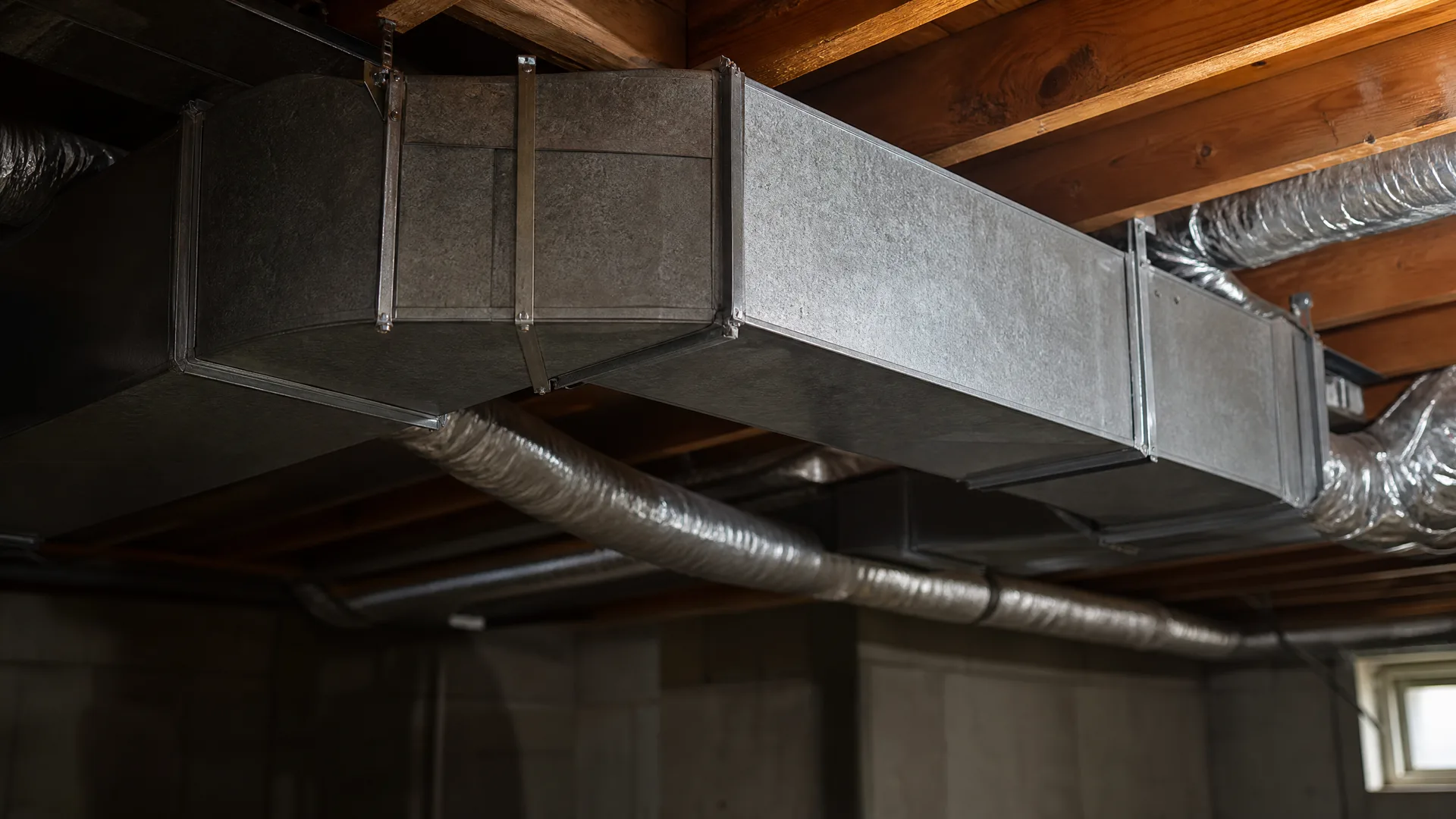
Rectangular sheet-metal HVAC trunk ducting and insulated flexible ducts running along wooden floor joists in an unfinished basement ceiling above concrete block walls.

Find a duct system cleaning pro in Genesee County

Duct and vent cleaningDucts or ventsGenesee County, MI
Step 1 of 2

What ZIP code is the job in?