

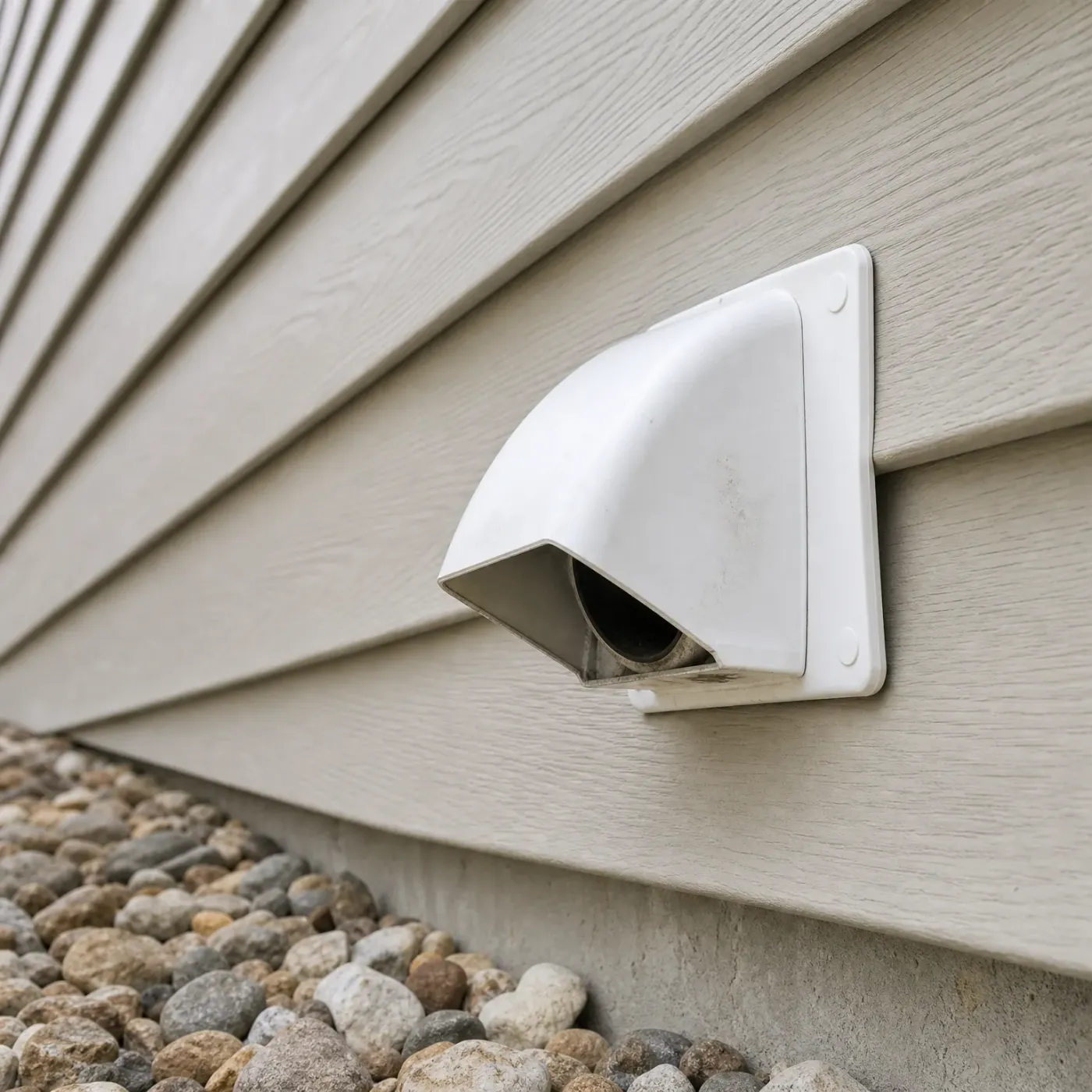
The vent hood moving freely
When the dryer runs, this hood should swing open with the airflow and the louvers should sit clear of each other. Air leaves in a steady push you can feel with your hand a few inches away, not a faint puff.
Get matched with a pro who works on dryer vents in Oakland County.
Request a proYour clothes come out hotter than usual, or it takes two cycles to get them dry, and you want to know if that means the vent is clogged. Maybe you noticed the outside vent hood barely moves when the dryer runs, or there's a burnt smell partway through a load. Before calling anyone, it helps to know what a blocked vent actually looks like from inside the house.
A clogged vent can't carry the hot, wet air out of the house, so the dryer has to run longer to do the same job. You'll notice clothes still damp at the end of a normal cycle, or the top of the dryer feels hot to the touch. The outside vent hood should push out a strong flow of air while the dryer runs. If you hold your hand near it and feel little or nothing, lint has probably built up somewhere in the line. A burning smell, more lint than usual around the lint trap, or a musty smell in the laundry room are other signs the air isn't getting out the way it should. In Oakland County winters, a blocked vent also means warm moist air has nowhere to go but back into the house.




2.39 people per household on average
Oakland County households run 2.39 people on average, so the dryer here is likely running loads most days, and a blocked vent means every one of them takes longer.
Half the homes here were built by 1975
Half the homes in Oakland County were built in 1975 or earlier. If yours is one of them, the vent run may be longer or older than what a newer duct would use.
Power here costs 20.26 cents per kilowatt-hour
Electricity here runs 20.26 cents per kilowatt-hour. A dryer fighting a clogged vent pulls more of it, cycle after cycle, to do the same job.
ACS 2020-2024 · EIA-861 2025

A load that takes an extra ten or fifteen minutes isn't an emergency. You run it again, fold the clothes while they finish, and move on with the day. Lint still builds up somewhere in the line, but the dryer is pushing the air out where it needs to go, just slower than it used to. This is the kind of thing you notice but don't act on right away, and most people don't.

When the drum itself feels hot to the touch after a cycle, or the laundry room warms up more than it should, the air isn't leaving the way it's supposed to. It's backing up instead of venting outside. That heat has to go somewhere, and if it isn't going out through the vent hood, it's building up in the dryer and the room around it. That's a different problem than a load running a little long.
At close to 2.4 people per household, most homes here are doing laundry almost every day, not once a week. That kind of steady use builds lint fast, so a vent that's slow to clear shows up sooner than you'd expect.
ACS 2020-2024
A dryer fighting a blocked vent runs longer to do the same job, and that extra time shows up on the power bill every cycle, not just once. Power here isn't cheap, so a dryer running two cycles instead of one adds up fast across a year of laundry. The heating element also works harder to push warm air through a restricted line, and that wear shortens how long it lasts before it needs replacing. None of this announces itself as a repair bill right away. It shows up slowly, in a bill that creeps up and a dryer that seems to age faster than it should.
Lint is fuel, and a clogged vent packs it close to a heat source that runs hot every time you start a load. That's the real reason this isn't something to put off once you've noticed the signs. A vent that's slow to clear or a hood that barely moves air isn't just an inconvenience to work around. It's lint sitting where heat is generated, cycle after cycle, with nowhere to go. Most of the homes in Oakland County are old enough that the duct run to the outside wall isn't short, which gives lint more places to catch along the way.


Send the form and the dryer vent cleaning stops sitting on your list.
Your request goes to an Oakland County pro who takes dryer vent jobs.
It costs nothing to send, and you don't have to hire anyone.
Walk past the dryer mid-cycle and the room feels warmer than it should, sometimes with a faint burnt-dust smell. The top of the dryer or the door itself runs hot to the touch. Clothes come out damp at the seams even after a full cycle, and towels especially seem to need a second run. Lint shows up around the drum seal or on the floor near the machine, not just in the trap. Outside, the vent hood flap stays mostly shut when the dryer is running, instead of flapping open with a steady push of air. Left alone, a blocked vent makes the dryer work harder to move air that isn't moving, and that strain is where the risk sits, both for the appliance and for anything flammable sitting too close to it.

When the dryer runs, this hood should swing open with the airflow and the louvers should sit clear of each other. Air leaves in a steady push you can feel with your hand a few inches away, not a faint puff.

Here the louvers can't close or open right because lint has built up across the opening. Air that should be pushing out hard is barely escaping, and dryer exhaust is also carrying moisture back toward the siding instead of clearing the house.

Lint doesn't just sit in the trap. The air pulls the fine stuff past the trap and down the duct, and it catches on every seam, every screw point, every bend where the line turns toward the wall or up through a joist bay. A straight, short run clears itself out fairly well. A run with two or three turns in it builds a clog right at the first turn, because that's where the airflow slows down enough for lint to stop moving and start collecting. Once a layer forms there, it narrows the duct, which slows the air even more, which means the next layer sticks easier than the last one did.
That's why the vent hood outside can look fine for months and then suddenly barely move. The blockage isn't at the hood. It's built up somewhere back in the duct, and by the time it reaches the opening, the problem has been growing for a while. A technician checking this clears the full run, not just what's visible at either end, because a clog at the first bend will keep rebuilding if nothing past it gets touched. Matching with someone who actually traces the line, instead of just vacuuming the trap, is the difference between a fix that holds and one that needs doing again next season.

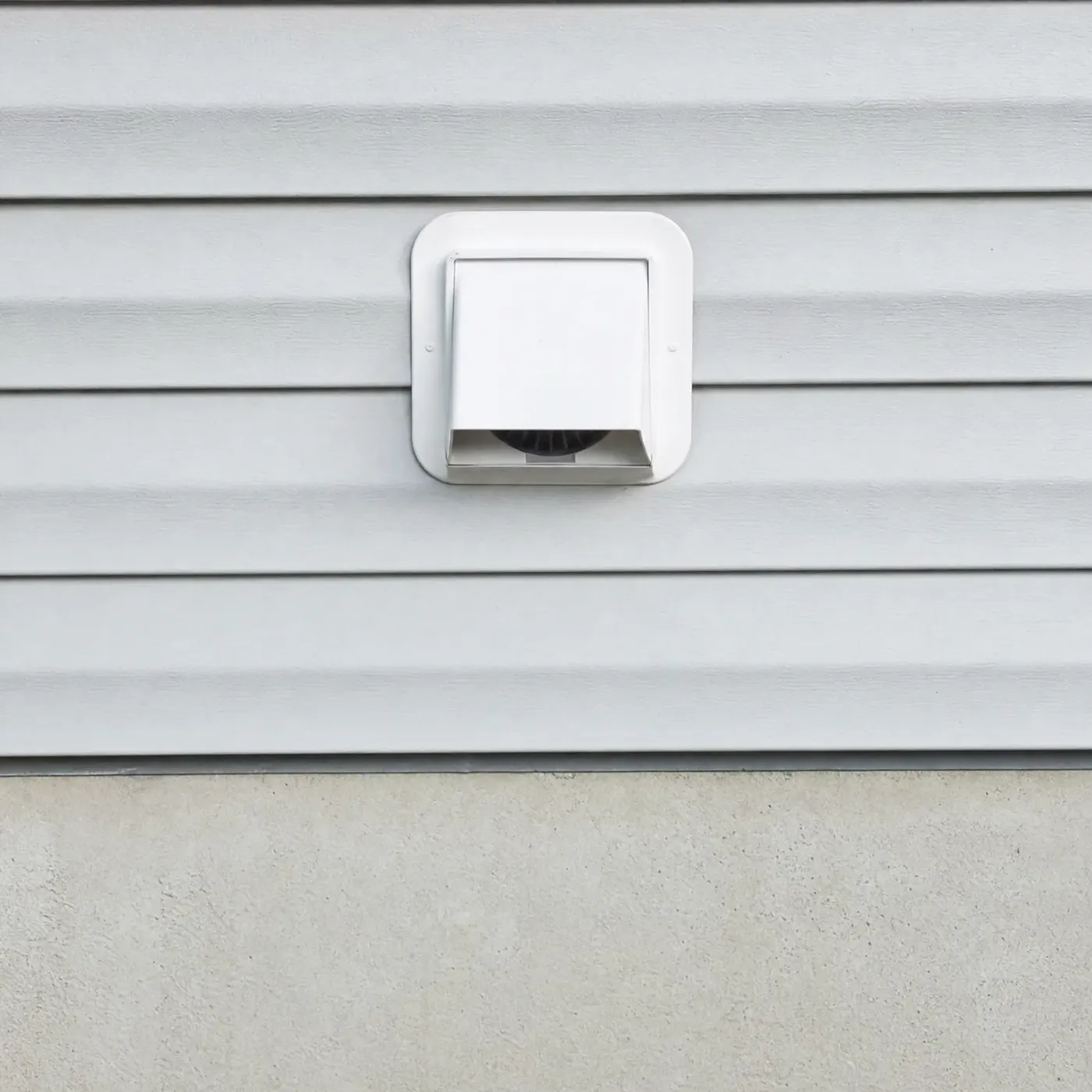
This is what a working vent looks like from outside. The flap hangs open on its hinge, loose enough to swing with the airflow. No lint catches on the edge of the hood or the siding around it. Walk by while the dryer runs and you can see daylight through the opening.
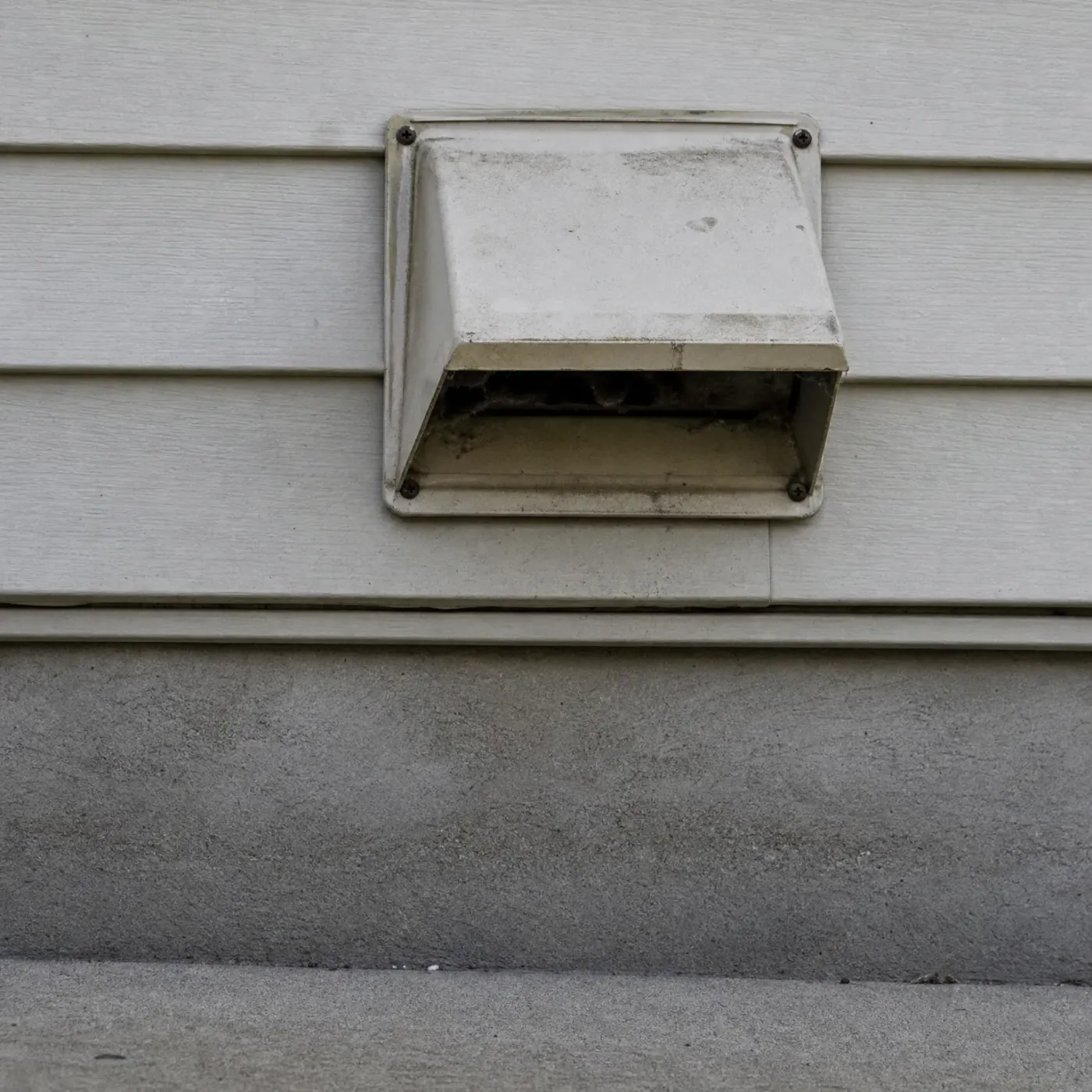
Lint has built up around the opening and across the louvers, and the flap sits propped open instead of swinging free. Some of it is matted against the siding below the hood. A vent that looks like this is already restricting how much air the dryer can push out.
A dryer that runs hot, takes two cycles, or barely moves the vent hood is telling you the line is blocked somewhere between the drum and the outside wall. You don't need to find the exact spot. A dryer running most days of the week in a house like yours has a lot of seams and bends for lint to catch on, and once it's caught, it builds. Clearing that line is a job for someone who clears them for a living, with the tools to run the full length of the duct and check the hood swings free when they're done. Send the form and the search for who does that work is off your plate. You don't have to track down a contractor or sort through who's reliable. Someone who handles this reaches out to you, and from there it's a straightforward fix, not a mystery you have to keep living with every time you start a load.
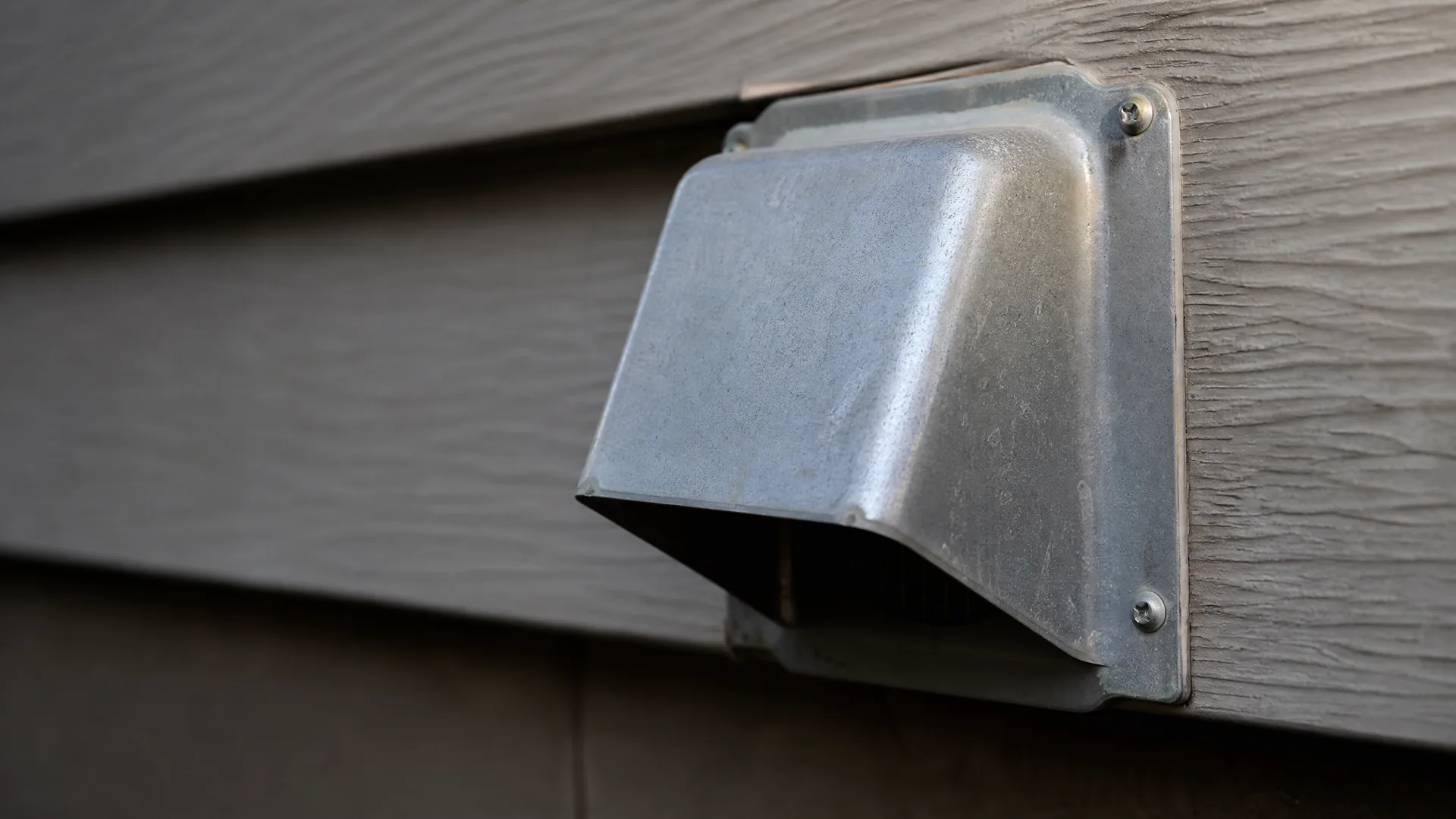
Get your dryer vent to the right pro