Normal ductwork
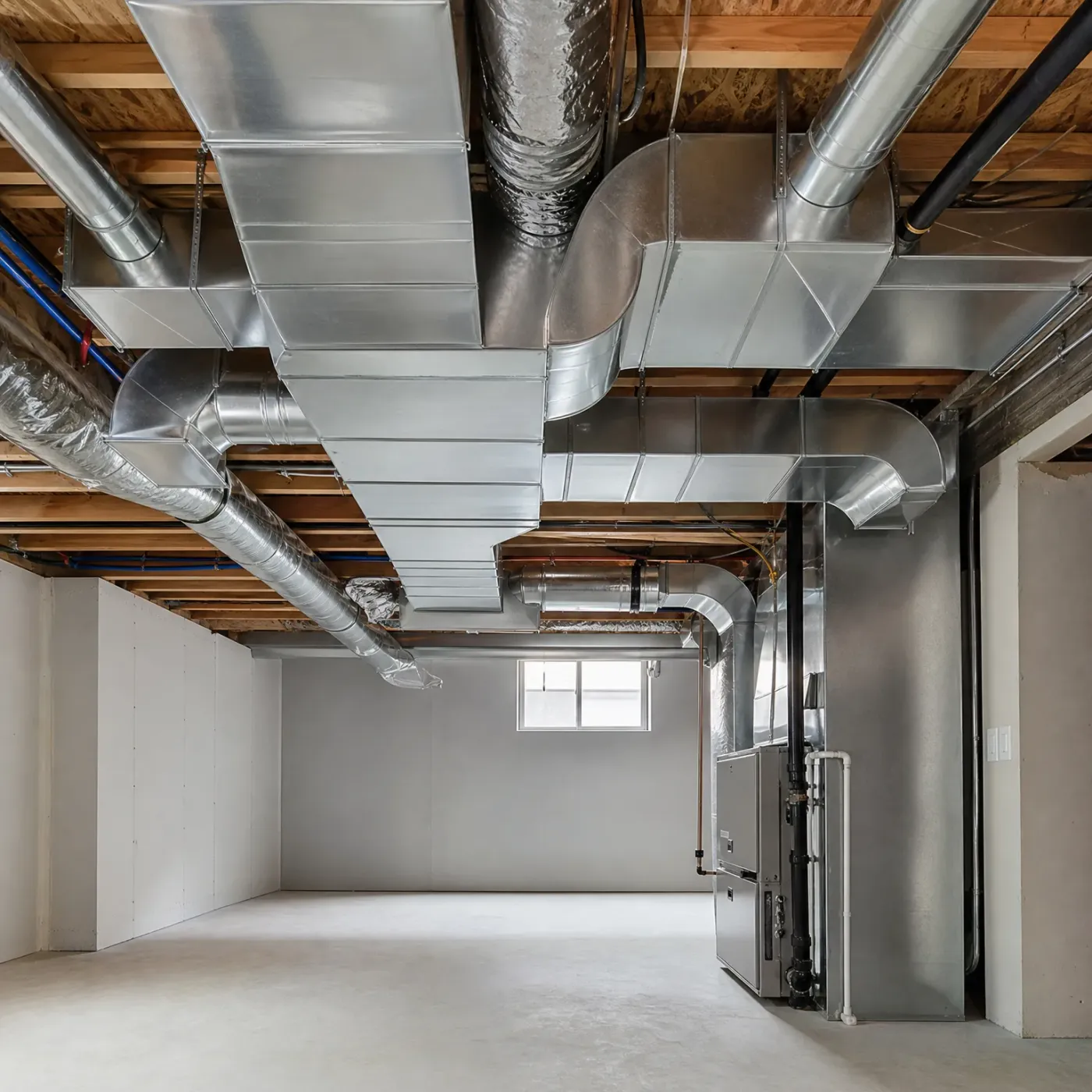
This is what most basements look like: galvanized trunk lines and flex duct running clean to the furnace, no mess around the seams. If yours looks like this, cleaning is about comfort and energy use, not a problem that needs fixing.
It depends on what's going on in your house, but in most Michigan homes, duct cleaning isn't something you need on a schedule. Dust and pet hair build up in ducts over the years, and if nobody in the house has allergies and you don't see dust blowing out of the vents, there's often not much to gain from cleaning them. Where it does matter is after work on the house: a renovation, new flooring, attic insulation, anything that kicks dust into the system. It also matters if you've had rodents or a water leak near the ductwork, since gas furnaces here run for months and that air moves through the house the whole time. If your ducts look fine and nobody's sneezing more than usual, you can likely skip it this year. If something's changed, a cleaning clears out what's built up before another winter of gas heat pushes it through your rooms.




A crew doing this runs a brush or an air whip down the supply and return lines to break loose what's built up on the walls of the duct, then pulls it out with a vacuum running at negative pressure so nothing gets pushed back into the house. The return side is usually where most of it is, because that's the air coming in from your rooms before it ever reaches the filter. Your furnace blower only moves air when it's actually running, so between cycles, dust has time to settle instead of staying airborne. The heaviest buildup tends to sit right at the registers and the first few feet of duct behind them, while the far ends of long runs often stay cleaner than you'd think. If you pull a return vent cover and see a thick layer coating the inside, that tells you the filter's been missing stuff for a while. And if you've got a whole-house humidifier, or a seam in the ductwork that's letting in moisture, that's usually what turns plain dust into the kind that clings and doesn't just wipe away.


If your ducts run through a crawlspace or an unfinished basement, check for signs rodents or insects have gotten in. That's a reason to clean worth acting on, separate from ordinary dust.
Dust gets filtered out. Droppings and nesting material sitting in a duct don't go away on their own, and they get pushed into every room the system feeds.
At 20.03 cents a kilowatt-hour, pushing air through ducts clogged with dust costs you more here than in most states. Clean ducts let your furnace blower and AC fan move air without straining, so you're not paying extra to shove conditioned air past a buildup that's blocking it.
EIA-861 2025 statewide residential average
This is what most basements look like: galvanized trunk lines and flex duct running clean to the furnace, no mess around the seams. If yours looks like this, cleaning is about comfort and energy use, not a problem that needs fixing.
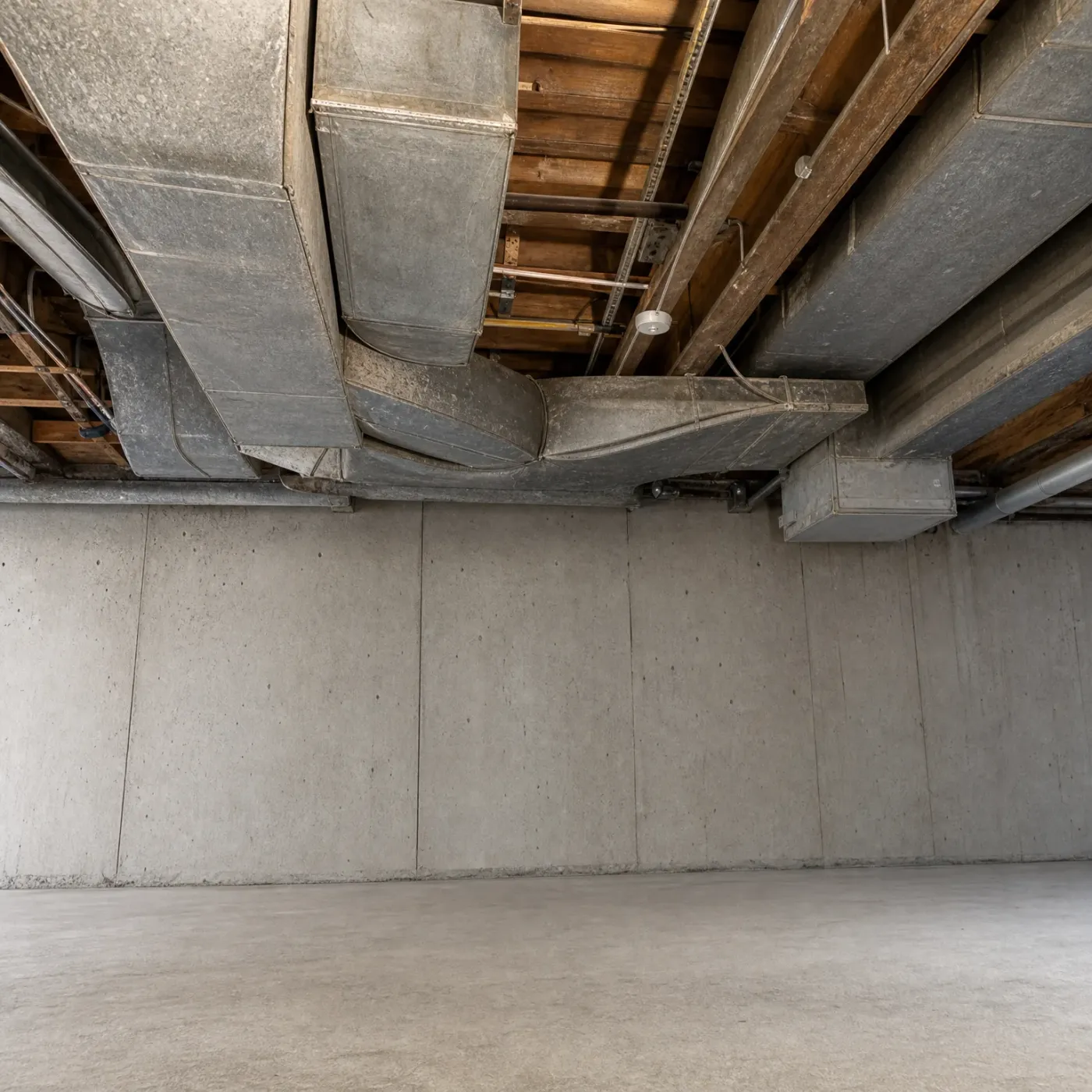
Exposed joists and sheet metal ducts in a crawlspace or unfinished basement are an easy place for rodents or insects to get in unnoticed. If you see droppings, nesting material, or gaps where the duct meets the joist, that's worth having a crew look at.


Skip searching for a duct system pro and answer a few questions instead.
It costs nothing to send, and you don't have to hire anyone.
So the answer to whether duct cleaning is worth it in Michigan depends on what's actually sitting in your ducts, not on how many years it's been. A home with no allergies in the house, no dust kicking out at the vents, and ductwork that looks like plain galvanized trunk line and flex duct has no real case for cleaning beyond comfort. A home with droppings in a crawlspace, nesting material near the furnace, or mold from a damp basement has a case that has nothing to do with how the ducts look otherwise. That's the whole decision. Michigan's electricity rate adds a second reason worth weighing: a furnace blower or AC fan straining against buildup costs more to run here than in states paying less per kilowatt-hour, so clean ducts can mean a lighter load on the bill even without a health reason driving it.
Once you've decided it's worth doing, the next part of the job is finding someone who'll actually do it right, and that's the part that eats time. Calling a handful of companies, describing your crawlspace or your basement setup to each one, then sitting with a stack of quotes trying to figure out who's quoting the same scope of work. One form replaces all of that. You explain your situation once, and the work of finding and sorting contractors stops being something you have to do yourself.

It's off your list after this




