Nine cycles an hour
On a cold day your furnace is pushing air through those ducts that often, and each pass carries dust back into the rooms you just cleaned.

You dust the shelves on a Sunday and by Thursday there's a film on them again. It's not your imagination and it's probably not your cleaning. Between a Michigan summer that keeps the windows shut and sticky, and a furnace that runs long into spring, the air in your house is getting handled by the same ductwork day after day. Something in that system is putting dust back into circulation faster than normal.
Every time your furnace or AC kicks on, air moves through the same ductwork and gets pushed back into your rooms. If dust has built up inside that ductwork, each cycle stirs some of it loose and sends it back out through the vents. A gas furnace that runs most of the fall and winter here, paired with AC working overtime through a humid Michigan summer, means that air is moving through the ducts almost constantly. The system barely gets a break, so dust that would normally settle gets picked back up and carried room to room before it has a chance to stay put. A clean filter helps, but it only catches what passes through it, not what's already coating the inside of the ducts themselves.






A furnace doesn't run once and stop. On a cold day it cycles on and off close to nine times an hour, and each time it does, air moves through the full length of your ductwork. Dust that's settled into the joints and seams doesn't stay put. It rides that airflow straight back out through the vents, and you'll see it on the furniture again before the day is out. Your filter can only catch what passes through it. It does nothing for the dust already stuck to the inside walls of the ducts, so that supply never really runs out. Because the furnace is pulling return air from inside the house, the same loose dust gets drawn through the blower again and again. With the windows shut all summer, there's less outside air coming in to replace any of it. The dust you're wiping off the shelves this week is largely the same dust that was there last month, just making another trip through the system.


You could spend an afternoon searching for duct cleaners, calling a few, explaining the same thing about the dust and the vents each time, then waiting on quotes to compare. Or you could hand it to someone local who cleans ducts in Michigan homes all year and knows how a furnace running nine cycles an hour packs dust into the joints and seams. Your request goes to one contractor, not a handful competing for your business, so you're not fielding five calls trying to figure out who to trust. That matters here because gas furnaces and shut windows all winter do the same thing to every duct system in this state, and the person who shows up already knows what they're looking at. The shelves you keep wiping, the film by Thursday, that's what gets handled. Getting the right person on it now is the part worth not doing yourself.
A furnace set to run until the house hits temperature doesn't check how dirty the ducts are first. It just keeps cycling, and every cycle moves the same trapped dust through your rooms again.
Clear that dust out of the duct runs and the furnace is moving clean air on cycle one, not stirring up what's been sitting in the joints since last winter.


On a cold day your furnace is pushing air through those ducts that often, and each pass carries dust back into the rooms you just cleaned.
Air moves through clean metal instead of around dust built up in the joints, so what the furnace pushes out is what you actually wanted heated.
Run a finger along the windowsill or the top of the TV and it's gray again, days after you wiped it down. You might notice it on the vent covers themselves, a soft gray fuzz around the edges where the air pushes out. Socks feel dusty by evening even on a day you vacuumed. If anyone in the house has allergies or asthma, you've probably noticed symptoms are worse indoors than out, which isn't how that's supposed to work. With the windows shut most of the year here, the air inside is only as clean as what's moving through your ducts, and dust that keeps resettling within hours means the ducts are feeding it back to you faster than you can clean it away.
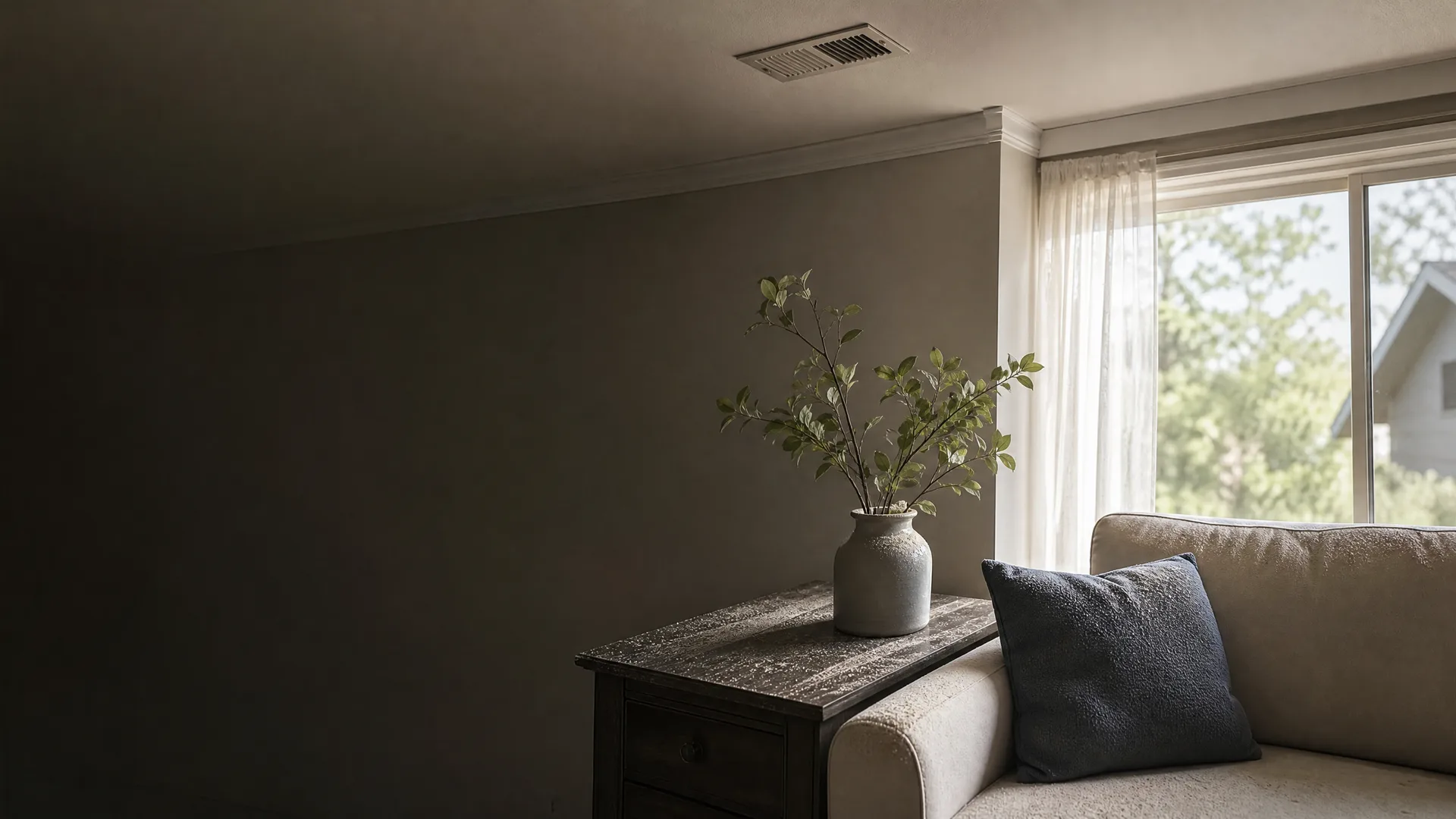
It's late April and the sun is on the carpet. You're on the couch after work and you look up at the ceiling vent, the one above the TV. The grille has gone gray at the edges, a soft ring of dust where the air pushes out every time the furnace cycles. You wipe the TV stand most weeks. It doesn't matter. The same dust sits on the lamp base and along the top of the picture frames, fine and gray, like it settled there overnight. Outside it's warm enough to open a window, but you haven't yet. The furnace clicked on twice while you sat there, and both times you noticed it: a little more dust in the air, a little more on the shelf.
At 20.03 cents a kilowatt-hour, running your blower longer than it needs to costs more here than in most states. A furnace pushing air through dusty ducts has to cycle more to get the house to temperature, and every extra cycle is pulling power at that rate.
EIA-861 2025 statewide residential average
The dust on your shelves is coming from the ducts your furnace pushes air through every time it cycles. Clear them out and fewer cycles end with dust landing back on your furniture. That's the whole answer. Finding someone to do the work is the part you can skip the long way around: instead of calling a handful of companies and explaining the gray film on your vent covers to each one, you get matched with one local contractor who cleans ducts in Michigan homes through every one of these cold, furnace-heavy winters and knows what nine cycles an hour does to a duct system over a season. No flood of callbacks, no comparing quotes from strangers. Just someone who's seen this exact problem in houses like yours and knows where the dust collects and why it keeps coming back. The film on your shelves will tell you when the ducts need attention again. Until then, you'll know what's behind it and what to do about it.





Your request stays with one local pro.
You only hire the pro if you want to.