
Why your furnace rattles in Michigan

RepairFurnace or heatingMichigan
Step 1 of 2

What ZIP code is the job in?

A rattle usually means something inside the furnace has worked loose. Loose panel screws are the most common cause, and the fix is often that simple. It can also be a sign the blower wheel has slipped out of balance, or that the squirrel cage inside it is cracked. Ductwork connected to the furnace can rattle too, especially where a duct joint has come apart slightly or where a return vent cover sits loose. Once your furnace is running most days from October through the cold Michigan winter, any loose part gets worked harder, and small looseness becomes a steady rattle you hear every time the heat kicks on. A rattle on its own does not mean the furnace is failing, but a cracked blower wheel or a loose connection can wear on the motor over a full winter of daily cycling, so it is worth having someone look before the cold settles in for good.

A gray high-efficiency furnace with white PVC vent pipes stands against a concrete basement wall beside sheet-metal ductwork, a small condensate pump on the floor, and exposed wood framing at left.

A quiet, steady furnace

Air moves through the ducts without a sound from the cabinet. The blower spins true, the panels sit flush and tight against the frame, and the flue pipes run straight with no vibration against the floor joists.

A gray sheet-metal furnace with flue pipe and adjacent ductwork stands against a stone basement wall on a concrete floor, with white PVC and metal pipes running nearby.

A furnace working loose

The rattle gets louder once the blower kicks on and the ductwork starts to shake with it. Left alone, a loose panel or an unbalanced wheel wears on the motor bearing until the furnace needs more than a few turns of a screwdriver.


A metal furnace with louvered panels stands against a concrete basement wall, connected to sheet-metal ductwork and a round flue pipe, with wooden framing posts and a pipe nearby.
Before you get your furnace repair
A gray gas furnace stands on a concrete basement floor, connected to sheet-metal ductwork, white PVC vent pipes, and a yellow gas line, with plastic sheeting covering the walls.
After you get your furnace repair

Why loose parts get worse

A furnace runs for hours at a stretch on the coldest days, and every one of those hours shakes a loose screw a little looser. What starts as a faint tick against the cabinet can turn into a steady rattle within a season, because nothing is tightening that panel back up on its own. The blower wheel works the same way. A small imbalance puts a wobble into the motor shaft, and that wobble wears the bearing it's riding on. Left alone, a bearing that starts out noisy can wear to the point where it seizes, and a seized blower motor stops moving air through the house altogether.

What the sound is telling you

Where the rattle sits tells you something about where to look. A rattle near the bottom of the cabinet is usually the blower compartment, loose sheet metal, or a panel that isn't seated right. A rattle higher up, closer to where the flue exits, can mean the vent pipe has worked loose from a joint or a strap. That distinction matters because a loose panel is a few screws, and a loose flue connection is a path for exhaust gas to leak into the house instead of going outside. Not every rattle is urgent, but a rattle you can trace to the flue is one worth checking the same day.


An older woman with gray hair in a bun and glasses, wearing a beige knit sweater, smiles while looking to the side in a warmly lit kitchen, with a loaf of bread on the counter in the foreground and a snowy scene outside the window.
A woman with her hair in a bun holds a sleeping young child against her chest, both wrapped in a textured beige knit blanket on a sofa in a dimly lit room with a lamp, framed picture, and bookshelf behind them.

Matched to your furnace job

Describe what your furnace is doing once, in one form.

There's no charge for the request.

A rattle you ignore in November can mean a blower motor bearing seized by January, on the week your furnace runs hardest against a Michigan cold snap.

A furnace that shuts itself down leaves a gas furnace unable to call for heat at all, and with power here costing what it does, space heaters aren't a cheap stand-in.


A woman with dark hair in a bun wearing a cream knit sweater sits on a gray sofa in a bright living room, looking off to the side.
A woman wrapped in a knit blanket sits on a gray sofa in a living room, looking toward a bright window with houseplants and an armchair in the background.
A woman in a gray cowl-neck sweater sits on a light sofa with cushions, smiling and looking to the side, with a kitchen and window visible behind her.
A woman with dark hair in a bun, wearing a light linen shirt, sits on a sofa and looks to the side, with a window, houseplants and a kitchen with pendant lights blurred behind her.
A gray high-efficiency furnace in a basement with sheet-metal ductwork, white PVC vent pipes, metal plumbing lines, a condensate pump on the floor, and a window showing green trees outside.

Furnace running clean

The cabinet panels sit flat against the frame, every screw tight. Gas lines and vent pipes run straight to the furnace with no slack to vibrate against the ductwork above. It draws air, fires, and moves heat through the house without a sound you'd notice from another room.

An older metal furnace with PVC and metal pipes stands on a concrete basement floor beside galvanized ductwork, with wooden stairs and a water tank in the background.

Furnace worth a look

Dust has built up across the cabinet and the duct connections nearby. A panel sits a little crooked, and the condensate line has some give in it where it meets the unit. None of that stops a furnace from running, but it's where a rattle usually starts.
Call Now or Wait It Out

Call now

  • You find out in minutes whether the rattle is a loose panel or a failing blower motor, instead of guessing through a cold night.
  • A contractor who already knows gas furnaces gets matched to your house, so you skip searching through listings and reading reviews on your own.
  • You explain the rattle once, to the person who's coming to fix it, instead of repeating it to three different companies on the phone.
  • You're not comparing quotes against each other while the furnace keeps running loose parts looser by the hour.
  • If the noise is a blower wheel working toward a seized bearing, you get ahead of a furnace that quits outright in the middle of January.

Wait it out

  • The rattle doesn't go away on its own, since a loose screw or an unbalanced blower wheel only loosens further with every heating cycle.
  • Each week you wait is another week of calling around yourself, explaining the same noise to whoever picks up.
  • A furnace that locks itself out from a worn part leaves you without heat on the exact night Michigan cold snaps make the furnace run hardest.
  • You're left sorting through contractors on your own instead of having one who fits your furnace reach out to you directly.
  • The longer a loose part vibrates against the cabinet or ductwork, the more it can wear on the part next to it.
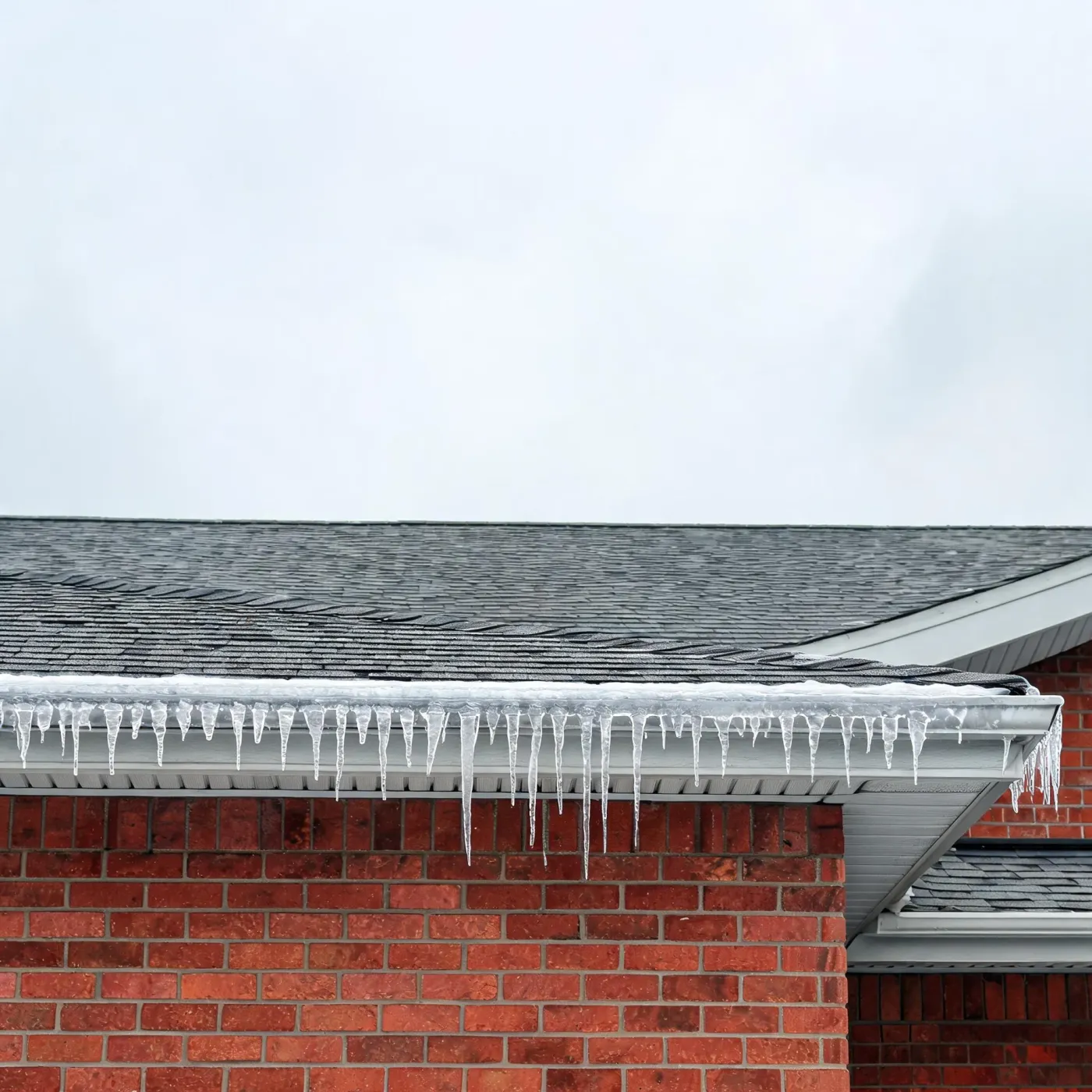
Icicles hanging from a white gutter along the edge of a gray shingled roof on a red brick house, under an overcast sky.

Winter nights across Michigan average 19°F, according to NOAA climate data. At that temperature your furnace isn't cycling on and off, it's running long stretches just to hold the house steady. Those long runs put hours of steady vibration into every screw, panel, and mount on the cabinet. A rattle that's barely noticeable in October has a lot more hours to work itself loose by January. If a panel screw or a blower mount is already a little loose, a cold night like this is when you'll hear it plainest, usually right as the burners kick on and stay on.

NOAA nClimDiv 1991-2020 county normals weighted by homes

A woman in a cream cardigan and jeans stands with one hand raised facing an open front door of a gray horizontal-siding house, with a black lantern wall light, a potted shrub with yellow flowers, and a stone-faced porch column.

A rattle is worth tracking down

A furnace that rattles is telling you something came loose or something is wearing out. Sometimes it's a screw. Sometimes it's a blower wheel losing its balance, and that kind of wear doesn't go back to normal on its own. Either way, the sound is information, not something to live with until spring.

Finding that out yourself means calling a few contractors, describing the noise over and over, and waiting to see who calls back first. A match skips that part. You answer once, and a contractor who knows gas furnaces and has worked on homes like yours reaches out to you directly, so the next call you make is the last one.


Interior corner of a room with a window and sheer curtain at left, a gray upholstered sofa with a cushion at right, and a round wooden table holding stacked books and a round vase with an olive branch.
Sunlight falls across a beige upholstered sofa with a textured woven cushion and a chunky knit throw, beside a dark wood cabinet holding a ceramic vase with green leafy branches, near a white-framed window.
A sunlit corner of a room with a wooden side table holding a ceramic vase of green foliage and a wooden bowl, beside a light upholstered sofa with a knit throw and rust-colored pillow, with window shadows cast on a beige wall.
A sunlit room corner with beige walls, a white-framed window with sheer cream curtain, wood floor with a light rug, and a woven basket holding a knit blanket.
A beige ceramic vase holding a leafy green branch sits on a wooden cabinet in a corner, with sunlight through a sheer curtain casting leaf shadows on the wall.
A grey upholstered sofa with a rust-orange velvet cushion and a textured throw sits beside a window with linen curtains, next to a wooden side table holding a pale ceramic vase of olive branches.

A furnace pro near you

Answer a few questions instead of calling shop after shop.

Request a pro

You only hire the pro if you want to.







