Michigan HVAC Help

Signs your furnace is undersized for a Michigan home

Skip collecting and comparing quotes for the new furnace.

Skip the search

What are the signs my furnace is too small for my Michigan house?

A furnace that can't keep up shows itself fast once the temperature drops. If yours runs most of the day without the house ever feeling warm, or some rooms stay cold no matter what the thermostat says, that points to one thing: the furnace wasn't sized for the house it's heating. In a Michigan winter, that's not a small problem, and it's worth knowing what to look for before the coldest months hit.

A furnace that runs constantly and still can't heat the house evenly is too small for it

An undersized furnace runs almost nonstop in January and February and the house still feels cool, especially upstairs or in rooms farthest from the furnace. The thermostat might read 70 while a back bedroom sits closer to 60. That happens because the furnace can't produce heat as fast as the house loses it on a cold night, so it never catches up. Some homeowners also notice the furnace short cycles on milder days but can't reach temperature when it's 10 degrees out. With gas heating the house and electric rates in Michigan on the high side, a furnace working this hard also means higher bills for less comfort. A properly sized replacement is matched to the square footage, insulation and layout of the house, not just the unit that was already there.

A beige residential gas furnace with white PVC vent pipes, copper and yellow gas lines, and adjacent sheet-metal ductwork stands on a concrete floor beside a plain white wall.

What a short cycle costs you

A furnace sized right for your house runs a full cycle, warms the air, and shuts off. One that's too small can't get ahead of a Michigan cold snap, so it runs longer and more often trying to close the gap. Every extra hour of runtime draws more electricity for the blower motor and igniter, and with power costing what it does here, that shows up on the bill before it shows up anywhere else.

A gray high-efficiency furnace with white PVC vent pipes and metal ductwork stands on a concrete floor beside a plain off-white wall in a basement.

Why the furnace runs nonstop

Furnaces are rated in BTUs, a measure of how much heat they can put out per hour. A unit sized for a smaller house than yours hits its ceiling fast and just keeps running, trying to reach a setpoint it can't hold. You'll notice it most on the coldest days, when outdoor temperatures drop and the gap between what the furnace can produce and what the house needs gets wider.

A closed dark laptop and a ceramic mug of coffee on a wooden dining table, with wooden chairs, a dark kitchen cabinet with cutting boards and a potted plant, and a leafy plant by a window in the background.

What that looks like in your house

You'll feel it in the rooms farthest from the furnace first. The bedroom over the garage or the room at the end of a long duct run stays cold while the thermostat reads 70. You end up running space heaters in those rooms, and that's power you're paying for on top of the gas bill, in a state where electricity isn't cheap either. Doors get left open between rooms to even things out, and the furnace still runs long stretches trying to catch up on a January night.

Over a full Michigan winter, a furnace working this hard wears faster than one sized right for your house. That's a bigger repair bill later, or a shorter life on equipment that should last years longer. Sorting that out yourself means calling around to a handful of contractors, explaining the same cold rooms and long runtimes to each one, then comparing quotes that size the job differently. A local contractor who installs furnaces in Michigan homes every winter already knows what a house like yours needs to hold heat through a hard cold snap.

Interior corner with a beige sofa holding a dark green and a light cushion and a textured throw, a potted small-leaved tree beside a white-framed window, and a dark shallow bowl on a wooden coffee table in the foreground.
A gray furnace cabinet in a basement with sheet-metal ductwork, white PVC vent pipes, and black gas piping against a concrete wall and wood-framed partition on a bare concrete floor.

Running the way it should

A furnace sized right for your house cycles on, brings the register air up to temperature, and shuts off. The duct connections stay tight, the flue pipes stay clear, and you don't think about it again until the next cycle starts.

A gray metal furnace with two white PVC vent pipes stands on a concrete floor beside galvanized sheet-metal ductwork in a basement or utility space with wood framing.

Working harder than it should

An undersized furnace strains to catch up on cold days, and that extra runtime wears on the cabinet and the venting over time. Surface rust and a unit that looks older than it is are what that strain leaves behind.

Does this sound like your house when it's cold out

You notice it most on the coldest nights. The furnace is still running at 2 a.m. and the house never quite gets warm. You bump the thermostat up a few degrees and nothing changes except the runtime. Upstairs is cold while the basement is fine, or the far end of the house never catches up to the rest. Windows fog or frost on the inside, especially in rooms you keep closed off to save heat. Your gas bill climbs past what it ran last winter, same house, same thermostat setting. Left alone through enough Michigan winters, a furnace working that hard wears out its parts years before it should, and a cold house in January is more than an inconvenience if anyone in it is elderly or sick.

  1. Thermostat calls for heat and the burners light

  2. Blower pushes warm air through the ducts

  3. Undersized furnace runs its full cycle, rooms still short of setpoint

  4. Thermostat never satisfies, so the burners stay lit

A gray-haired man in a dark sweater sits on a light gray sofa in a living room, looking toward a sunlit window with trees outside.
A gray-haired man in a dark blue sweater sits on a light gray sofa in a sunlit living room, looking off to the side, with a potted plant, shelving unit, and large glass doors behind him.
A bearded man with graying hair in a dark green sweater sits on a sofa in a living room, looking off to the side, with a sliding glass door and a dim kitchen doorway behind him.
A gray-haired man in a dark knit sweater sits on a light gray sofa in a living room, looking toward a sunlit window, with houseplants, a lamp, and framed art in the background.

No phone calls to make

One installer gets your project, so there's no bidding war over it.

You only hire the pro if you want to.

How a furnace gets sized

  • A furnace is sized in BTUs, the amount of heat it can put out in an hour.
  • That output has to match a heat loss number calculated from your house, not just its square footage.
  • A contractor figures heat loss room by room, counting windows, insulation, and ceiling height.
  • An undersized furnace is picked by square footage alone or swapped in to match the old one without a new calculation.
  • The nameplate on the furnace cabinet lists its BTU input and output, and that number is fixed once it's installed.
  • Michigan's design temperature, the coldest it's expected to get on a bad night, is part of that heat loss math.

A furnace's rating is BTUs per hour, the heat it can deliver when it's running. That number means nothing on its own. It has to be matched against a heat loss calculation, the rate your house loses heat on a cold night, which depends on your windows, your insulation, your ceiling height, and how the rooms are laid out, not just the square footage on file. A contractor who does this right goes room by room and adds it up. One done wrong skips that step. Someone measures the square footage, applies a rule of thumb, and orders a furnace off that number. Or a furnace gets replaced with the same size as the one coming out, on the assumption that whoever installed it twenty years ago got it right. Neither checks the math against your house as it stands today, including any windows or insulation that changed since.

Michigan's design temperature factors into that calculation too. It's not the average winter day, it's the coldest night your area is expected to see, and the furnace has to be sized to keep up with heat loss on that night specifically, not just on the mild days in between. Once the furnace is installed, its output is fixed. The nameplate on the cabinet lists the BTU input and output, and that's what you have, whether or not it was ever matched to your house in the first place.

A beige high-efficiency furnace stands on a concrete basement floor beside sheet-metal ductwork, with white PVC vent pipes and a gas line running along an insulated wood-framed wall.
A furnace sized to your house holds a steady burn, the gas line and flue doing their job without strain.
An older metal furnace with a louvered front panel stands against a concrete basement wall, connected to sheet-metal ductwork and a flue pipe, with copper and steel pipes running alongside.
A furnace working too hard shows its wear early, the cabinet aging faster than the years on it suggest.
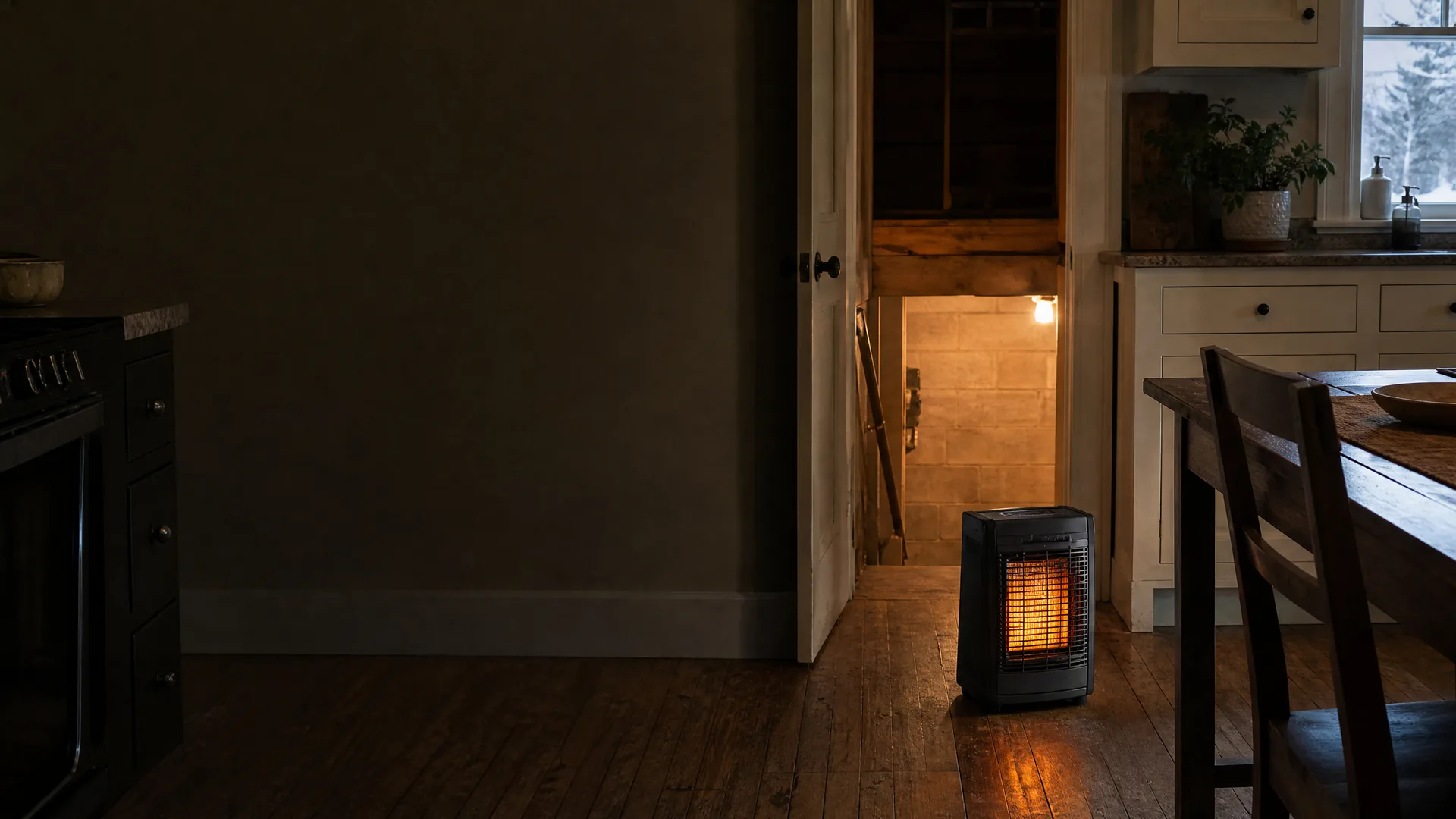
A dimly lit interior with wood plank flooring where a small portable heater with a glowing orange element sits near an open doorway, with a stove at left, kitchen cabinets and a potted plant at right, and a wooden table and chair in the foreground.

It's just past six and still dark outside. You're in the kitchen in your coat because the furnace has been running since you came down, and the room still hasn't caught up. The space heater by the table glows orange, cord stretched back toward the outlet near the basement door, which you left open to let some of the furnace's heat climb up from downstairs. You rub your hands near the coils and look over at the thermostat on the wall. It says 68. It doesn't feel like 68. Outside, the Michigan cold has settled in for the morning, and you've got another ten minutes before anyone else is up and asking why it's so cold in here.

Right Size or Stay Undersized

Right-sized replacement

  • A contractor runs a heat loss calculation on your house before quoting a BTU output, not just a square footage chart.
  • The new furnace cycles on, heats the house to setpoint, and shuts off, even on the coldest nights of the year.
  • Rooms at the end of long duct runs come up to temperature along with the rest of the house instead of lagging behind.
  • Gas usage matches the output you're actually getting, so you're not paying to run an undersized unit longer to make up ground.
  • The cabinet, heat exchanger, and blower motor wear at the rate they're built for instead of running near their limit all winter.

Staying undersized

  • The furnace keeps running past the point it should have cycled off, because it never caught up to the thermostat's setpoint.
  • Rooms farthest from the furnace stay cold, so you're running space heaters on top of a furnace that's already running flat out.
  • The extra runtime shows up on the gas bill without the house actually getting warmer for it.
  • Parts built to cycle on and off end up running continuously instead, which wears them down faster than their age would suggest.
  • You're left guessing at the fix yourself, calling around to different companies and explaining the same cold-room problem to each one.
A beige gas furnace in a basement with a metal flue pipe, galvanized sheet-metal ductwork to its left, and gas and water pipes along the concrete wall to its right.
Before you get your furnace installation
A gray high-efficiency furnace with white PVC vent pipes stands on a concrete pad in a basement, beside sheet-metal ductwork, copper piping and a poured concrete wall with wood framing at left.
After you get your furnace installation

Winter nights average 19°F statewide

Winter nights in Michigan average 19°F. That's the load your furnace has to answer for hours at a stretch, not just at the coldest point of the night. A furnace that's undersized for your house will fall behind long before morning.

NOAA nClimDiv 1991-2020 county normals weighted by homes

A woman with shoulder-length brown hair wearing a beige knit cardigan sits in a gray upholstered armchair near a window, looking off to the side with a slight smile, with bookshelves blurred in the background.
A woman and a child wrapped together in a knitted gray blanket on a couch, with the child's head resting on her shoulder and a lit table lamp and houseplant in the background.
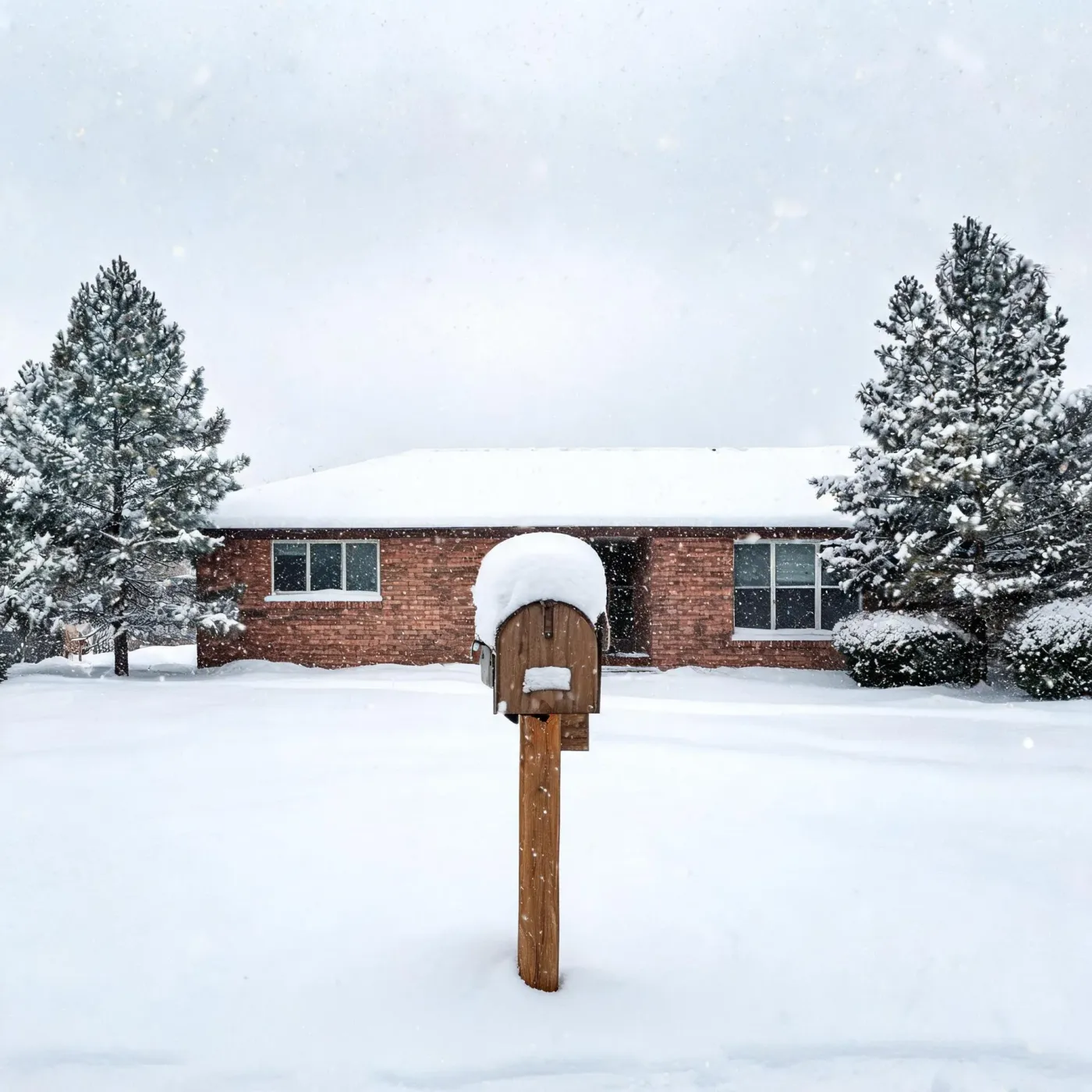
A snow-covered wooden mailbox on a post stands in a deep snowy yard in front of a single-story brick house flanked by snow-laden pine trees during falling snow.

State climate records put the average winter night in Michigan at 19°F. A furnace sized to your house is built to answer for that, hour after hour, not just the coldest snap before dawn. One that's undersized starts behind and stays behind once the sun goes down, which is why the house never feels caught up even with the thermostat set the same as always. By midnight it's still working the same hour it started, and by morning the rooms farthest from it have had all night to lose ground it never made up.

NOAA nClimDiv 1991-2020 county normals weighted by homes

A furnace that keeps running and still can't warm the house isn't a furnace that's failing. It's one that was never sized for the house it's in. The fix isn't a bigger thermostat setting or another space heater by the table. It's a heat loss calculation and a furnace sized to answer for it, down to single digits outside. That's a job for someone who runs this calculation on Michigan houses all winter and knows which rooms tend to come up short and why. When you request help through this page, you're matched with one licensed local contractor, not a list of five companies calling you back at dinner. Someone who's seen this exact problem in houses like yours, and knows what a right-sized furnace looks like before they walk in the door.

A dimly lit unfinished basement with concrete walls and floor, exposed floor joists, a small window at left, and a dark furnace with PVC venting and sheet metal ductwork at right.

One form, no calling around

Only one pro gets your request, so you hear from one company.

New system or replacementFurnace or heatingMichigan
Step 1 of 2

What ZIP code is the job in?