Profile view of a bearded man wearing a dark green baseball cap and a dark gray T-shirt against a plain light background.

Does closing vents save heat in a Michigan home

Tune-up, service, or cleaningFurnace or heatingMichigan
Step 1 of 2

What ZIP code is the job in?

Does closing vents save heat in my Michigan home

Michigan winters push furnaces hard, and closing off vents in rooms you don't use feels like a reasonable way to cut the gas bill. It seems like simple math: less space to heat, less fuel burned. But a furnace and its ductwork are built around moving a certain amount of air, and blocking part of that path changes how the whole system behaves, not just the one room.

No, closing vents doesn't save heat

A furnace is sized to push a set amount of air through the ductwork. Closing vents doesn't reduce that amount, it just blocks the path some of that air was supposed to take. The pressure inside the ducts goes up, and the blower has to work against it. That means your furnace runs the same amount of fuel to heat the house, but pushes harder to do it, and the strain lands on the blower motor and the heat exchanger. Air that can't get out through a closed vent often finds its way out through small gaps and seams in the ductwork instead, in a wall or crawl space you're not even trying to heat. Over a Michigan winter that runs October through April, that adds up to wear, not savings.

A smiling bearded man in a dark green hooded jacket and blue t-shirt sits on a couch in a living room with shelves, a potted plant, and a bowl of popcorn on a wooden table.
A smiling man in a green long-sleeved shirt sits on a beige sofa in a living room, with a bowl of popcorn in the foreground, a large potted plant and shelving behind him.
A smiling man in a dark blue T-shirt sits on a couch in a dimly lit living room with a bowl of popcorn and a remote on a wooden table, a lit floor lamp and bookshelves behind him, and windows showing greenery.
A smiling bearded man in a dark green long-sleeved shirt sits on a leather couch in a living room, with a bowl of popcorn and a remote control on a wooden table in the foreground.
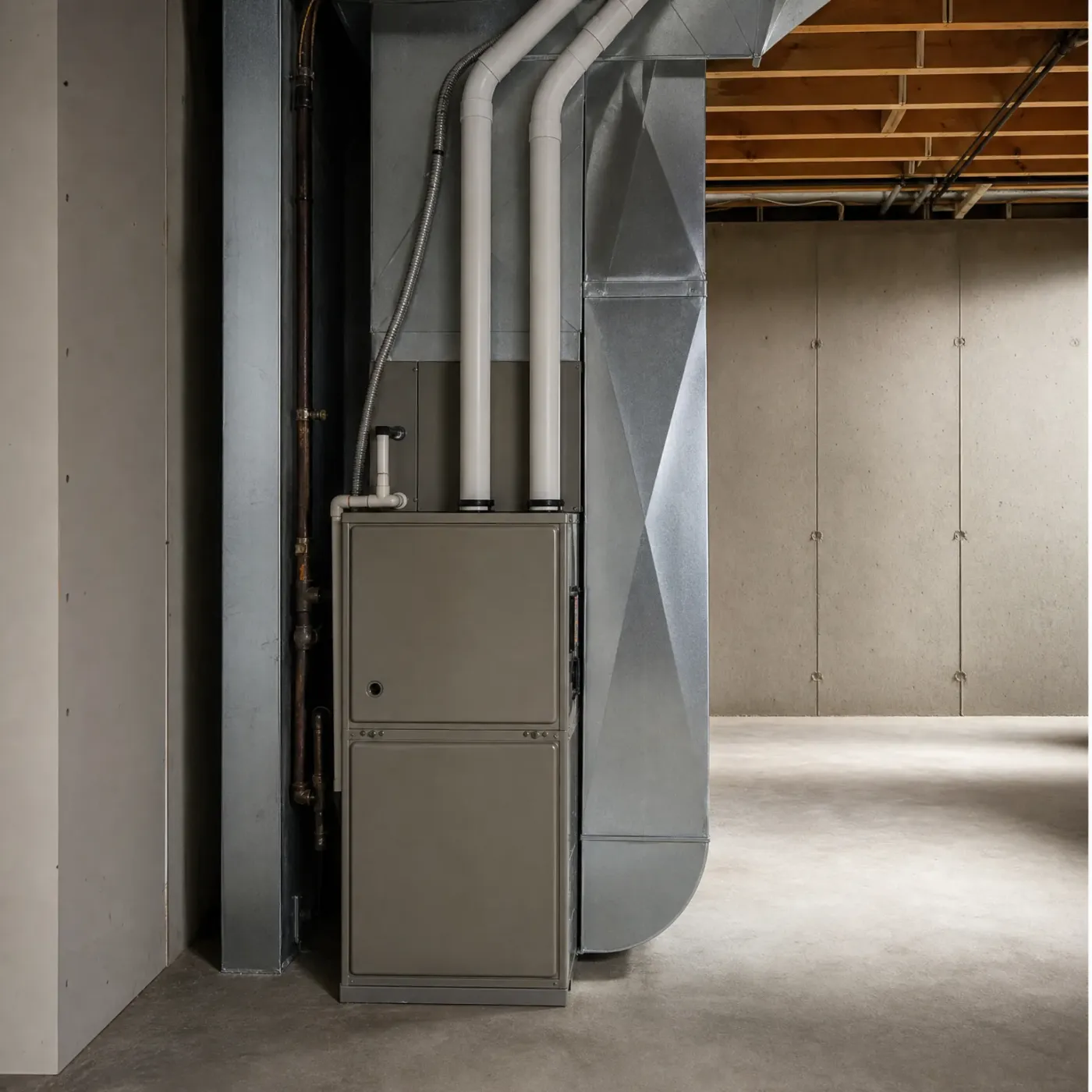
A dark high-efficiency furnace on a concrete pad in a basement, connected to galvanized ductwork, white PVC vent pipes, and copper and black gas piping, with concrete walls and wood framing nearby.
Furnace sized to the house, every vent open, air moving through the ductwork the way it was designed to.
A gas furnace with a louvered upper panel stands on a concrete pad in a basement, flanked by sheet-metal ductwork, white PVC and metal pipes, and insulated columns.
Vents shut, pressure building in the ductwork until it finds a way out through loose joints or the cabinet seams.

The blower in your furnace is built to move a set amount of air every time it runs. It doesn't know or care how many vents are open. Shut a few, and that same volume of air has fewer places to go, so pressure builds up inside the ductwork itself. That pressure doesn't just sit there. It pushes air out through the seams and joints in the ducts, the spots that were never sealed to carry air under load, often into the attic or the crawlspace instead of your living room. Meanwhile the blower motor is straining against resistance it wasn't built to run against, which wears it down faster over time. Push the pressure high enough and the furnace's own safety switch will read it as a problem and shut the burner off. And if you've closed vents upstairs, the airflow balance a contractor set when the system went in gets thrown off, so some rooms end up too warm and others never get warm enough.

Where That Air Actually Goes

  • Your furnace moves a fixed amount of air no matter how many vents are open, because the blower runs at a set speed.
  • Closing vents doesn't shrink the ductwork, so the same volume of air gets pushed through fewer openings and the pressure inside the ducts climbs.
  • That extra pressure forces air out through seams and joints never meant to carry it, often into the attic or the crawlspace.
  • The blower works harder against that pressure, which can wear down the motor faster than it would running at normal resistance.
  • A furnace reads how hard it's working through static pressure, and too much of it can trip a high limit switch and shut the burner down.
  • Closed registers in bedrooms upstairs can also throw off the balance a contractor set when the system was installed, leaving other rooms too hot or too cold.
An older beige furnace with a louvered vent panel stands on a concrete basement floor beside galvanized sheet-metal ductwork, a metal flue pipe and vertical pipes along a concrete wall.
Before you get your furnace maintenance
A beige high-efficiency furnace with white PVC vent pipes stands beside galvanized sheet-metal ductwork in a basement with a concrete floor, exposed wood studs, and metal piping along the wall.
After you get your furnace maintenance

Matched to your furnace job

A furnace that's straining against closed vents is working against itself every time it runs, and in a Michigan winter that's a lot of hours. The higher pressure from closed vents can crack a heat exchanger or wear out a blower motor years before it should, and either one costs a lot more than the gas you thought you were saving. With power rates here what they are, a furnace running efficiently matters more than ever, and that starts with the ductwork doing what it was built to do. A tech checking your system can tell you whether your airflow is balanced the way it should be, catch a strained blower or a cracked exchanger before it leaves you without heat on a cold night, and make sure every vent in the house is actually helping instead of working against the furnace. You don't have to track down who does that kind of work. Send the request and let someone qualified take it from here.

A furnace built to heat a 2,000 square foot house still moves the same air whether you close off one bedroom or five.

That extra pressure doesn't disappear. It pushes warm air out through duct seams and joints before it ever reaches a register, so you pay to heat air that never makes it to a room.

A woman in a dark gray sweater reclines on a light sofa with eyes closed and a slight smile, under a textured gray blanket with an open book resting on her lap, with a lit table lamp and plant in the background.
A smiling bearded man in a navy crewneck sweater sits at a dinner table with a glass of red wine, plates and glasses in the foreground, in a dimly lit room with a lamp and framed picture behind him.

What you'd actually notice

Close the vents in a spare room and the rest of the house doesn't heat faster. If anything, the room next to it runs colder, because the pressure change pushes air down paths you didn't plan for. Register covers rattle more. A room near the furnace might run warm while one at the end of a duct run stays cold no matter how long the furnace runs. None of that shows up right away. It builds over a season, and by February you're adjusting the thermostat higher to get the same comfort you had in November, which is the opposite of what closing those vents was supposed to do.


What it costs you later

The gas bill doesn't drop the way the math suggests, because the furnace still burns fuel to heat air that's now leaking out through duct joints instead of reaching a room. Michigan winters run the furnace for months, so that waste adds up. Worse is what it does to the equipment itself. A blower motor working against higher pressure wears faster, and a cracked heat exchanger is not a small repair. Furnace maintenance catches a duct system under strain before it turns into a failed part, which matters more here than almost anywhere, given how many hours the furnace runs each winter.

Winter nights average 19°F statewide

A 19°F night is routine here, not a cold snap, so your furnace is running long stretches to hold the house steady. That's exactly when a blower pushed into higher pressure by closed vents has the least room to recover.

NOAA nClimDiv 1991-2020 county normals weighted by homes

A gray high-efficiency furnace with two PVC vent pipes stands in an unfinished basement beside sheet-metal ductwork, a framed and plastic-covered wall, and a bare concrete wall with vertical pipes.

Vents open, running right

Air moves through every register the way the ductwork was built for. The blower pulls air in and pushes it back out at the pressure the system expects, so the furnace cycles on, heats the house, and shuts off. No strain, no leaks at the seams.

A gray furnace cabinet in a basement, connected to galvanized sheet-metal ductwork and white PVC pipes, against a concrete wall with exposed metal piping and insulation overhead.

Vents closed, pressure trapped

The blower still moves the same volume of air, but with fewer registers open it has nowhere to go. Pressure builds inside the ductwork and pushes out through the joints and the cabinet seams instead of into the rooms. The furnace runs the same, just harder.

Closing vents doesn't save you anything. It raises the pressure in your ductwork, pushes warm air out through seams before it reaches the rooms you do use, and puts extra strain on a blower that's already working hard through a Michigan winter. The gas bill doesn't go down because of it, and the furnace doesn't get a break. What actually protects it is having someone check the pressure, the airflow, and the condition of the blower before the cold months pile up the hours on it. A maintenance visit catches the strain closed vents cause before it turns into a cracked heat exchanger or a blower motor that quits early. Once you send the form, you're not the one tracking down who can do that work. A contractor who handles this gets in touch, and from there it's off your plate. Open the vents, keep the furnace running the way it was built to, and let someone qualified confirm the rest is in order.

A gray high-efficiency furnace in an unfinished basement, connected to sheet-metal ductwork and two white PVC vent pipes, with copper piping and exposed wood floor joists nearby.

A furnace pro near you

Hand it off

One request and finding someone for the tune-up is handled.

There's no charge for the request.