
Signs of a clogged dryer vent in Grand Rapids, MI

Get matched with a Kent County pro who cleans dryer vents.

Get a local pro

A clogged dryer vent shows up as clothes that take two or three cycles to dry, a dryer that runs hot to the touch, or a burnt smell when it's running. Check the outside vent hood while the dryer runs: if the flap barely moves or no air pushes out, lint is blocking the line somewhere between the machine and the wall. Humid Grand Rapids summers make towels and jeans feel damp even on a short cycle, so a partial clog is easy to blame on the weather instead of the vent. Through a Kent County winter, a blocked vent also pushes warm, moist exhaust back into the house instead of outside, which shows up as lint dust behind the machine or a musty smell in the laundry area. A gas dryer with restricted airflow is also working harder to vent combustion byproducts, which is worth paying attention to. Left alone, the lint keeps building and the dryer keeps working harder to push air through it.

A white hooded dryer vent cover screwed into beige lap siding above a concrete foundation wall, with a bed of rounded gravel at the base.

The vent hood working right

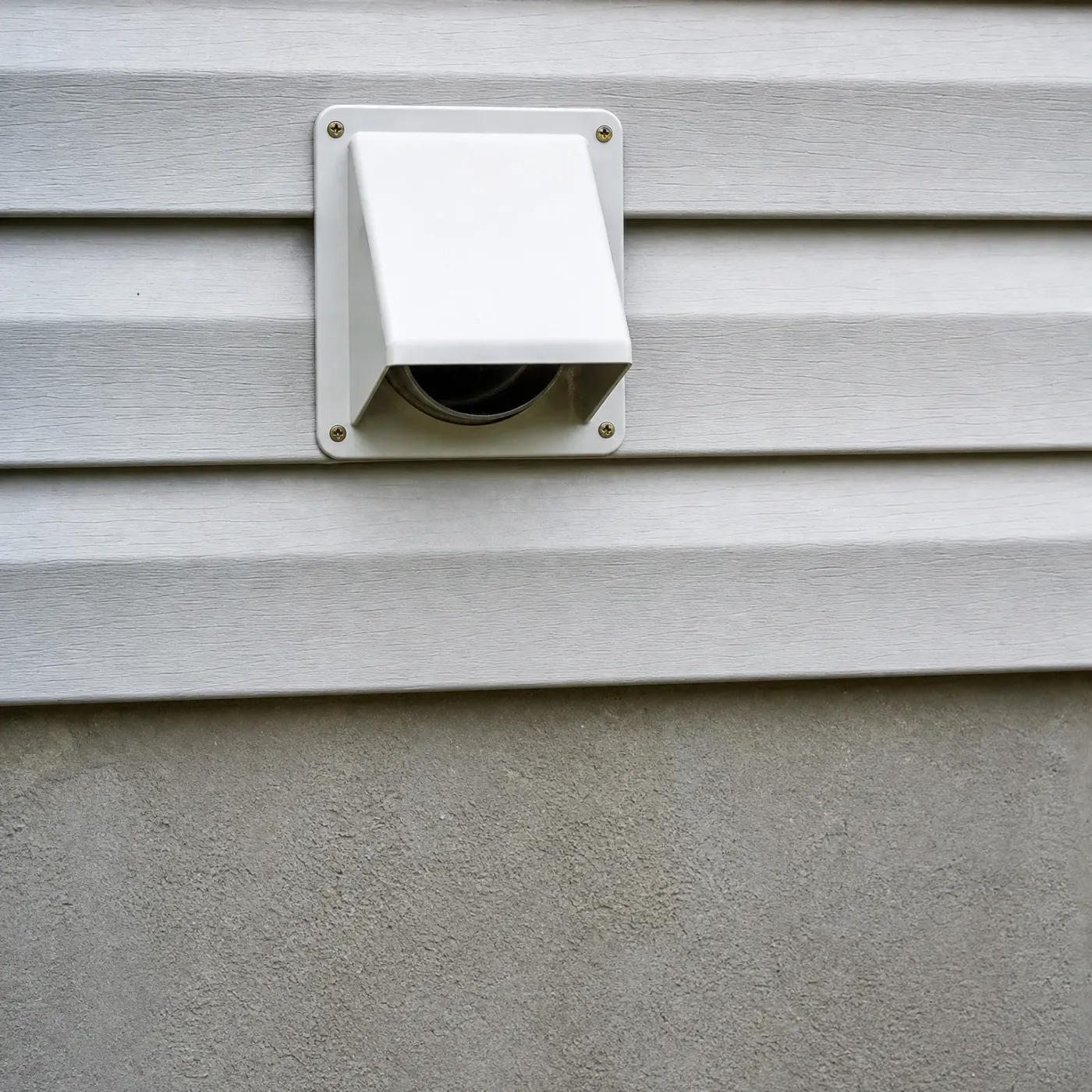
When air moves freely, the hood flap swings open wide while the dryer runs and stays open the whole cycle. Step outside and you'll feel warm air pushing out steady, not weak puffs. A clear vent like this moves lint and moisture out of the house instead of trapping them in the line.


A metal dryer vent hood mounted on light gray horizontal lap siding, with its opening clogged by gray lint, above a concrete foundation wall.

The vent hood backed up

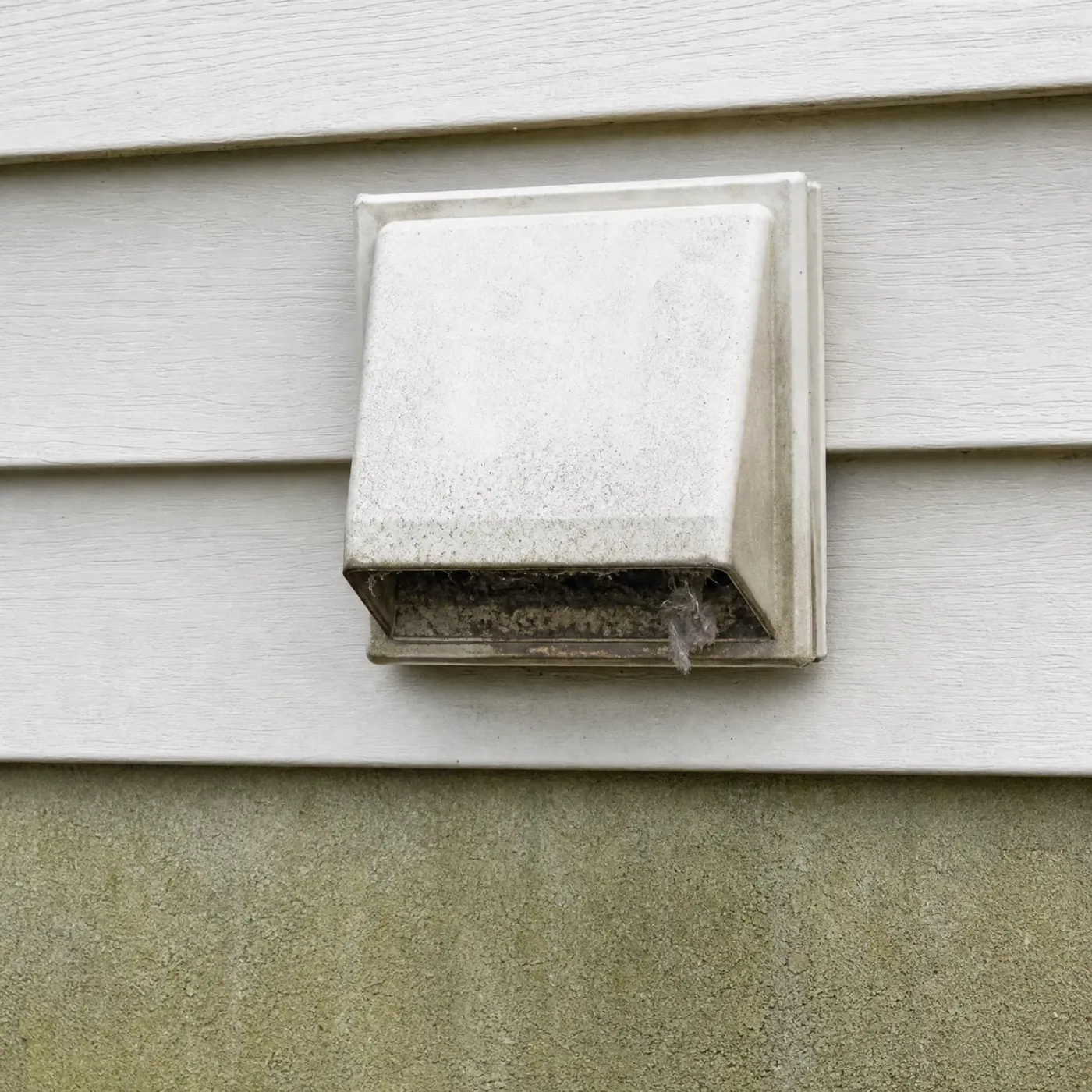
Lint has built up enough to block most of the opening, so the flap barely lifts even with the dryer running. Air that should carry moisture and heat outside is pushing back into the duct instead. Left alone, that trapped lint is dry and it's fuel.

Why does your household's dryer vent clog faster here?

  • 2.54 people per household on average

    Kent County households average 2.54 people, and that's a lot of loads through one vent. More loads mean more lint moving through the duct every week.

  • Half the homes here were built by 1977

    Half the homes in Kent County were built in 1977 or earlier. If yours is one of them, check what kind of duct run was put in and whether it's ever been cleaned.

  • Power here costs 20.54 cents per kilowatt-hour

    Power here runs 20.54 cents per kilowatt-hour. A dryer fighting a clogged vent pulls more of it to finish the same load.

ACS 2020-2024 · EIA-861 2025

What a blocked vent costs you in heat

A dryer pushes hot, wet air out through that vent every cycle. When lint packs the duct, that heat and moisture have nowhere to go, so the dryer runs longer trying to finish the load. The motor and heating element stay on well past the point they'd normally shut off. Over a hard Michigan winter, with loads running most days, that extra runtime shows up on your power bill. Grand Rapids households already pay some of the highest electric rates in the country, so a dryer working overtime isn't a small thing. A clear vent lets the dryer shut off when the clothes are actually dry, not after it's fought a blocked duct for an extra twenty minutes.

Why lint buildup is a fire risk

Lint is dry, fine, and sits right next to a heating element built to run hot. A clear vent carries it outside with the exhaust air before it can collect. A clogged one traps it inside the duct, where it builds against the hot airflow cycle after cycle. The U.S. Fire Administration lists dryers as a leading cause of home fires, and a blocked vent is the most common reason why. This matters more in houses that run the dryer daily through a Michigan winter, when windows stay shut and nobody's checking the outside vent hood for weeks at a time.

A woman in a gray turtleneck sweater stands by a window looking outside at snowy ground, with a dimly lit living room containing a sofa, shelves, lamp and a lit candle behind her.
A woman in a cream cable-knit turtleneck sweater stands in a warmly lit living room with a fireplace and shelves behind her, looking out a window toward snow-covered trees and a railed deck.
A woman in a cream knit turtleneck sweater stands by a window looking out at snow, with a lit fireplace, sofa and lamp in the room behind her.
A woman in a gray knit sweater sits by a window looking out at falling snow, with a dimly lit living room containing a sectional sofa, pillows, a lamp and houseplants behind her.

Where the Lint Actually Builds Up

  • Lint builds up fastest at the elbows and bends in the ductwork, not in a straight run.
  • A clogged vent trips the dryer's thermal fuse or high-limit switch as a safety response to trapped heat.
  • Rigid metal duct resists lint buildup better than the ridged foil or vinyl duct some older installations still use.
  • Every added foot of duct and every extra turn gives lint more surface to catch on before it reaches outside.
  • The outside hood's flap is the last line of defense, and a flap that won't close all the way lets pests and cold air in.
  • A dryer that cycles on and off repeatedly mid-load is often the high-limit switch responding to heat with nowhere to vent.

Lint doesn't pack evenly through the duct. It catches where the airflow changes direction, at every elbow and bend between the dryer and the outside hood. A straight shot of duct stays cleaner longer than one with two or three turns to get around a wall or a joist. That's why the layout behind your dryer matters as much as how often you run it. Rigid metal duct gives lint less to grab onto, since the smooth inside wall doesn't have the ridges that foil or vinyl duct does. If your home still has the older ridged kind, lint catches in those ridges and builds up faster, turn by turn, foot by foot, until airflow drops. When the duct finally chokes down enough, the dryer's high-limit switch reacts to the heat that can't escape. That switch is a safety device, not a flaw, and it will cycle the heating element on and off to keep the dryer from overheating, which is why some loads seem to stall or restart partway through. In a bad enough blockage, the thermal fuse blows instead, and the dryer stops heating altogether. At the far end, the outside hood's flap is supposed to seal shut between cycles. A flap held open by packed lint lets cold air, moisture, and small pests work their way back into the duct even when the dryer isn't running.

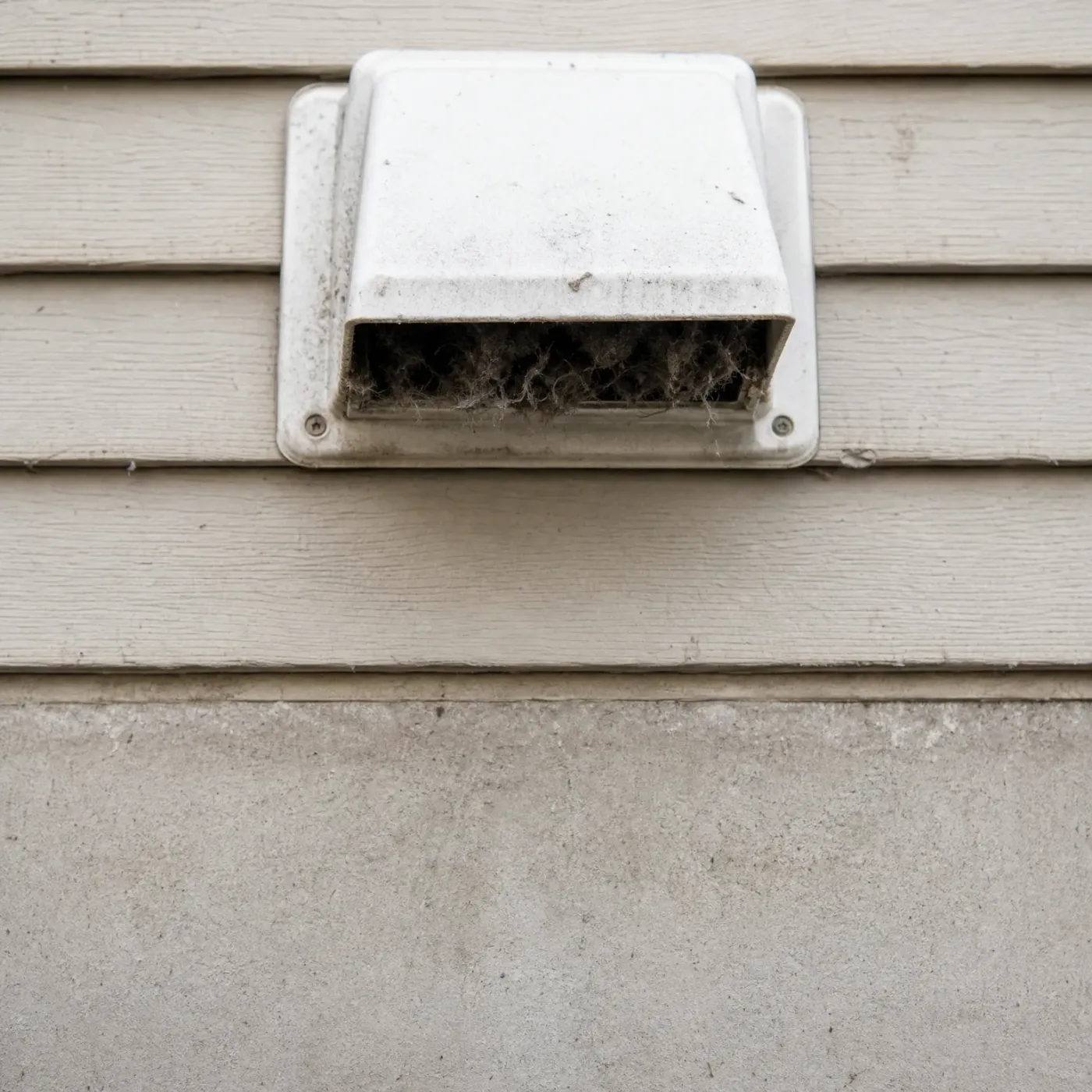
A white plastic dryer vent hood clogged with grey lint, mounted on beige horizontal lap siding above a concrete foundation wall.
Before you get your dryer vent cleaning
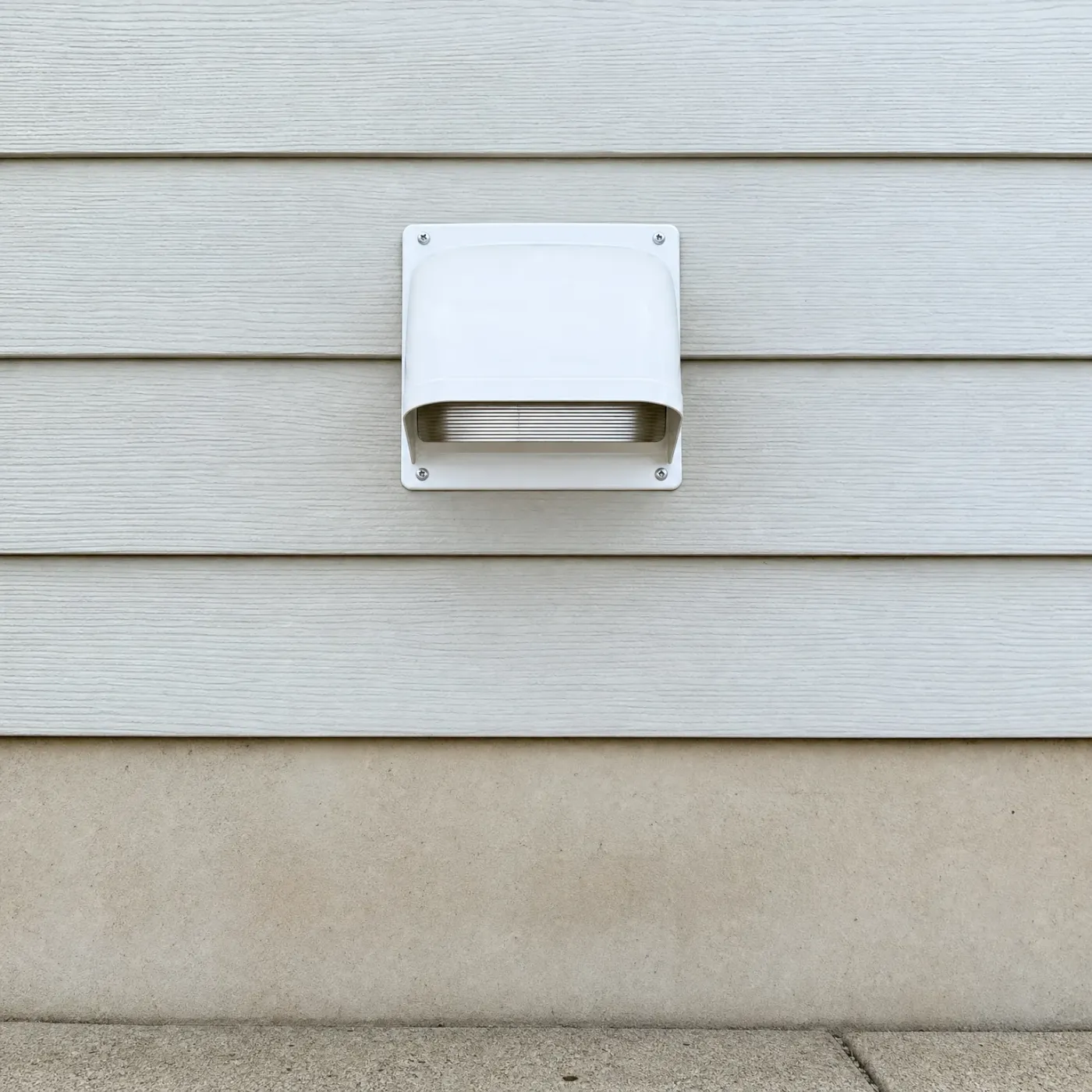
A white hooded dryer vent with a louvered opening mounted on light beige horizontal lap siding above a concrete foundation and sidewalk.
After you get your dryer vent cleaning

2 to 3 cycles

If your dryer needs that many runs to finish one load, lint has already cut off most of the airflow. It gets worse each week until the vent is cleared.

Reach a local pro

Fire risk

Lint is the fuel. A blocked vent traps heat right where it builds up fastest, at the elbows and bends in your ductwork, and that's how a dryer fire starts.

Reach a local pro
A bearded man in a plaid flannel shirt stands indoors looking out a condensation-covered window at a snowy landscape, with a speckled mug on the sill and kitchen shelves behind him.
A bearded man in a dark t-shirt sits on a light sofa, smiling and looking down toward a laptop screen visible at the bottom edge of the frame, with a blurred living space behind him.

Find a dryer vent cleaning pro in Kent County

A licensed pro who works in Kent County gets your request.

No fee to send it, and nothing to sign.

A metal hooded dryer vent with a louvered opening mounted on gray horizontal lap siding, next to a plain off-white wall.

A vent you clean on schedule

You clean this one on your own timeline, not because the dryer forced your hand. Loads dry in one cycle. The outside hood flap swings open wide and stays open. You go months without thinking about the dryer at all, and when you check the vent it's clear enough that the job takes a few minutes. Nobody in the house has smelled anything burning. The thermal fuse has never tripped. This is what a vent looks like when lint never got the chance to pack into the elbows.

A stainless steel hooded dryer vent screwed to light gray horizontal lap siding, with a blank white wall occupying the left side of the frame.

A vent that finally forces the call

You put it off through a few slow cycles, telling yourself the dryer just needs a new setting. Then the smell shows up, or the dryer shuts off mid-cycle on its high-limit switch. By the time someone looks at the hood outside, the flap barely lifts. Lint has packed the bends solid, and every load since has been pushing hot, wet air against that blockage. The fix is the same cleaning either way. The difference is whether it happens before the thermal fuse trips or after.

Clear It Yourself or Call It In

DIY check

  • You can check the outside hood yourself in about two minutes while the dryer runs a load.
  • A broom handle or shop vac reaches the first few feet of duct but not the full run to the hood.
  • If the clog sits at a bend past where your arm or vacuum hose reaches, you'll clear nothing and the dryer still runs hot.
  • Rooftop and long-run vents common on some Kent County homes put the blockage well out of reach from inside.
  • Doing it yourself costs you only time, but a missed clog means the same slow drying and heat buildup keep happening.
  • Without a way to confirm the full duct is clear, you're guessing at whether the job actually worked.

Professional cleaning

  • A local contractor runs a rotary brush or air whip the full length of the duct, elbows included, not just the first few feet.
  • They pull lint from bends you can't reach with a vacuum hose or a broom handle.
  • Someone who services dryer vents every season knows which duct runs in this area tend to clog fastest and why.
  • You get one contractor matched to your situation, not a handful of companies calling about the same job.
  • After the cleaning, the hood flap swinging open wide while the dryer runs confirms the airflow is actually restored.
  • A contractor can also flag if your duct material or routing is working against you before it causes the next clog.
A white hooded dryer vent with a square mounting plate screwed onto light gray horizontal vinyl siding, above a gray stucco-textured lower wall.
Air pushes the flap open wide and you can feel it push warm air out steady the whole cycle.
A white plastic dryer vent hood mounted on light-colored horizontal lap siding, with lint caught in its lower opening and a green-stained foundation wall below.
Lint packs the opening until only a thin gap is left, and what comes through it is weak and slow.

2.54 people per household on average

With 2.54 people in the average Kent County household, that's a steady run of laundry through one vent, week after week. Every load pushes more lint through the duct. A household that size usually isn't running one or two loads a month, so checking the outside hood for airflow is worth doing on a regular basis, not just when something seems off.

ACS 2020-2024

A woman stands in the open front doorway of a single-story house with stone and wood siding while a man in a dark polo shirt and cap walks toward it along a concrete path.

A clogged vent doesn't clear itself

The signs are the same ones covered above: longer dry times, a hot dryer, a hood flap that won't swing open. If you've checked and found any of it, the lint is already packed somewhere between the dryer and the outside wall. It stays there until someone clears the full run, not just the first few feet.

A local contractor who services dryer vents through Grand Rapids winters and summers knows where lint sits hardest in your home's duct run, whether that's a long straight shot or a path with a few bends. Once you request a match, one licensed contractor from the area reaches out to you directly. You're not fielding calls from a handful of companies, just the one suited to a vent like yours.

A light-colored ceramic vase holding green leafy branches sits on a round wooden table, with a wooden-framed armchair draped in a cream throw, a tripod floor lamp, and sheer curtains blurred in the background.
A dark-clad house with large windows beside a gravel driveway lined with in-ground path lights, ornamental grasses and hydrangeas, with distant hills and an orange sunset sky.

Dryer Vent Cleaning

Get the right pro for your dryer vent

Duct and vent cleaningKent County, MI
Step 1 of 3

What kind of equipment?

  • A pale ceramic vase holding leafy green branches sits on a wooden side table beside a linen-covered chair with a throw blanket, below a wood-framed window.
    • Say what's going on with your dryer vent, and a pro who works on them reaches out.
    • Your dryer vent cleaning request goes to a local pro who does this work.
  • A large woven basket with rope handles holding a draped cream fringed blanket stands in a room corner on a wood floor, with sunlight from a nearby curtained window and a dark wood cabinet at right.
    • Send the form and the dryer vent cleaning stops sitting on your list.
    • Send the request and finding a pro stops being your problem.
  • A leafy green plant in a woven basket sits in a sunlit corner beside a beige sofa with a knit throw, sheer curtains, a window, and a wooden coffee table.
    • Skip searching for someone who cleans dryer vents in Kent County.
    • Explain the job once and skip repeating it on every call.
  • A ceramic vase holding olive branches and a wooden bowl sit on a wooden windowsill beside a white-framed window, with a framed picture leaning against the grey wall.
    • Your request goes to one pro, not a list of companies.
    • The pro who reaches out is licensed in Michigan.