Mini Split Installation in Detroit, MI
A new system here will heat from October through May and cool from June through August every year. Tell us about the house, and a licensed contractor who covers Wayne County will get in touch.
Tell us about the job
It takes about a minute.
What Wayne County asks of a mini-split
Your mini-split works nearly all year here. Homes in Wayne County need heat from October through May and cooling from June through August, which leaves only a short stretch when the system sits idle. On winter nights that average 21°F, the heat pump has to keep pulling warmth from air that's genuinely cold. On summer afternoons averaging 82°F, it's back to work on the cooling side not long after the heat shuts off for the season.
Most homes here heat with gas, so a mini-split you're adding usually has to work alongside a furnace rather than replace it, or it needs to be sized to carry the house on its own through a 21°F night. Any unit installed new has to meet the federal minimum for a split-system heat pump, 14.3 SEER2 for cooling and 7.5 HSPF2 for heating. Wayne County has also logged 14 winter storms and 142 damaging wind events over the past ten years, and more than a third of Michigan households went at least 24 hours without power in 2024, so it's worth asking your contractor how the system comes back on once power returns.
- 8 months
- October through May, your system heats
- 3 months
- June through August, it cools
- 21°F
- the average winter night it heats against
- 82°F
- the average summer afternoon it cools against
NOAA nClimDiv, 1991–2020 normals
Michigan requires HVAC contractors to hold a state license.
The Board of Mechanical Rules is the state body that tests and licenses HVAC contractors in Michigan. The license belongs to the contractor, not to any one job, so it covers this installation the same as any other mechanical work they take on.
Because Michigan licenses at the contractor level, the mini-split installation itself still needs to clear the local building office. In most cities and counties that means a permit before the work starts and an inspection once it is done, separate from whatever the state license already covers. That inspection is what confirms the unit was installed correctly at this address, license or not.
Sources: Michigan Legislature · Michigan Department of Licensing and Regulatory Affairs
- Is a mini split worth it?
- It depends on what you're using it for. A mini split makes sense for a room that never gets heat or cooling from your main system, like a bonus room over the garage or a basement someone finished after the ductwork was already in place. Detroit winters get down to 21°F on average overnight from December through February, so if you're leaning on a mini split as the only heat for a space, check that the unit is rated for cold climate use before you count on it for the coldest nights. For a whole house already served by ducts, it's a bigger call, and a contractor can walk through whether it beats fixing or replacing what you have.
- How many rooms can a mini split cover?
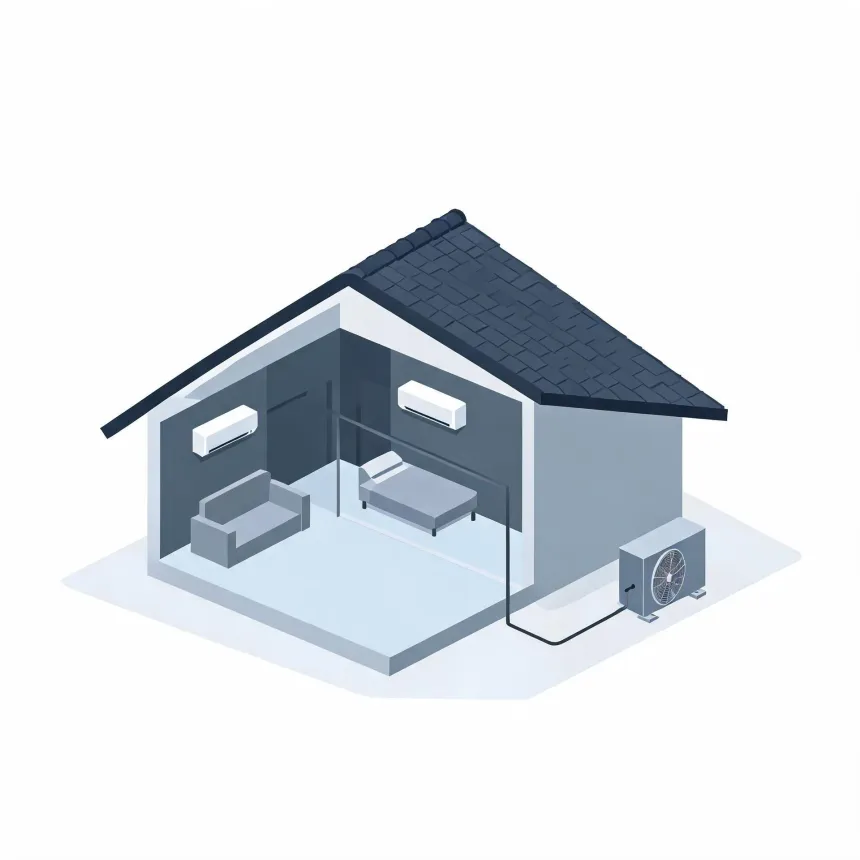
- A single outdoor unit can run one indoor head or several, and multi-zone systems are built for exactly that. Each indoor head is sized to the room it serves, so a contractor works out how many zones you need by measuring the rooms, not by guessing at a number that fits every house. More zones on one outdoor unit means more flexibility to control each room on its own, but it also means more to plan for during installation, like where lines run between the outdoor unit and each head.
- Can a mini split heat a whole house?
- It can, if it's sized and placed for that job, but most homes here already heat with gas furnaces and ductwork built around them. Swapping that out for a whole-house mini split setup means enough indoor heads to reach every room, and a system rated to keep up when it's 21°F outside, which is the average low here from December through February. That's a bigger project than adding a mini split to one room, so it's worth having a contractor look at your specific house before deciding which way makes sense.