
HVAC Installation in Detroit, MI
A new system here will heat from October through May and cool from June through August every year. Tell us about the house, and a licensed contractor who covers Wayne County will get in touch.
Tell us about the job
It takes about a minute.

What a system here has to handle
Your new furnace and AC have eleven months of work ahead, not just one season. Winter nights average 21°F from December through February, and the furnace has to keep pulling the house back up from that, night after night. Summer only asks 82°F of the AC, but that leaves just June through August to rest before heating season starts again in October and runs through May.
Most homes in this area heat with gas, so a properly sized furnace matters as much as the air conditioner does. Wayne County also sees its share of hard weather, ice and heavy wind both, and Michigan households lost power for a full day or more often enough in 2024 that it's worth asking your contractor how a new system holds up when the power drops and comes back.
- 8 months
- October through May, your system heats
- 3 months
- June through August, it cools
- 21°F
- the average winter night it heats against
- 82°F
- the average summer afternoon it cools against
NOAA nClimDiv, 1991–2020 normals
Michigan requires HVAC contractors to hold a state license.
Michigan's Board of Mechanical Rules tests contractors before they get a license, and keeps a record of who holds one. That license covers the contractor, not the job, so it applies to this installation and to every other job that contractor takes on.
In most cities and counties, installing a furnace or air conditioner needs a permit from the local building office, along with an inspection once the work is done. The permit and inspection check that the new equipment was installed correctly. The license is what tells you the contractor was tested and is on record with the state.
Sources: Michigan Legislature · Michigan Department of Licensing and Regulatory Affairs
- When should I replace my HVAC system?
- Once your furnace or air conditioner needs repairs more winters and summers than not, it's time to start pricing a replacement instead of fixing it again. Watch for uneven heat between rooms, a furnace that short cycles, or an air conditioner that struggles to keep up on the hottest afternoons. Age matters too. Most furnaces and air conditioners are built to last one to two decades, and a system near the end of that range is a bigger risk to lean on through a Detroit winter, when nights average 21°F for months at a stretch. A licensed contractor can tell you whether what you're seeing is a repair or a sign the whole system is done.
- Should I replace my furnace and air conditioner at the same time?
- If both are getting old, replacing them together is usually the better move. A furnace and air conditioner installed at different times can end up mismatched, and a mismatched pair won't run as efficiently as a system designed to work together. It also means one visit and one disruption instead of two, which matters here since homes need heat or cooling 11 months of the year. That said, if one unit is much newer than the other, a contractor can tell you whether it's worth keeping for now.
- What happens during an HVAC installation?
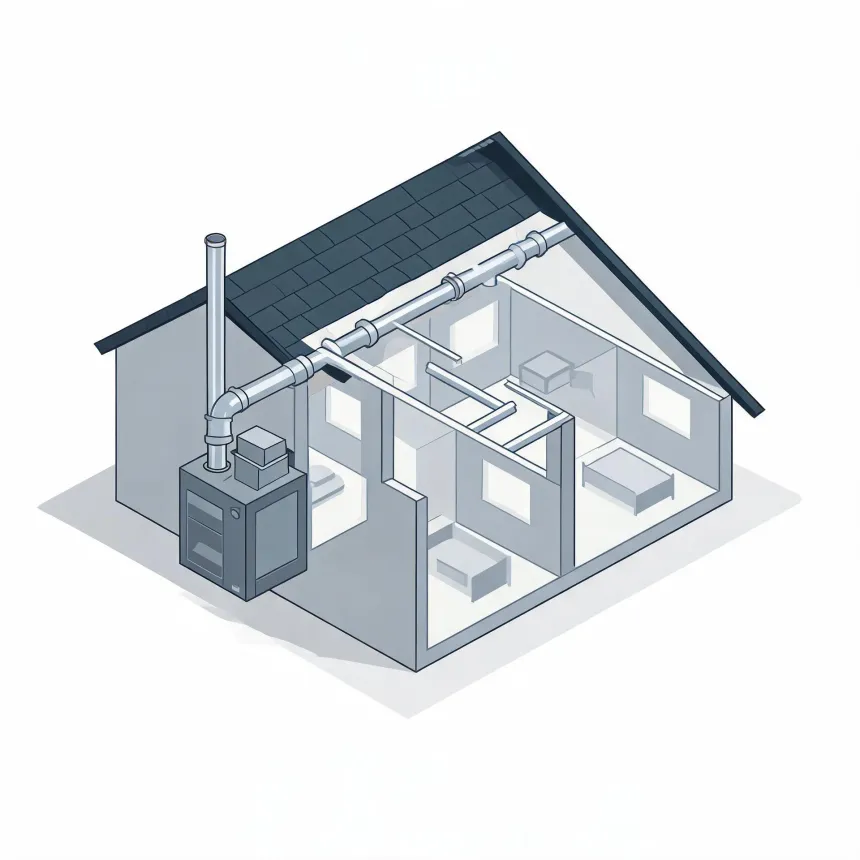
- A contractor first sizes the new equipment to your house, checking things like square footage, insulation, and duct layout so the furnace or air conditioner isn't too big or too small for the job. On install day, the old equipment comes out and the new unit goes in. Then the connections it needs go in too, the gas line or refrigerant lines, the ductwork, the electrical. Once it's in place, the contractor tests it. They check airflow, make sure it cycles on and off correctly, and confirm it's venting properly. With 83.6% of homes here heating with gas, that gas line connection and venting check are a routine part of most installs in Detroit.