
Dryer Vent Cleaning in Kalamazoo, MI
Tell us about your home, and a licensed contractor who covers Kalamazoo County will get in touch.
Tell us about the job
It takes about a minute.

Cold vents make lint stick
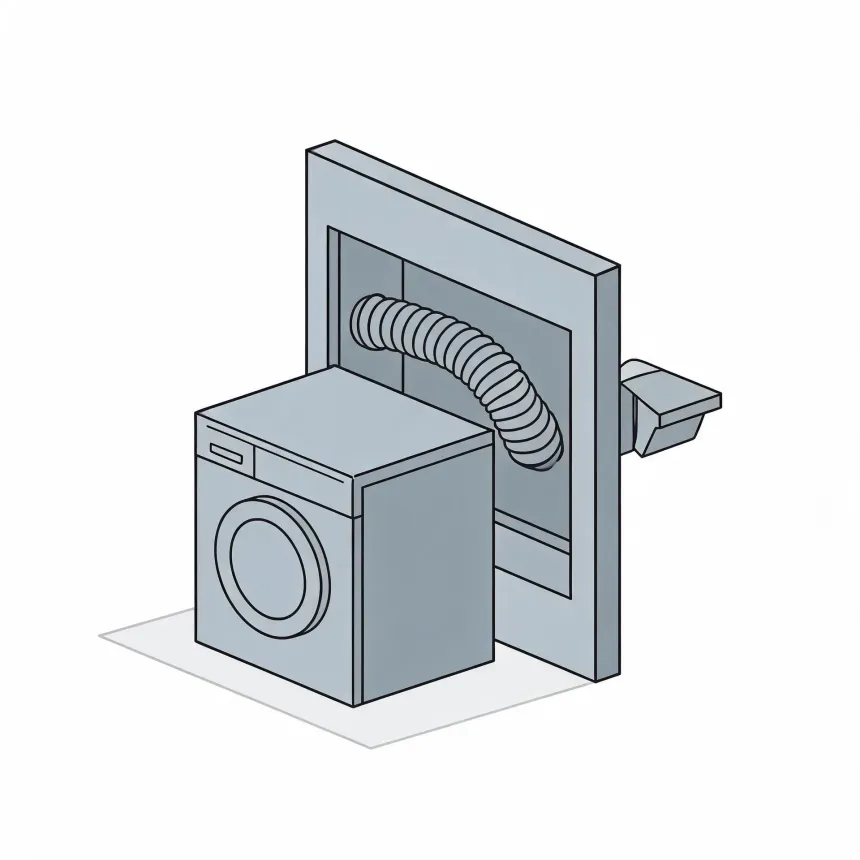
Your dryer pushes out warm, damp air, and that air has to travel through a vent that sits in cold space most of the year. Winter nights here average 19°F from December through February, so that vent runs cold for eight months straight. The warm air cools fast against those cold walls, and the moisture it carries turns the lint damp instead of letting it blow straight through. Damp lint sticks. It builds up layer on layer along the inside of the vent instead of landing outside where it belongs.
A vent that's clogged this way blocks the path exhaust needs to escape the house. Heat and moisture back up toward the dryer instead, and the vent gets slower to clear itself with every load.
- 19°F
- the average winter night, and cold vents catch damp lint
- 8 months
- October through May, the vent stays cold
NOAA nClimDiv, 1991–2020 normals
- How often should a dryer vent be cleaned?
- Once a year is the general rule, but how often you actually need it depends on how much you use the dryer and how long the vent run is. A household running a load almost daily, or a home where the dryer sits far from the outside wall, will build up lint faster than that. A contractor can look at your setup and tell you if yours needs cleaning more than once a year. Lint builds up along the whole duct, not just at the lint trap, so the vent can be packed further down even when it looks clear at the dryer end.
- Can I clean my dryer vent myself?
- You can handle part of it, but not all of it. Pulling the dryer out and vacuuming the first few feet of duct and the outside vent hood is something most homeowners can do. The rest of the run, especially where it bends through walls or up through a roof, needs a brush and rod system long enough to reach the full length, and that is where a contractor's equipment does a more complete job.
- What are the signs of a clogged dryer vent?
- Clothes coming out hot to the touch but still damp is the clearest sign. Others include a musty smell in the laundry room, the outside vent hood flap barely moving or not opening when the dryer runs, and the dryer itself getting hot on the outside. A load that used to take under an hour now taking much longer is also a sign the exhaust air is not getting out the way it should.